

ODM
28
2026-10
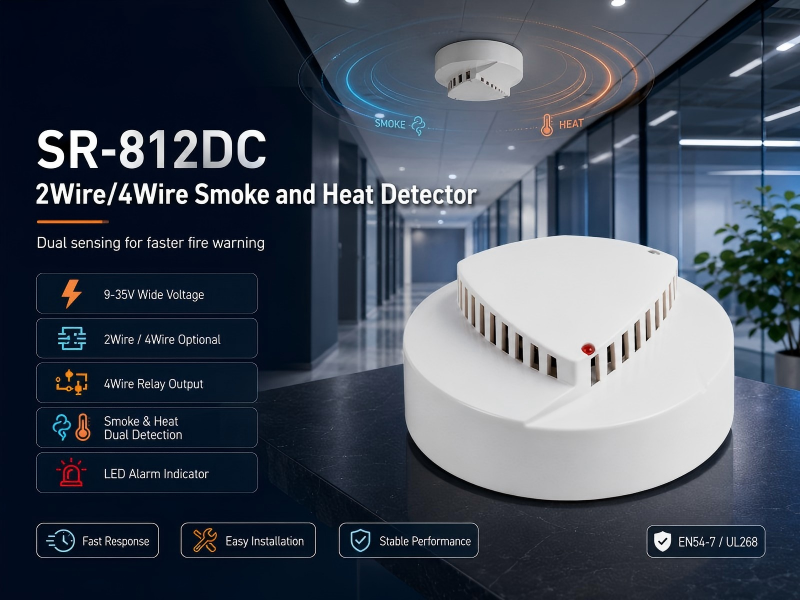
How Should B2B Buyers Evaluate the SR-812DC Photoelectric Smoke and Heat Detector?
A photoelectric smoke and heat detector is a fire detection device that senses smoke through an optical chamber and monitors temperature using a heat-sensing element. Unlike a stand-alone household smoke alarm, a conventional detector is intended to communicate with a compatible fire alarm control system. The SUMRING SR-812DC combines infrared photoelectric smoke detection with a specified 57°C heat alarm point and is described in both 2-wire and 4-wire versions. For distributors, contractors, and system integrators, selection means confirming the wiring version, zone behavior, current demand, circuit supervision, and destination-market evidence. These seven checks translate the SR-812DC sheet into a purchasing review. 1. How Does the Smoke-and-Heat Sensing Design Work? The SR-812DC photoelectric smoke and heat detector uses an infrared optical chamber. Under normal conditions, little light reaches the receiving diode. When smoke enters the chamber, particles scatter infrared light toward the receiver; the electronic circuit processes this change and can produce an alarm signal. The product sheet also describes a built-in heat detector with a 57°C alarm temperature. The manual does not confirm rate-of-rise detection or explain how the two channels combine alarm signals. Request engineering confirmation before making such claims in a tender. 2. What Should Buyers Check on......
26
2026-10
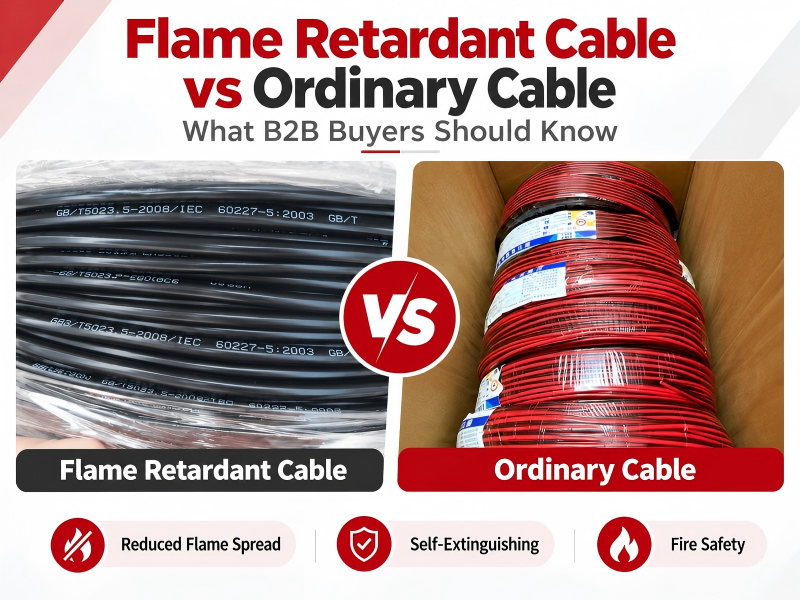
What Is a Flame Retardant Cable and Why Does It Matter?
A Flame Retardant Cable is an electrical cable designed to limit flame propagation under specified test conditions. Its insulation or sheath can still ignite, produce smoke, and suffer damage. The critical distinction is not whether fire can touch the cable, but whether combustion is likely to continue spreading after the ignition source is removed. For B2B distributors, fire alarm contractors, system integrators, and project buyers, this difference matters when specifying wiring for buildings, equipment, and fire-safety systems. What Is the Difference Between Flame Retardant Cable and Ordinary Cable? An ordinary cable and a Flame Retardant Cable may look similar, yet their insulation materials and verified fire performance can differ. Neither jacket color nor cable thickness proves its classification. The first reference photo shows red-and-black ordinary insulated wire supplied in coils. The second shows black-jacketed cable with printed markings. These photos illustrate different products; they do not establish either product’s fire-test result. Under certain conditions, an ordinary non-flame-retardant cable may keep burning or allow flames to advance along its polymer covering after the external heat source disappears. A suitably tested flame-retardant product is designed to reduce that propagation. Actual behavior depends on the cable construction, heat exposure, arrangement, and installation environment.......
23
2026-10
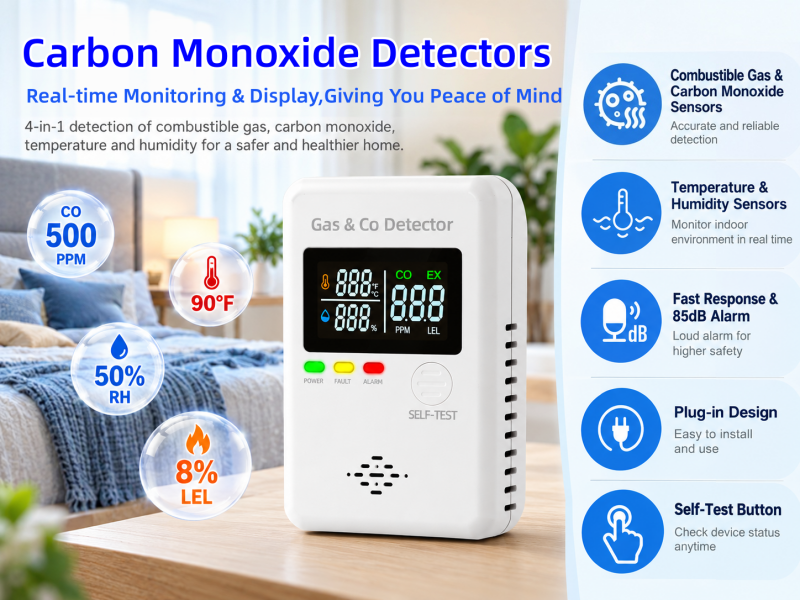
How Can B2B Buyers Evaluate a 4-in-1 CO and Natural Gas Detector?
A 4-in-1 CO and Natural Gas Detector is an indoor safety device that monitors carbon monoxide (CO), methane-based natural gas, ambient temperature, and relative humidity in one unit. Its two gas-monitoring functions address different hazards; temperature and humidity readings provide additional environmental information rather than replacing a dedicated fire or environmental-control system. For importers, distributors, and OEM brands, selection starts with verifiable performance, not display icons. A 4-in-1 CO and Natural Gas Detector such as SUMRING SR-910 provides seven practical checks for a sound purchasing decision. 1. What Exactly Does the Detector Monitor? A 4-in-1 CO and Natural Gas Detector combines four measurements, but that does not necessarily mean four independent hazard alarms. CO can accumulate when fuel-burning equipment operates improperly, while methane can escape from natural gas connections or appliances. The SR-910 is specified to issue audible warnings for these gas hazards. Its display also presents temperature and humidity readings, useful when buyers want a compact visual overview of an indoor environment. Before advertising additional temperature or humidity alarms, request specific evidence: the supplied manual does not define separate warning thresholds for either environmental measurement. For product catalogues, describe the device as a dual-gas alarm with temperature and humidity......
21
2026-10
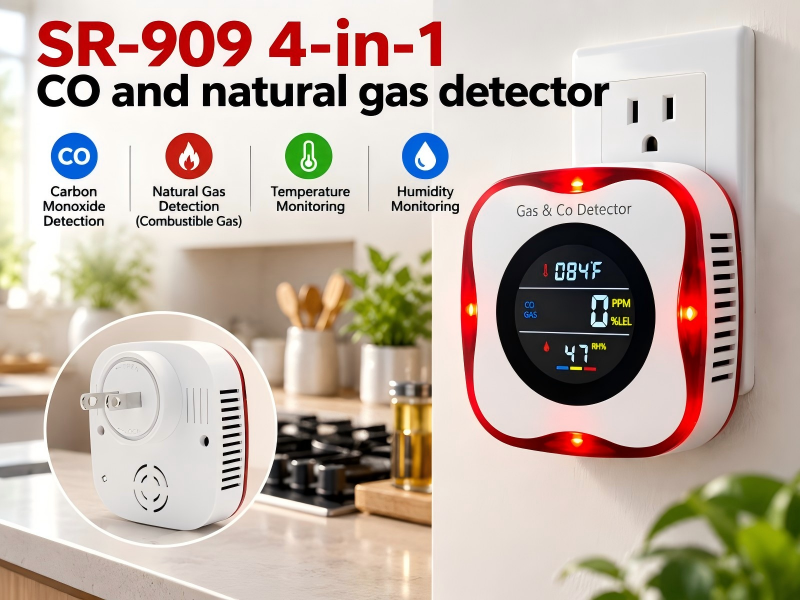
How Should B2B Buyers Evaluate a 4-in-1 Plug-In CO and Natural Gas Detector?
A plug-in CO and natural gas detector is an AC-powered safety alarm that monitors carbon monoxide and methane/natural gas, while providing audible and visual warnings when specified alarm conditions occur. A four-function model may also display ambient temperature and relative humidity. For distributors, importers, and contractors, these features are only the starting point. The SUMRING SR-909 combines gas monitoring, a color digital display, and a direct plug-in housing. This guide explains what its specifications mean, how buyers can evaluate installation suitability, and why verification matters before placing a wholesale order. What Does the SR-909 Actually Monitor? The SR-909 is described as a four-in-one detector with readings for carbon monoxide, natural gas, temperature, and humidity. Its display allows users to view several measurements without switching between separate screens. A plug-in CO and natural gas detector is not necessarily a smoke alarm, an LPG alarm, or an industrial multi-gas instrument. Buyers should match the exact gas type to the site. Natural gas commonly contains methane, whereas LPG applications may require different sensor calibration and positioning. For residential developments, a useful question is whether residents need a simple warning device, a numeric display, or an alarm that interfaces with other building equipment. ......
19
2026-10
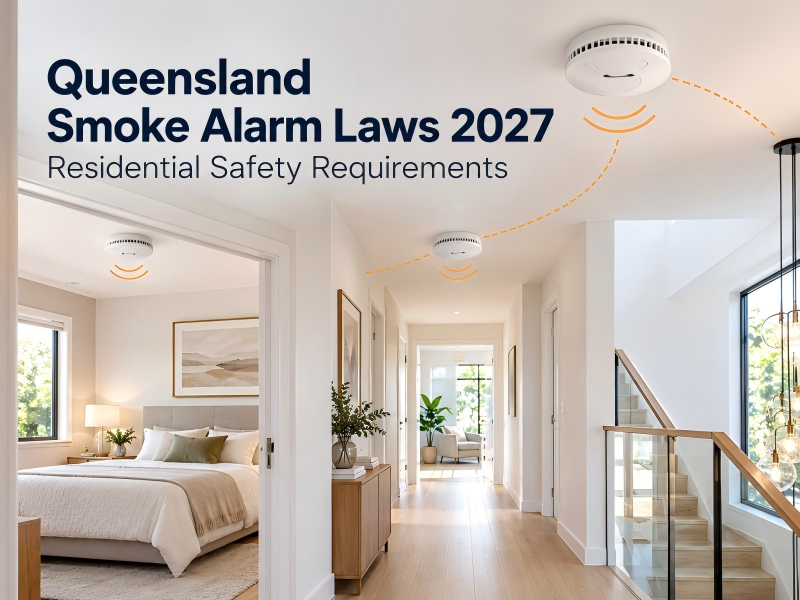
What Should Buyers Know About Queensland Smoke Alarm Laws 2027?
Queensland Smoke Alarm Laws 2027 refers to the final stage of Queensland’s phased residential smoke alarm reforms, requiring the remaining domestic dwellings to have interconnected photoelectric smoke alarms by 1 January 2027. It describes an existing deadline, not a new 2027 law. For distributors, installers and OEM brands, the deadline affects documentation and procurement. Useful alarm features alone cannot prove market suitability. Why Is 1 January 2027 Important? Queensland implemented its smoke alarm reforms in stages. Since 1 January 2017, the updated requirements have applied to new dwellings and substantial renovations. From 1 January 2022, they have also applied to homes being sold or leased. From 1 January 2027, the requirements extend to the remaining domestic dwellings. Consequently, Queensland Smoke Alarm Laws 2027 should not be presented as an entirely new obligation for rental properties. The current deadline matters especially for existing owner-occupied houses, townhouses and units that have not yet been upgraded. Registered caravans and motorhomes have related but distinct requirements. Read the official Queensland Fire Department smoke alarm reforms before preparing product claims or quotations. Which Smoke Alarm Requirements Must Be Verified? Under Queensland Smoke Alarm Laws 2027, prescribed domestic alarms must be photoelectric, comply with AS 3786-2014,......
16
2026-10
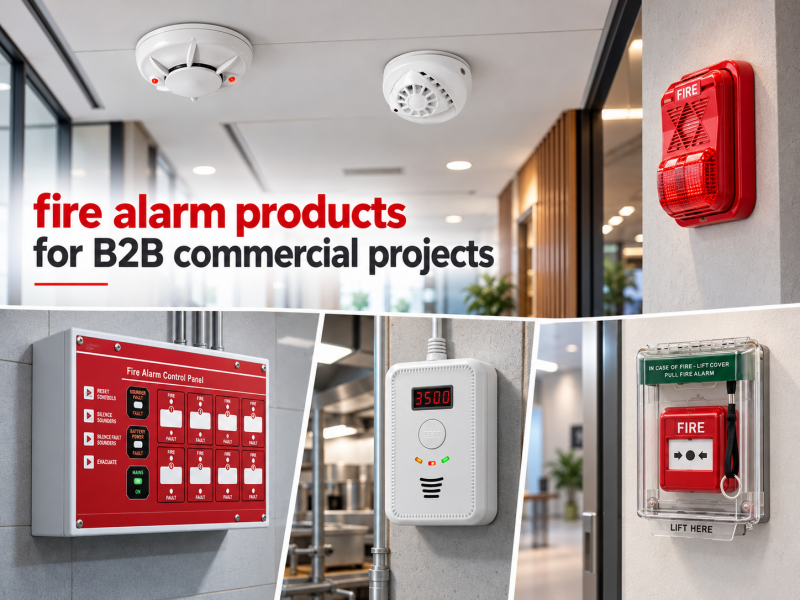
How Should B2B Buyers Choose Fire Alarm Products?
The term fire alarm products refers to the detection devices, control panels, manual activation devices, audible and visual notification equipment, cables, protective enclosures, and maintenance accessories used to support fire detection, alarm communication, and system operation. For distributors, wholesalers, contractors, installers, system integrators, and OEM/ODM buyers, choosing the right equipment requires more than comparing individual product prices. A commercial building may need smoke detectors, heat detectors, manual call points, a fire alarm control panel, sounders, strobes, emergency light,exit light and cables. A warehouse may require beam detectors and high-output notification devices. Outdoor installations may need additional environmental protection. Buying fire alarm products therefore requires three important decisions: What equipment does the project actually need? How should different devices work together? Why do compatibility, certification, installation conditions, and manufacturer capabilities matter? This guide explains the major product categories, technical selection factors, and procurement considerations for international B2B projects. What Products Make Up a Complete Fire Alarm Solution? A complete fire alarm solution is built around several functional layers: detection, control, manual activation, notification, connection, protection, and maintenance. The right fire alarm products should be selected according to each layer’s requirements rather than purchased as independent items. Product Category Primary Function Important......
12
2026-10
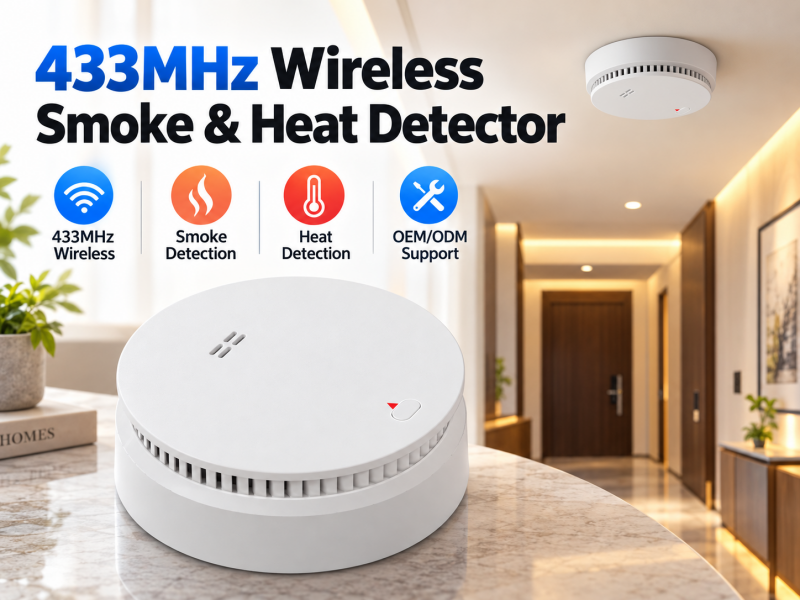
How Should B2B Buyers Evaluate a 433MHz Wireless Smoke & Heat Detector Manufacturer?
A 433MHz Wireless Smoke & Heat Detector is a battery-operated fire alarm device that combines photoelectric smoke sensing, fixed-temperature heat detection, local audible and visual warnings, and a radio-frequency alarm output in a 433MHz configuration. For distributors, installers, contractors, and private-label brands, choosing one requires more than comparing appearance and unit price. Purchase decisions require documented specifications, RF compatibility, compliance evidence, and a production plan—especially when replacing an older model. Which Technical Details Should Buyers Confirm First? The supplied combination photoelectric smoke and heat alarm manual provides a useful starting point. Its specifications describe an optical sensing chamber that detects smoke-related infrared light scattering and a heat sensing element with an alarm temperature of 57°C ± 2.7°C. Specification Manual reference Smoke detection Infrared photoelectric sensing Heat alarm point 57°C ± 2.7°C Wireless output 315MHz or 433MHz variant Power Two 1.5V batteries Sound warning 85dB stated; verify measurement distance Alarm indications Sound and flashing red LED Working temperature -10°C to +55°C Relative humidity Below 95% RH Dimensions Diameter 105 × 43mm Reference detecting area 20m² stated in manual These are manual-reported values, not independent test evidence. Verify the production revision; follow local rules for coverage and mounting. For a 433MHz Wireless......
09
2026-10
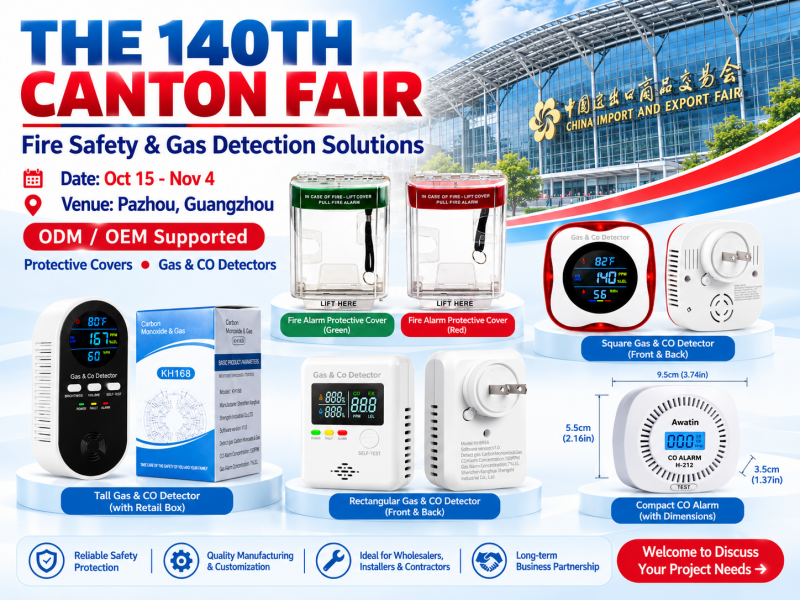
140th Canton Fair 2026: B2B Safety Solutions
The 140th Canton Fair 2026 will open on October 15 and conclude on November 4 at the China Import and Export Fair Complex in Pazhou, Guangzhou, China. SUMRING warmly welcomes global customers, including wholesalers, distributors, installers, contractors, and trading companies, to visit our company in Shenzhen, China. We are currently focusing on two key product categories: emergency stop button protective covers and gas leak detector alarms. Visitors are welcome to explore our manufacturing capabilities and discuss product selection, bulk purchasing, and customized ODM/OEM solutions. For wholesalers, safety equipment distributors, installation contractors, and engineering companies, this international trade event provides an opportunity to evaluate Chinese manufacturers and plan future procurement. When Will the 140th Canton Fair Take Place? The exhibition will be organized into three phases: Phase 1: October 15–19, Advanced Manufacturing Phase 2: October 23–27, Quality Home Life Phase 3: October 31–November 4, Better Life Throughout the 140th Canton Fair 2026, international buyers can explore opportunities for equipment sourcing, private-label manufacturing, and long-term supply partnerships. Emergency Stop Button Protective Covers for Project Applications Protective covers help shield emergency control devices and manual call points from accidental contact, dust, moisture, and everyday impact. SUMRING’s SR-A08 protective cover series features transparent polycarbonate......
30
2026-09
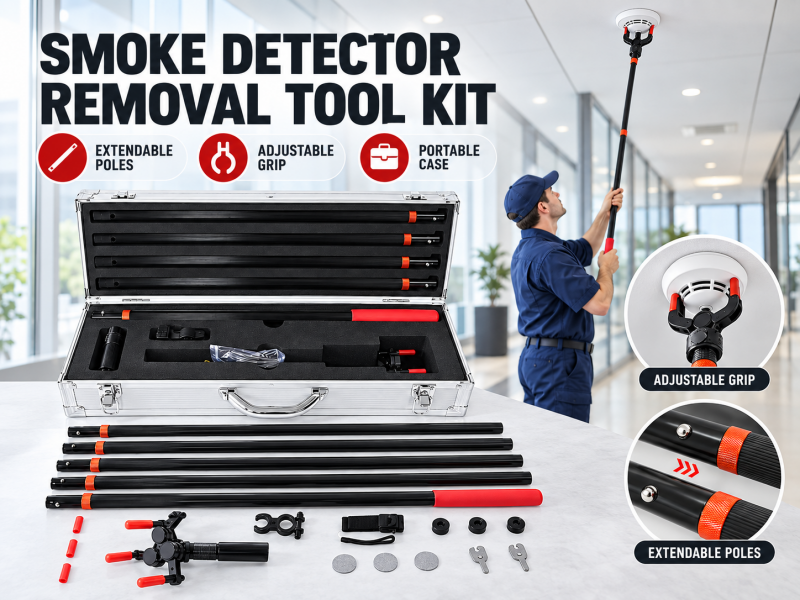
How Should Buyers Choose a Smoke Detector Removal Tool Kit?
A smoke detector removal tool kit is a maintenance accessory set used to grip, rotate, remove, and reinstall compatible ceiling-mounted smoke detectors with an access pole. It supports planned inspection, cleaning, replacement, and commissioning when detectors use a compatible mounting structure and can be safely reached from floor level. For fire alarm contractors, facility maintenance companies, distributors, and OEM buyers, reach is only one consideration. Detector compatibility, grip stability, pole structure, working height, replacement parts, packaging, and sample verification all affect whether the tool can perform reliably in a real project. Why Do Commercial Projects Need a Detector Removal Tool? Smoke detectors are commonly installed on ceilings in offices, hotels, warehouses, schools, hospitals, shopping centers, and industrial facilities. Routine servicing may require technicians to remove multiple detectors across a large building. In suitable locations, a smoke detector removal tool kit can reduce repeated ladder or scaffold setup, shorten routine service time, and reduce disruption to building occupants. It may also help technicians control the detector more steadily when removing it from its base. However, an access-pole tool does not eliminate every working-at-height risk. Stairwells, atriums, obstructed ceilings, unusually high areas, and damaged detectors may still require an approved ladder, platform,......
29
2026-09
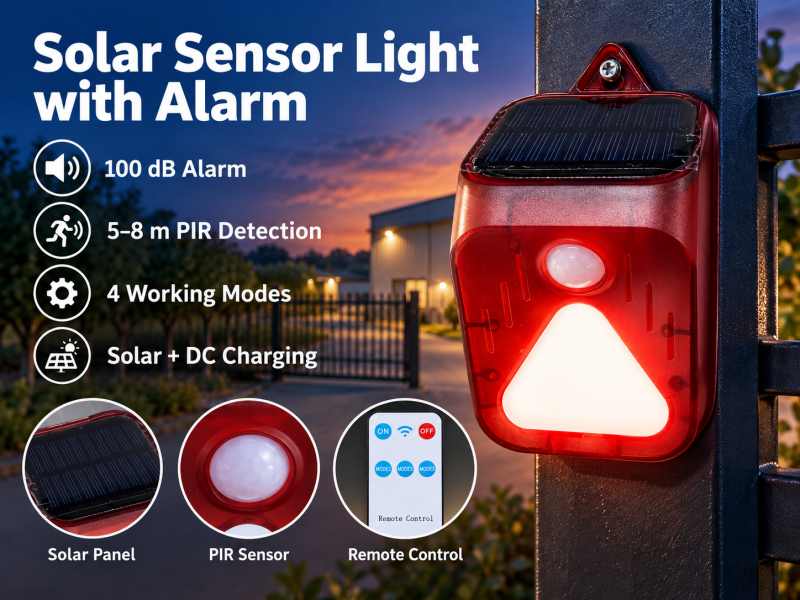
How Should B2B Buyers Choose a Solar Sensor Light with Alarm?
A Solar sensor light with alarm is an outdoor security device that combines solar charging, passive infrared motion detection, a flashing warning light and an audible siren. When the PIR sensor detects movement within its coverage area, the device activates the selected warning mode without requiring permanent mains wiring. For distributors, security installers, agricultural suppliers and private-label buyers, the purchasing decision should not depend only on alarm volume or housing appearance. PIR coverage, charging performance, battery capacity, working modes, mounting position, weather resistance and OEM documentation all affect the product’s performance in a real project. How Does the Solar-Powered Alarm Work? The operating process follows a simple signal path: Sunlight → Solar panel → Rechargeable battery → PIR sensor → Controller → Siren and warning light The 5V, 60mA polycrystalline solar panel charges the internal 3.7V, 1200mAh 18650 lithium battery during daylight. When the product enters its active state, the PIR module monitors the selected area for human movement. Once movement is detected, the Solar sensor light with alarm activates sound, light or both according to the selected operating mode. The supplied information states that the alarm can continue while movement remains within the sensing area and stop approximately 30......
28
2026-09
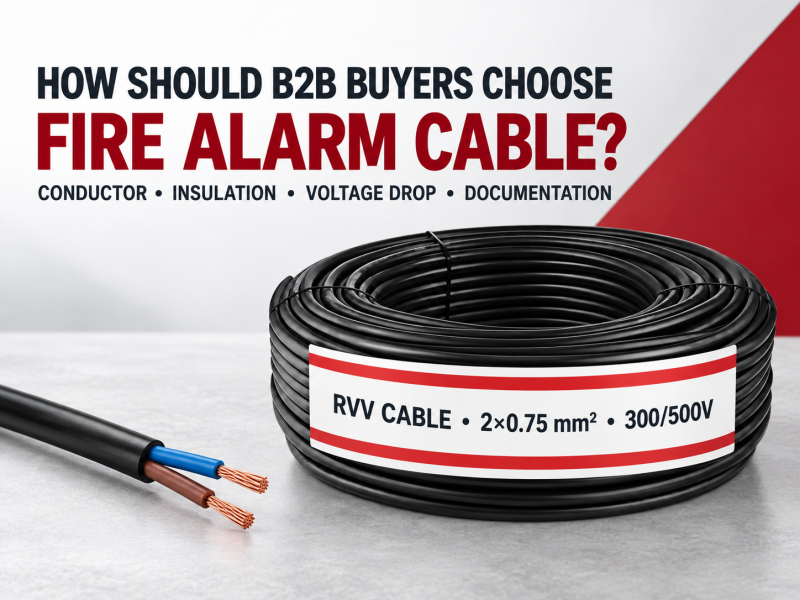
How Should B2B Buyers Choose Fire Alarm Cable?
Fire alarm cable is an insulated conductor assembly used to carry power, alarm signals, control signals, or notification outputs between compatible fire-system components. For B2B buyers, selection requires more than comparing conductor size and price. Voltage drop, insulation, flame performance, installation route, local code, and system approval must be evaluated together. The supplied approval sheet identifies this product as 60227 IEC 53 (RVV) 2×0.75 mm², with two stranded bare-copper conductors, PVC insulation, and a black PVC VW-1 jacket. It references GB/T 5023.5-2008 / IEC 60227-5:2003. This guide explains what B2B buyers should verify before procurement. What Does the 2×0.75 mm² Specification Mean? “2×0.75 mm²” means that the product contains two insulated conductors, each with a nominal cross-sectional area of 0.75 mm². The approval sheet specifies blue and brown cores. Each conductor consists of 24 strands of 0.20 mm bare copper, with a stated bundle diameter of 1.13 mm. Stranded construction can simplify routing and termination in suitable indoor installations. A fire alarm cable intended for continuous movement, outdoor exposure, direct burial, wet locations, plenums, or circuit-survival applications may require a different construction and separate approvals. Key Technical Parameters for B2B Procurement Parameter Specification Parameter Specification Construction 60227 IEC 53 (RVV),......
24
2026-09
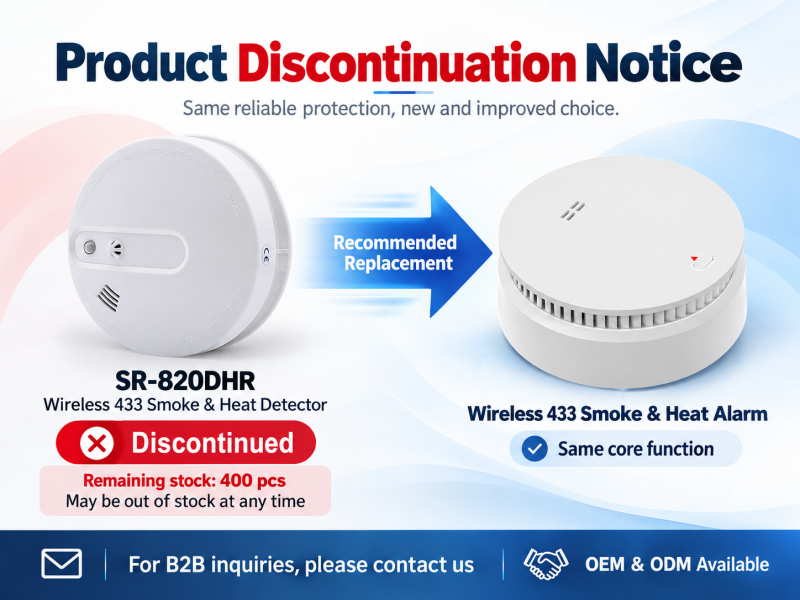
Wireless 433 Smoke & Heat Detector Replacement Notice
SUMRING is issuing a product lifecycle update for B2B distributors, wholesalers, installers, contractors, and trading partners. The SR-820DHR Wireless 433 Smoke & Heat Detector has been discontinued. At present, approximately 400 units remain in stock, and availability may change quickly as existing inventory is allocated. For customers who still require the SR-820DHR for existing orders, replacement projects, or channel inventory, we recommend confirming stock before placing a purchase order. Once the remaining inventory is sold, this model will no longer be available for regular supply. A Replacement Is Available for New Inquiries To support continuity for ongoing customer inquiries, Sumring can now recommend a current wireless 433 smoke & heat detector with the same core application: combined smoke and heat detection with 433 MHz wireless communication. For existing installations, follow our 433MHz smoke and heat detector replacement guide to check the installed host, run a sample pilot, and plan a phased rollout before approving the new model. This replacement provides distributors, installers, project contractors, and trading companies with a practical alternative when the original SR-820DHR is no longer available. For distributors and contractors evaluating replacement options, choosing a new wireless detector requires more than matching the 433MHz frequency. RF protocol......
Featured Fire & Gas Safety Products
View More +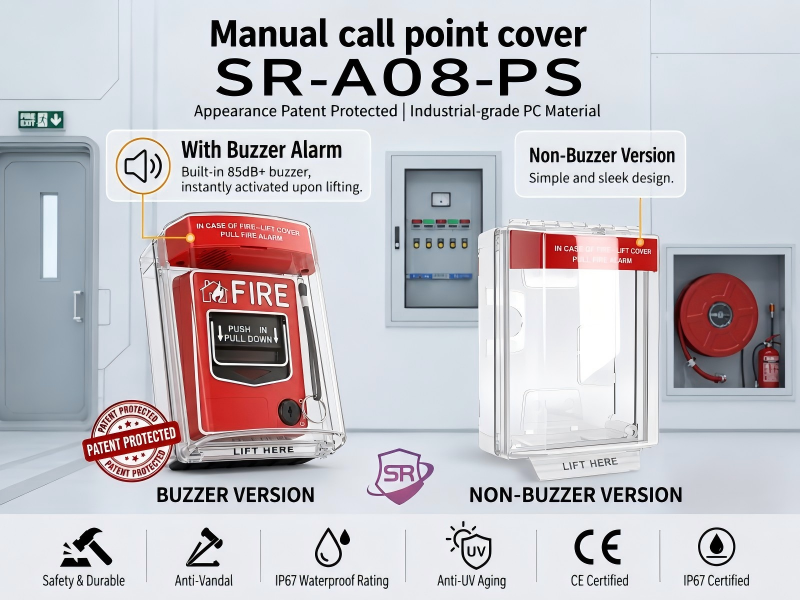
SR-A08-PS IP67 Manual Call Point Cover with Sounder Option
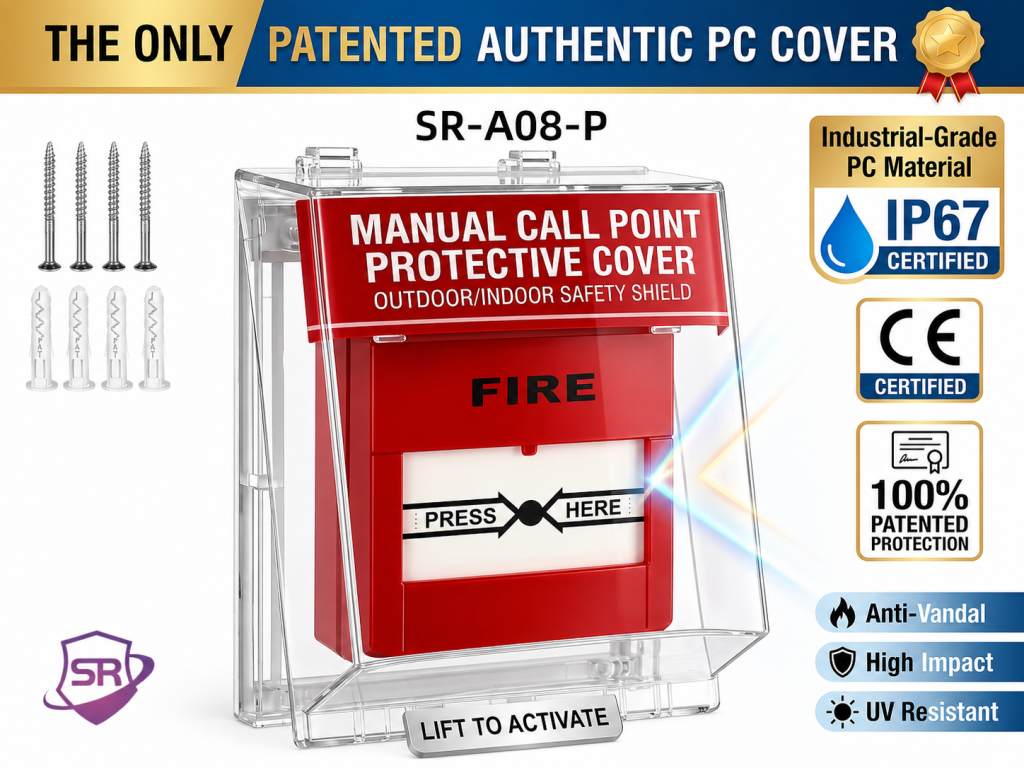
SR-A08-P IP67 Manual Call Point Cover Without Sounder
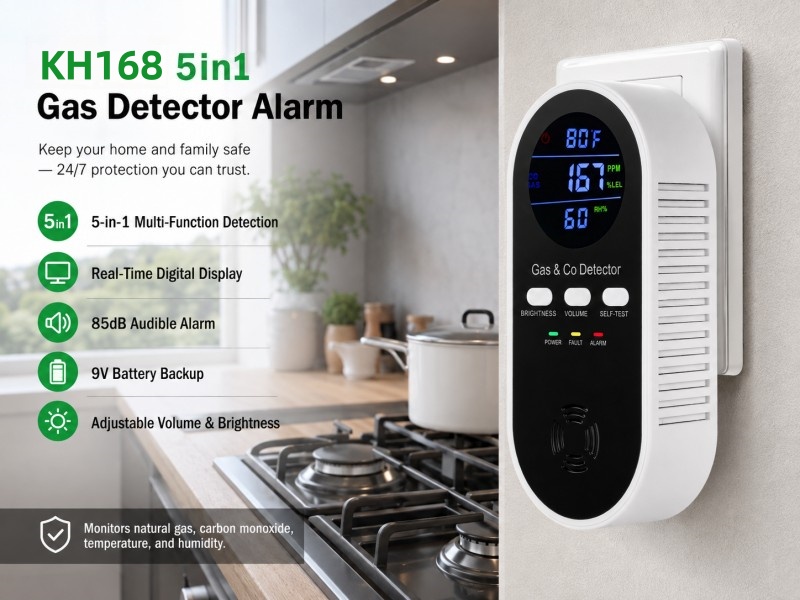
KH168 5 in 1 CO and Gas Detector with 9V Backup
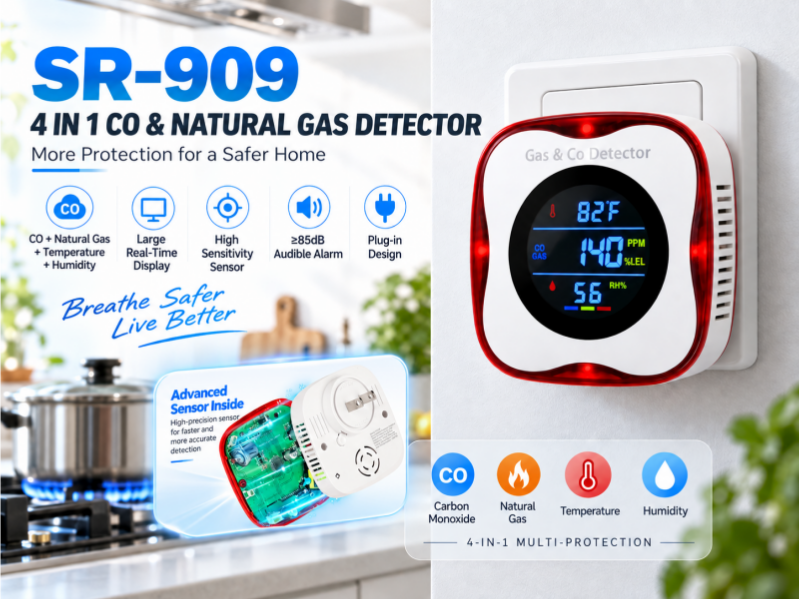
SR-909 4-in-1 Carbon Monoxide & Natural Gas Detector with Large Digital Real-Time Display
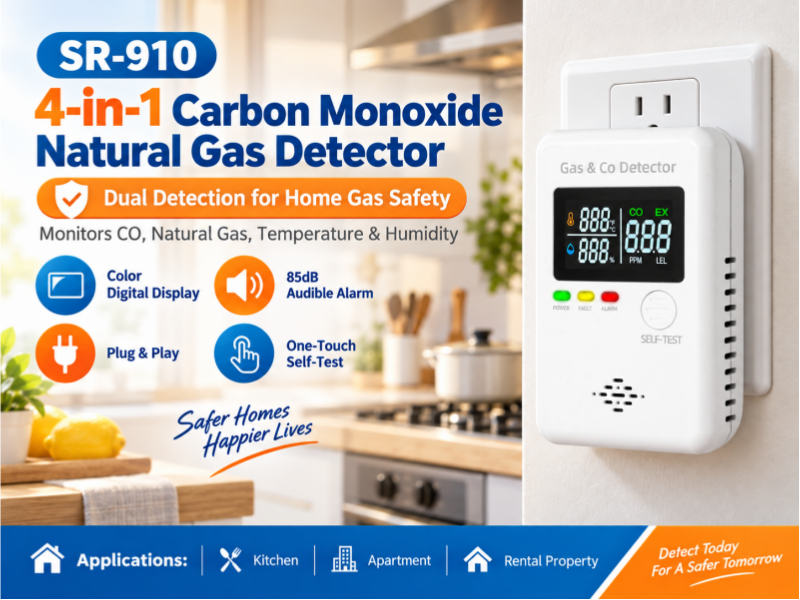
SR-910 CO and Natural Gas Detector with Timed CO Response
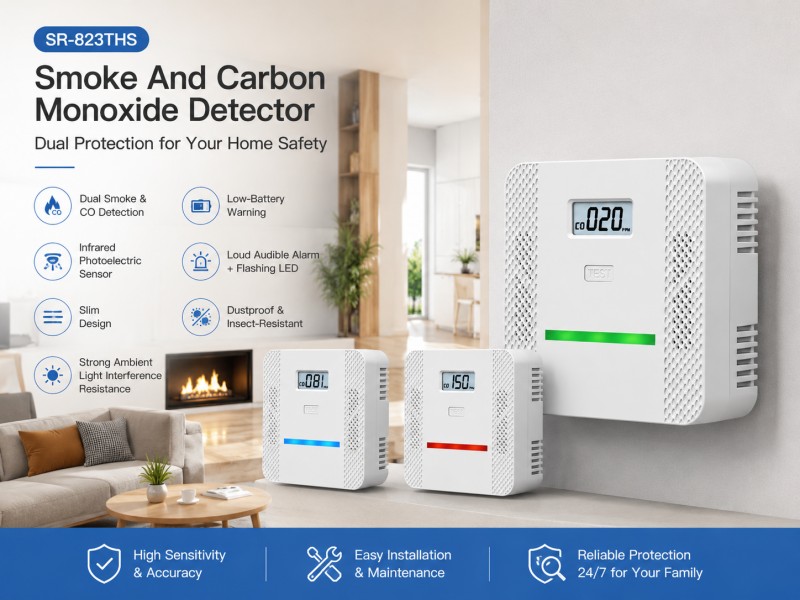
SR-823THS Battery Operated CO and Smoke Detector Fire Alarm Tester
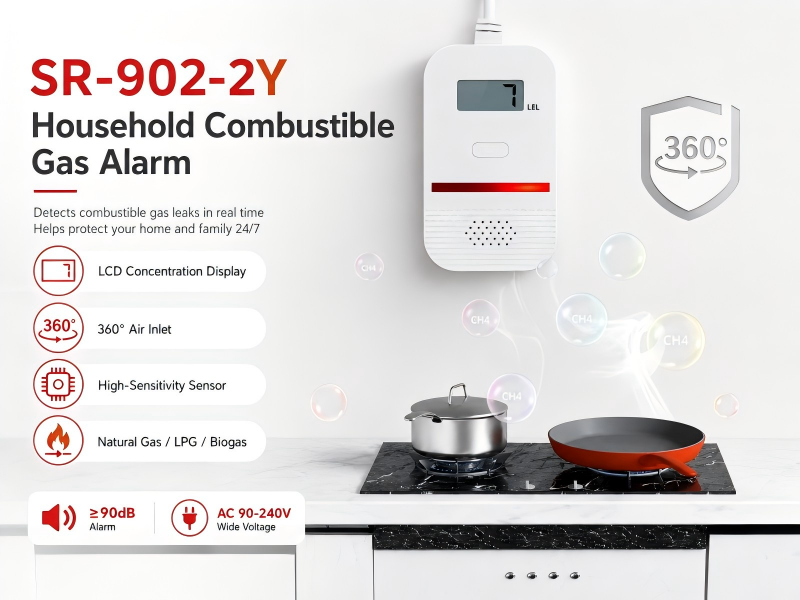
SR-902-2Y Home Safety CH4 LPG Gas Leak Sensor Alarm
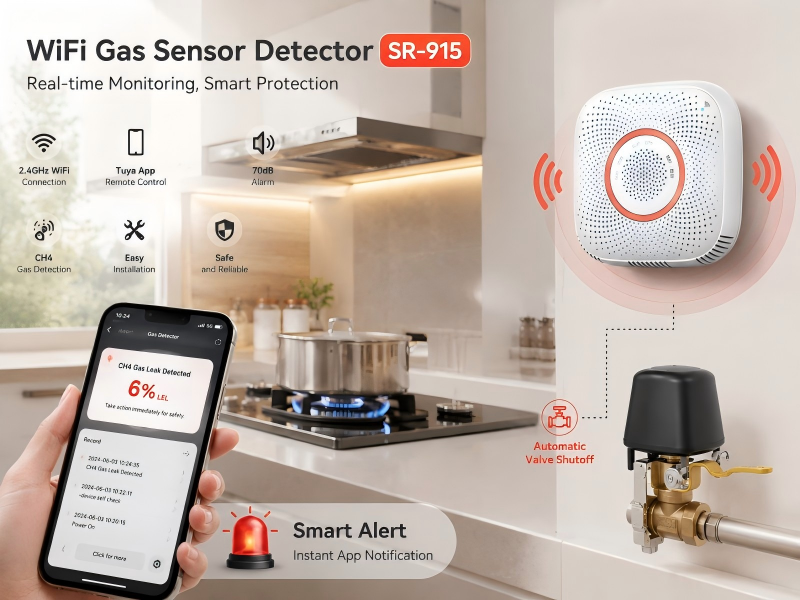
SR-915 WiFi Gas Sensor Detector with Tuya App Alerts
Let's Discuss Your Project
Contact us for suitable solution, and to meet your needs with maximum efficiency!
1. How can I become a SUMRING distributor?
We welcome global partners for fire alarm system distribution.You can apply for:Regional distributor rights,OEM branding cooperation,Project-based supply agreements,Long-term B2B partnership,Contact us to discuss your target market and business plan.
2. Why choose SUMRING fire alarm systems?
Our Key advantages include:Factory-direct fire alarm manufacturer pricing;Fast delivery for urgent engineering projects;Complete fire detection product portfolio;OEM/ODM customization capability;Stable quality control under ISO9001 system;Suitable for global mid-tier fire protection projects.
3. Do you provide technical support for fire alarm systems?
Yes, we provide full technical support including:Fire alarm system installation guidance,Wiring and configuration support,Troubleshooting assistance,Project-based consultation for distributors and contractors.
4. What shipping methods are available for fire alarm products?
We offer global logistics solutions:Sea freight (main export via Shenzhen / Hong Kong ports),Air freight,Express delivery (DHL, FedEx, UPS, TNT),China-Europe Railway Express (for EU markets).