

ODM
09
2026-11
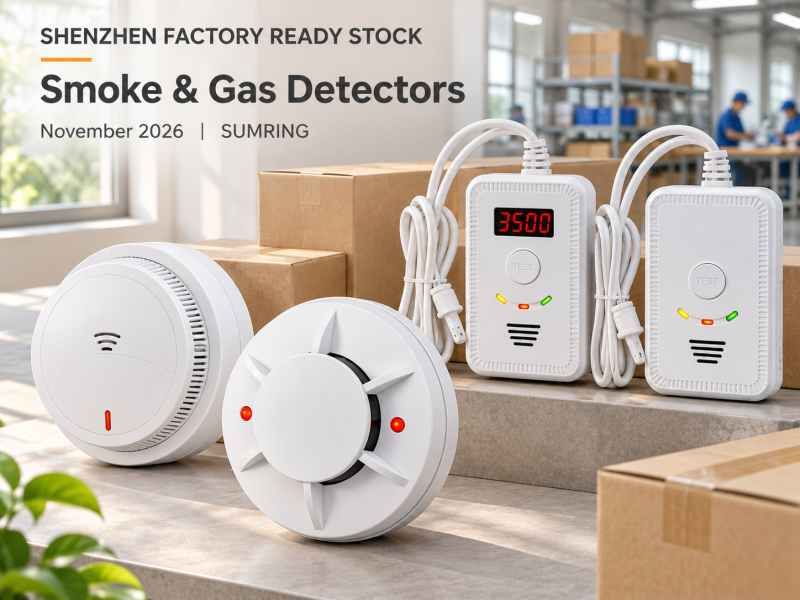
What Smoke and Gas Detectors Are in Stock for November 2026?
What Smoke and Gas Detectors Are in Stock at SUMRING’s Shenzhen Factory? Smoke and gas detectors in stock are finished units listed in a manufacturer’s available inventory at a specific time, rather than products shown only in a catalog. For overseas distributors and project buyers, an inventory snapshot is a useful starting point for checking model availability, electrical configurations, and the next purchasing step. SUMRING’s November 2026 Shenzhen factory inventory lists 2,368 units across 10 configurations and seven model numbers. The stock covers standalone smoke detectors, four-wire smoke detectors, combination CO and gas alarms, and combustible gas detectors. This is a dated factory inventory record, not a promise of immediate dispatch or availability in an overseas warehouse. What Is Available in the November Factory Inventory? The following smoke and gas detectors in stock were listed in SUMRING’s November 2026 factory report. Model Product / configuration Stock (pcs) SR-803-5 Standalone smoke detector 789 SR-918DSY Combination gas detector, EU plug 263 SR-805-4 Four-wire smoke detector 225 SR-918NC DC combustible gas detector, no display 211 SR-918NS Combustible gas detector, EU plug 197 SR-918NS Combustible gas detector, US plug 165 SR-802-4 Four-wire smoke detector – Final stock, no replenishment 159 SR-918NV Combustible gas detector,......
06
2026-11
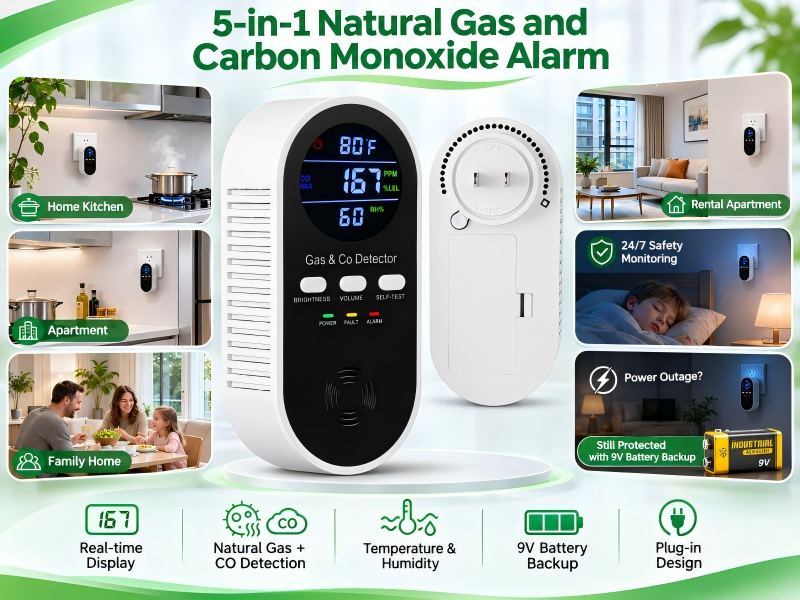
How Can Buyers Verify a 5-in-1 Natural Gas and Carbon Monoxide Alarm During Power Outages?
A 5-in-1 Natural Gas and Carbon Monoxide Alarm is a plug-in safety device that combines carbon monoxide (CO) monitoring, combustible-gas monitoring, temperature display, humidity display, and audible/visual warnings. It does not measure five different gases. For importers and contractors, the purchasing priority is whether monitoring and backup-power claims suit the intended installation and have supporting evidence. What Are the Five Functions—and Which Ones Trigger an Alarm? The 5-in-1 Natural Gas and Carbon Monoxide Alarm presents two gas measurements on a digital screen, alongside ambient temperature and relative humidity. Local sound and light signals make up the fifth advertised function. Its front panel has self-test, brightness, and volume controls plus three status indicators. This distinction matters in wholesale listings. The manual specifies no separate temperature or humidity alarm thresholds. Similarly, a natural-gas application must not be advertised as universal detection of propane, LPG, or every combustible gas without gas-specific documentation. Can the Backup Battery Support Monitoring During an Outage? Unlike an AC-only device, the 5-in-1 Natural Gas and Carbon Monoxide Alarm includes a compartment for a 9V alkaline backup battery. It normally uses AC 110–220V. The manual claims backup operation for more than four hours during an outage. The promotional image......
04
2026-11
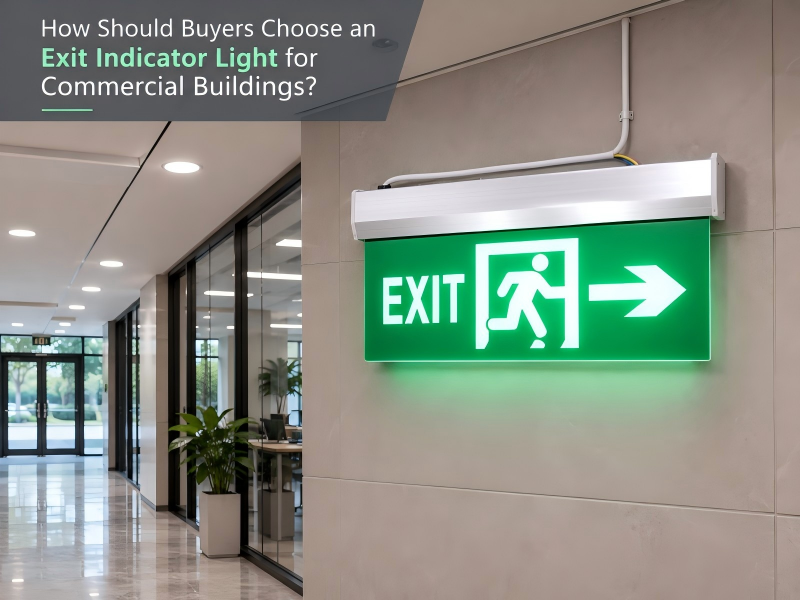
How Should Buyers Choose an Exit Indicator Light for Commercial Buildings?
How Should Buyers Choose an Exit Indicator Light for Commercial Buildings? An exit indicator light is an illuminated sign designed to identify a designated exit or show the direction of escape. When fitted with a suitable battery-backup system, it can continue displaying that message during a power interruption. Its primary job is wayfinding; it does not replace emergency lighting that illuminates corridors, stairs, or obstacles. For importers, distributors, contractors, and system integrators, buying an exit indicator light requires more than choosing a green sign. Sign visibility, emergency duration, operating voltage, environmental protection, and destination-market rules determine whether a product is appropriate. Why Does Exit Sign Visibility Matter More Than Appearance? People unfamiliar with a building should be able to recognize the designated exit without guessing. An exit indicator light should be placed where the approved evacuation design requires it, with a clear sightline from approaching corridors and decision points. For hotels, shopping centers, offices, schools, and warehouses, consider viewing distance, mounting height, obstructions, background lighting, and language or pictogram requirements. Different countries accept different sign formats. A green EXIT display shown in a catalog is not automatically acceptable for every jurisdiction. A sign identifies the route; other emergency lighting equipment......
02
2026-11
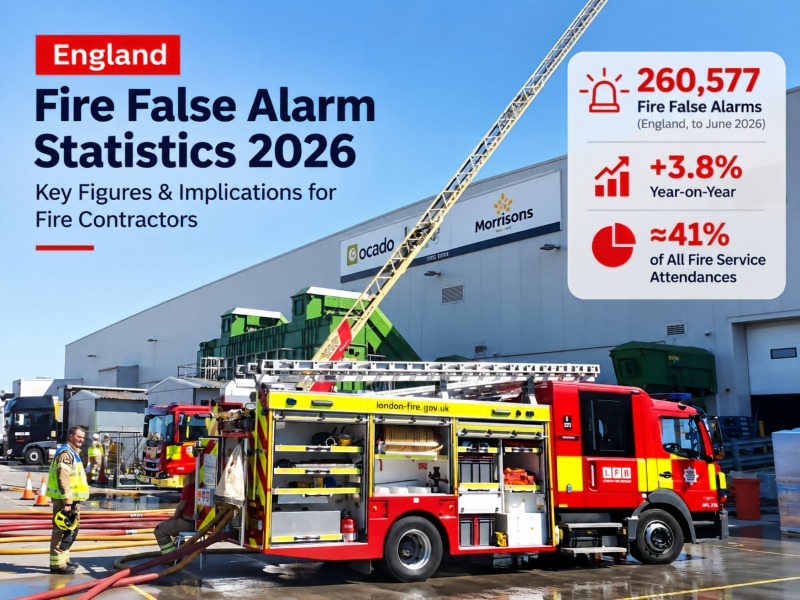
Why Did Fire False Alarms in England Rise in 2026?
Fire false alarms in England are incidents in which fire and rescue services attend a suspected fire but find that no fire exists or existed. New government figures show that crews attended 260,577 such incidents in the 12 months ending June 2026, up 3.8% from the previous year. For contractors and facility managers, the question is which risks maintenance, design and protective accessories can address. The statistics were released on 28 October 2026 by the UK Ministry of Housing, Communities and Local Government. They cover England only and count fire service attendances, not every alarm activation. What Do the Latest Government Figures Show? The official report records 638,454 incidents attended by fire and rescue services in the year ending June 2026. Of these, 158,659 were fires, while fire false alarms represented about 41% of all attendances. The breakdown for fire false alarms in England is: 260,577 total fire false alarms, compared with 251,039 a year earlier (+3.8%). 178,003 due to apparatus, compared with 172,433 (+3.2%). 77,028 due to good intent, compared with 72,803 (+5.8%). 5,546 malicious reports, compared with 5,803 (−4.4%). These national figures do not identify individual device types or building sectors. What Does “Due to Apparatus” Actually Mean?......
30
2026-10
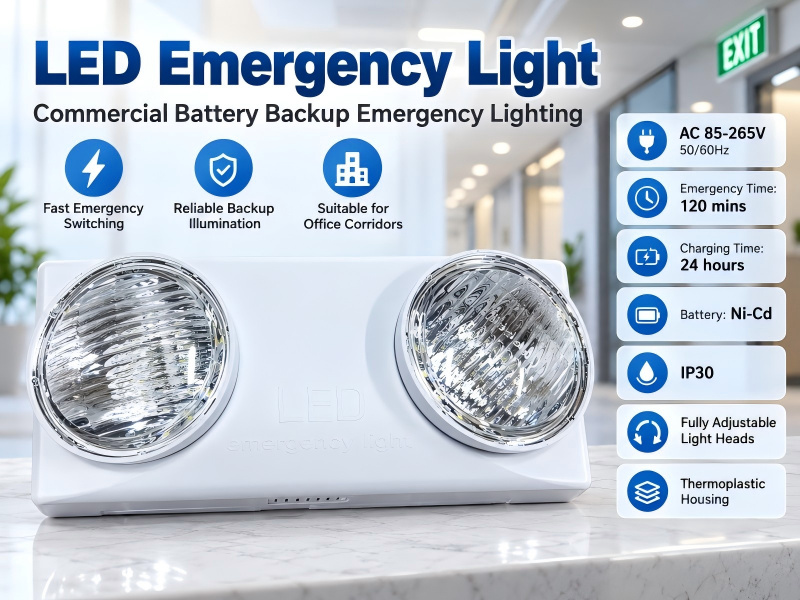
How Does an LED Emergency Light Work During a Power Failure?
How Does an LED Emergency Light Work During a Power Failure? An led emergency light is a safety lighting device designed to provide temporary illumination when normal electrical power becomes unavailable. It typically uses a rechargeable battery, charging circuit, automatic changeover function, and LED light sources to support visibility along designated evacuation routes. For commercial buildings, warehouses, hotels, offices, and public facilities, reliable backup illumination helps occupants recognize obstacles and navigate toward exits during a power interruption. This guide explains how battery-powered lighting works, what technical specifications matter, and how B2B buyers can evaluate products before placing bulk orders. How Does an LED Emergency Light Work? A typical led emergency light operates through three basic stages: normal power, battery charging, and backup illumination. 1. Normal AC Power Operation When utility power is available, the unit receives electricity through its AC input. An internal charging circuit maintains the rechargeable battery according to the product’s charging design. Some units keep their LED lamps off during normal operation, while others support maintained illumination. The operating mode depends on the model. 2. Automatic Power Failure Detection When normal power is interrupted, the control circuit detects the change and switches the lighting supply to the internal......
28
2026-10
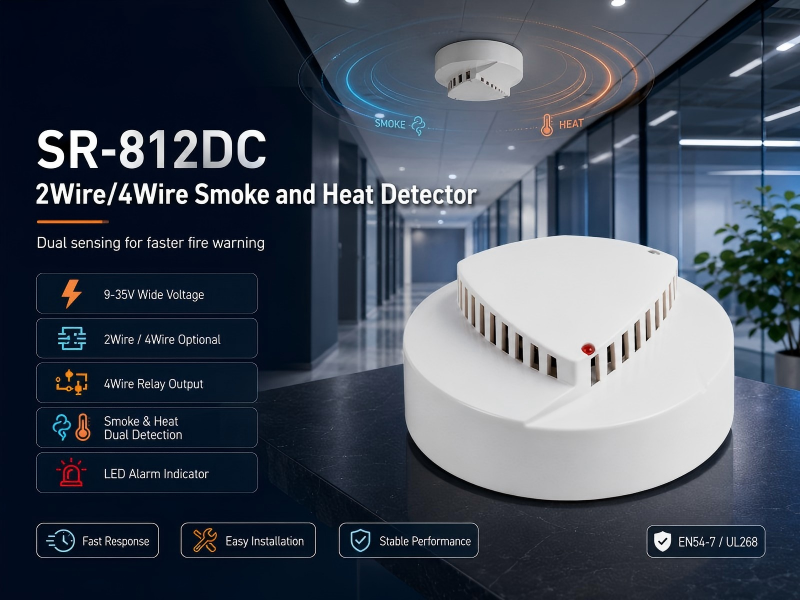
How Should B2B Buyers Evaluate the SR-812DC Photoelectric Smoke and Heat Detector?
A photoelectric smoke and heat detector is a fire detection device that senses smoke through an optical chamber and monitors temperature using a heat-sensing element. Unlike a stand-alone household smoke alarm, a conventional detector is intended to communicate with a compatible fire alarm control system. The SUMRING SR-812DC combines infrared photoelectric smoke detection with a specified 57°C heat alarm point and is described in both 2-wire and 4-wire versions. For distributors, contractors, and system integrators, selection means confirming the wiring version, zone behavior, current demand, circuit supervision, and destination-market evidence. These seven checks translate the SR-812DC sheet into a purchasing review. 1. How Does the Smoke-and-Heat Sensing Design Work? The SR-812DC photoelectric smoke and heat detector uses an infrared optical chamber. Under normal conditions, little light reaches the receiving diode. When smoke enters the chamber, particles scatter infrared light toward the receiver; the electronic circuit processes this change and can produce an alarm signal. The product sheet also describes a built-in heat detector with a 57°C alarm temperature. The manual does not confirm rate-of-rise detection or explain how the two channels combine alarm signals. Request engineering confirmation before making such claims in a tender. 2. What Should Buyers Check on......
26
2026-10
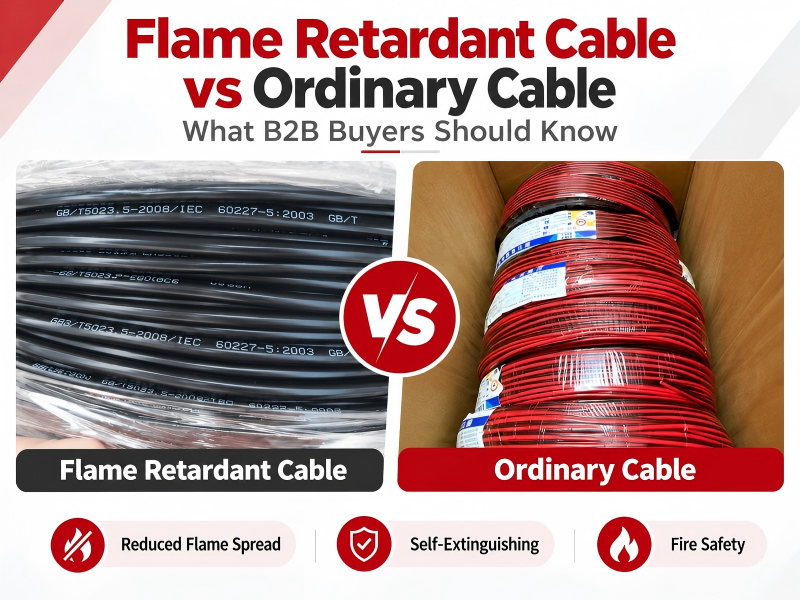
What Is a Flame Retardant Cable and Why Does It Matter?
A Flame Retardant Cable is an electrical cable designed to limit flame propagation under specified test conditions. Its insulation or sheath can still ignite, produce smoke, and suffer damage. The critical distinction is not whether fire can touch the cable, but whether combustion is likely to continue spreading after the ignition source is removed. For B2B distributors, fire alarm contractors, system integrators, and project buyers, this difference matters when specifying wiring for buildings, equipment, and fire-safety systems. What Is the Difference Between Flame Retardant Cable and Ordinary Cable? An ordinary cable and a Flame Retardant Cable may look similar, yet their insulation materials and verified fire performance can differ. Neither jacket color nor cable thickness proves its classification. The first reference photo shows red-and-black ordinary insulated wire supplied in coils. The second shows black-jacketed cable with printed markings. These photos illustrate different products; they do not establish either product’s fire-test result. Under certain conditions, an ordinary non-flame-retardant cable may keep burning or allow flames to advance along its polymer covering after the external heat source disappears. A suitably tested flame-retardant product is designed to reduce that propagation. Actual behavior depends on the cable construction, heat exposure, arrangement, and installation environment.......
23
2026-10
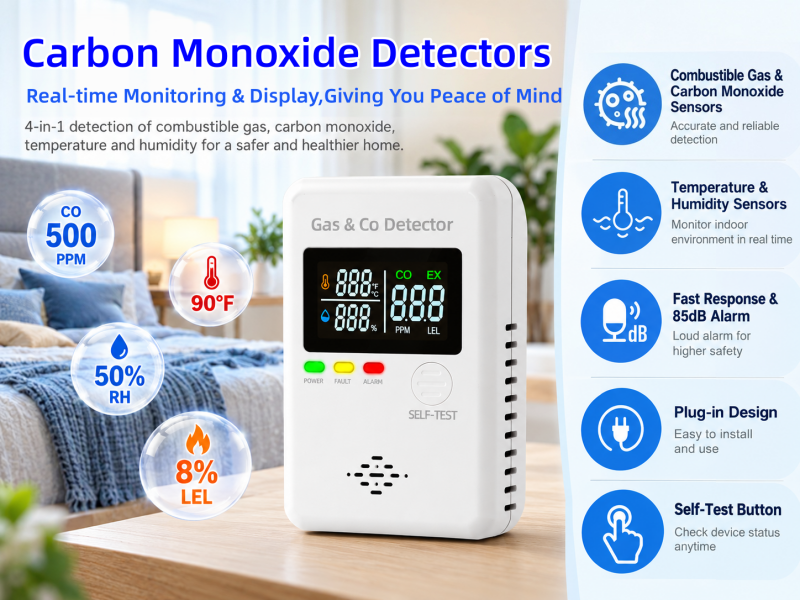
How Can B2B Buyers Evaluate a 4-in-1 CO and Natural Gas Detector?
A 4-in-1 CO and Natural Gas Detector is an indoor safety device that monitors carbon monoxide (CO), methane-based natural gas, ambient temperature, and relative humidity in one unit. Its two gas-monitoring functions address different hazards; temperature and humidity readings provide additional environmental information rather than replacing a dedicated fire or environmental-control system. For importers, distributors, and OEM brands, selection starts with verifiable performance, not display icons. A 4-in-1 CO and Natural Gas Detector such as SUMRING SR-910 provides seven practical checks for a sound purchasing decision. 1. What Exactly Does the Detector Monitor? A 4-in-1 CO and Natural Gas Detector combines four measurements, but that does not necessarily mean four independent hazard alarms. CO can accumulate when fuel-burning equipment operates improperly, while methane can escape from natural gas connections or appliances. The SR-910 is specified to issue audible warnings for these gas hazards. Its display also presents temperature and humidity readings, useful when buyers want a compact visual overview of an indoor environment. Before advertising additional temperature or humidity alarms, request specific evidence: the supplied manual does not define separate warning thresholds for either environmental measurement. For product catalogues, describe the device as a dual-gas alarm with temperature and humidity......
21
2026-10
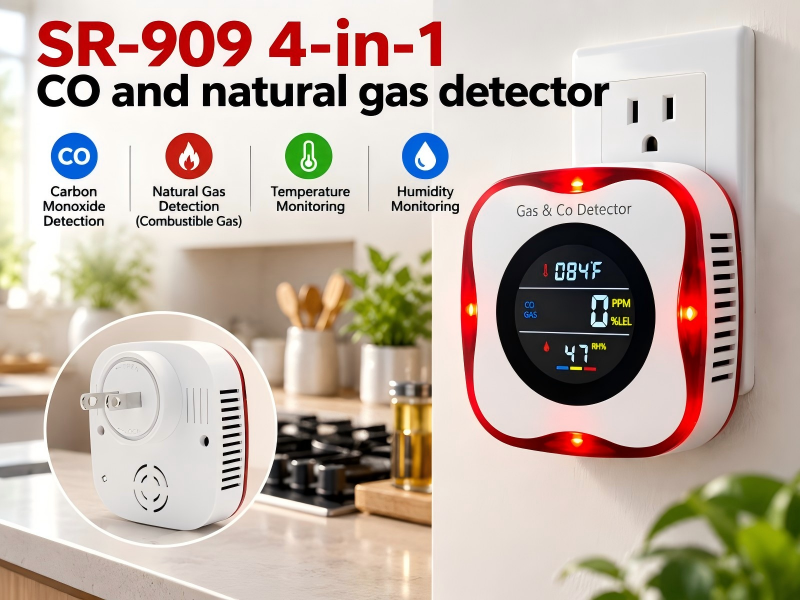
How Should B2B Buyers Evaluate a 4-in-1 Plug-In CO and Natural Gas Detector?
A plug-in CO and natural gas detector is an AC-powered safety alarm that monitors carbon monoxide and methane/natural gas, while providing audible and visual warnings when specified alarm conditions occur. A four-function model may also display ambient temperature and relative humidity. For distributors, importers, and contractors, these features are only the starting point. The SUMRING SR-909 combines gas monitoring, a color digital display, and a direct plug-in housing. This guide explains what its specifications mean, how buyers can evaluate installation suitability, and why verification matters before placing a wholesale order. What Does the SR-909 Actually Monitor? The SR-909 is described as a four-in-one detector with readings for carbon monoxide, natural gas, temperature, and humidity. Its display allows users to view several measurements without switching between separate screens. A plug-in CO and natural gas detector is not necessarily a smoke alarm, an LPG alarm, or an industrial multi-gas instrument. Buyers should match the exact gas type to the site. Natural gas commonly contains methane, whereas LPG applications may require different sensor calibration and positioning. For residential developments, a useful question is whether residents need a simple warning device, a numeric display, or an alarm that interfaces with other building equipment. ......
19
2026-10
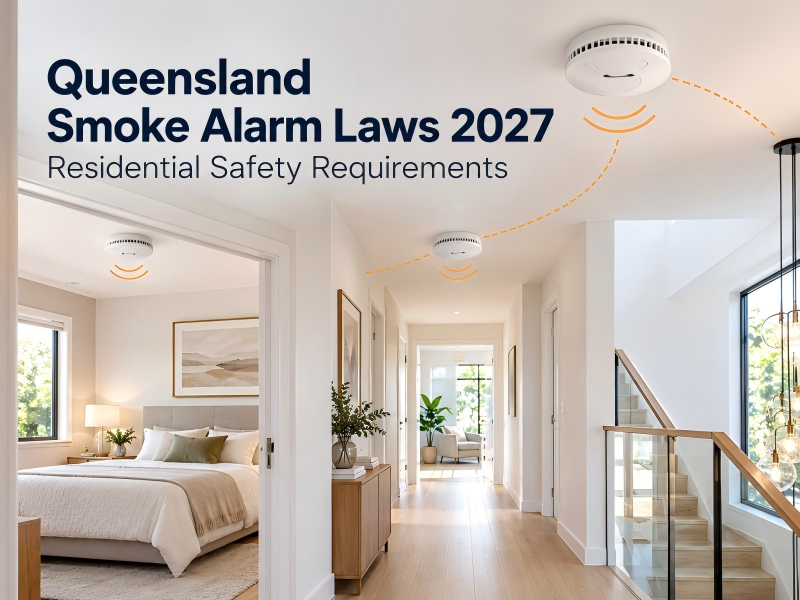
What Should Buyers Know About Queensland Smoke Alarm Laws 2027?
Queensland Smoke Alarm Laws 2027 refers to the final stage of Queensland’s phased residential smoke alarm reforms, requiring the remaining domestic dwellings to have interconnected photoelectric smoke alarms by 1 January 2027. It describes an existing deadline, not a new 2027 law. For distributors, installers and OEM brands, the deadline affects documentation and procurement. Useful alarm features alone cannot prove market suitability. Why Is 1 January 2027 Important? Queensland implemented its smoke alarm reforms in stages. Since 1 January 2017, the updated requirements have applied to new dwellings and substantial renovations. From 1 January 2022, they have also applied to homes being sold or leased. From 1 January 2027, the requirements extend to the remaining domestic dwellings. Consequently, Queensland Smoke Alarm Laws 2027 should not be presented as an entirely new obligation for rental properties. The current deadline matters especially for existing owner-occupied houses, townhouses and units that have not yet been upgraded. Registered caravans and motorhomes have related but distinct requirements. Read the official Queensland Fire Department smoke alarm reforms before preparing product claims or quotations. Which Smoke Alarm Requirements Must Be Verified? Under Queensland Smoke Alarm Laws 2027, prescribed domestic alarms must be photoelectric, comply with AS 3786-2014,......
16
2026-10
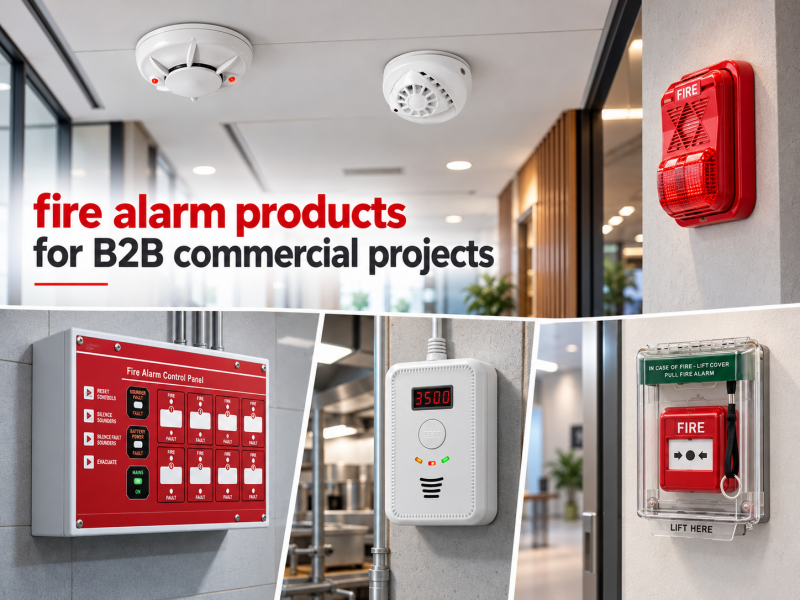
How Should B2B Buyers Choose Fire Alarm Products?
The term fire alarm products refers to the detection devices, control panels, manual activation devices, audible and visual notification equipment, cables, protective enclosures, and maintenance accessories used to support fire detection, alarm communication, and system operation. For distributors, wholesalers, contractors, installers, system integrators, and OEM/ODM buyers, choosing the right equipment requires more than comparing individual product prices. A commercial building may need smoke detectors, heat detectors, manual call points, a fire alarm control panel, sounders, strobes, emergency light,exit light and cables. A warehouse may require beam detectors and high-output notification devices. Outdoor installations may need additional environmental protection. Buying fire alarm products therefore requires three important decisions: What equipment does the project actually need? How should different devices work together? Why do compatibility, certification, installation conditions, and manufacturer capabilities matter? This guide explains the major product categories, technical selection factors, and procurement considerations for international B2B projects. What Products Make Up a Complete Fire Alarm Solution? A complete fire alarm solution is built around several functional layers: detection, control, manual activation, notification, connection, protection, and maintenance. The right fire alarm products should be selected according to each layer’s requirements rather than purchased as independent items. Product Category Primary Function Important......
12
2026-10
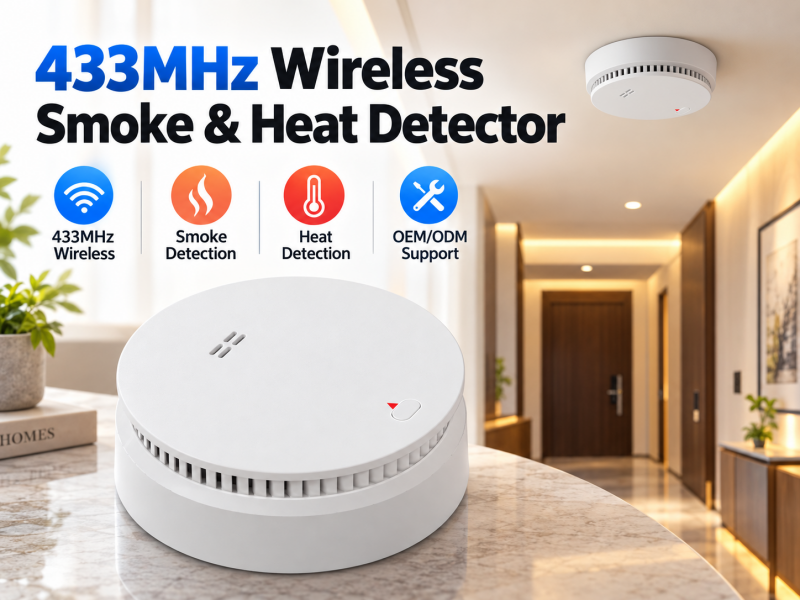
How Should B2B Buyers Evaluate a 433MHz Wireless Smoke & Heat Detector Manufacturer?
A 433MHz Wireless Smoke & Heat Detector is a battery-operated fire alarm device that combines photoelectric smoke sensing, fixed-temperature heat detection, local audible and visual warnings, and a radio-frequency alarm output in a 433MHz configuration. For distributors, installers, contractors, and private-label brands, choosing one requires more than comparing appearance and unit price. Purchase decisions require documented specifications, RF compatibility, compliance evidence, and a production plan—especially when replacing an older model. Which Technical Details Should Buyers Confirm First? The supplied combination photoelectric smoke and heat alarm manual provides a useful starting point. Its specifications describe an optical sensing chamber that detects smoke-related infrared light scattering and a heat sensing element with an alarm temperature of 57°C ± 2.7°C. Specification Manual reference Smoke detection Infrared photoelectric sensing Heat alarm point 57°C ± 2.7°C Wireless output 315MHz or 433MHz variant Power Two 1.5V batteries Sound warning 85dB stated; verify measurement distance Alarm indications Sound and flashing red LED Working temperature -10°C to +55°C Relative humidity Below 95% RH Dimensions Diameter 105 × 43mm Reference detecting area 20m² stated in manual These are manual-reported values, not independent test evidence. Verify the production revision; follow local rules for coverage and mounting. For a 433MHz Wireless......
Let's Discuss Your Project
Contact us for suitable solution, and to meet your needs with maximum efficiency!
1. How can I become a SUMRING distributor?
We welcome global partners for fire alarm system distribution.You can apply for:Regional distributor rights,OEM branding cooperation,Project-based supply agreements,Long-term B2B partnership,Contact us to discuss your target market and business plan.
2. Why choose SUMRING fire alarm systems?
Our Key advantages include:Factory-direct fire alarm manufacturer pricing;Fast delivery for urgent engineering projects;Complete fire detection product portfolio;OEM/ODM customization capability;Stable quality control under ISO9001 system;Suitable for global mid-tier fire protection projects.
3. Do you provide technical support for fire alarm systems?
Yes, we provide full technical support including:Fire alarm system installation guidance,Wiring and configuration support,Troubleshooting assistance,Project-based consultation for distributors and contractors.
4. What shipping methods are available for fire alarm products?
We offer global logistics solutions:Sea freight (main export via Shenzhen / Hong Kong ports),Air freight,Express delivery (DHL, FedEx, UPS, TNT),China-Europe Railway Express (for EU markets).