

PRODUCTS
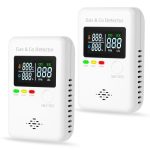
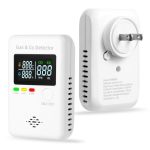
SR-910 CO and Natural Gas Detector with Timed CO Response


SR-910 CO and Natural Gas Detector with timed CO response, 5% LEL natural gas warning, AC 110–220V power and OEM options.
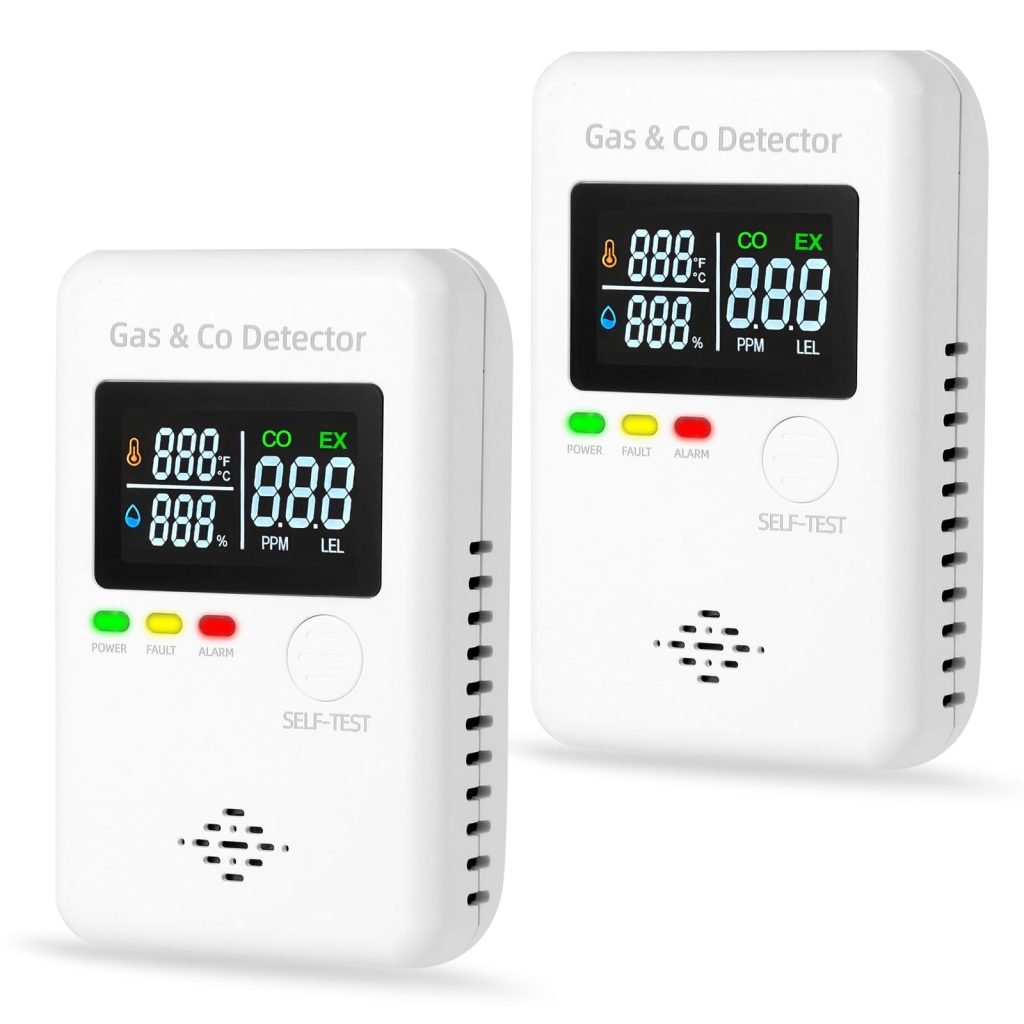
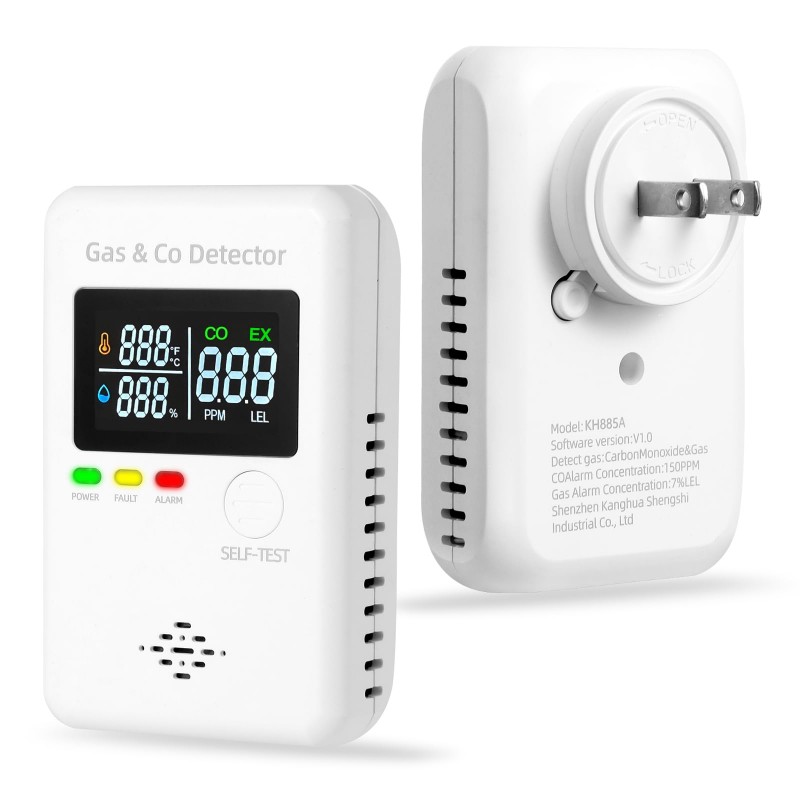
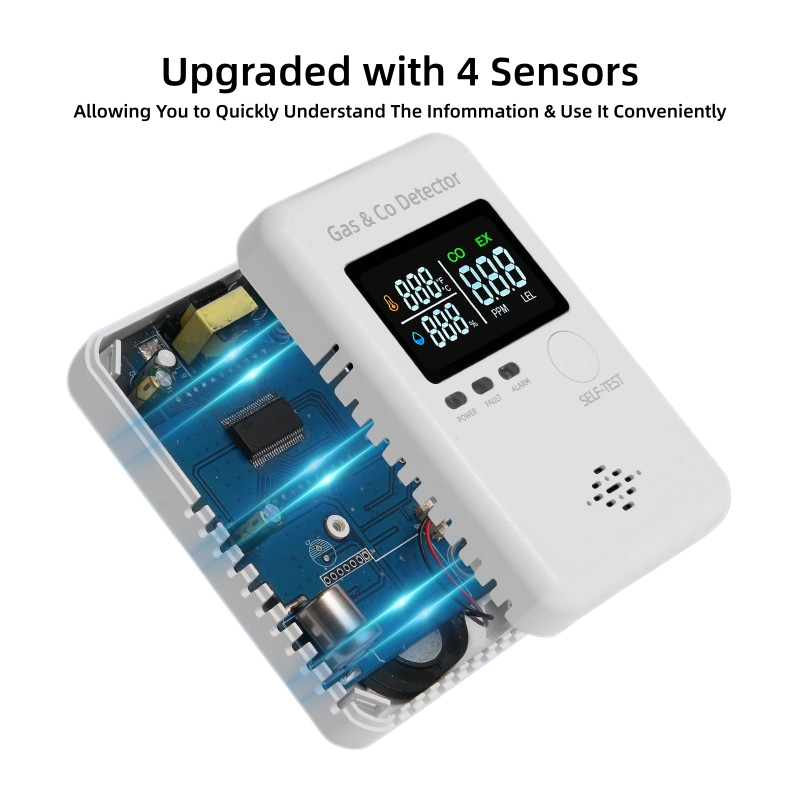
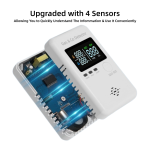
The SR-910 CO and Natural Gas Detector is a 4-in-1 indoor gas safety alarm developed by SUMRING. It combines carbon monoxide detection, natural gas monitoring, temperature and humidity functions in one compact device.
Unlike simple gas alarms, the SR-910 uses different CO alarm response times according to gas concentration. Its published specifications include response conditions at 50 ppm, 100 ppm and 200 ppm. This helps buyers understand how the alarm responds to different CO exposure levels.
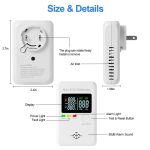
The SR-910 CO and Natural Gas Detector operates on AC 110–220V power. It features an audible alarm of at least 85 dB, a digital display and a green power indicator. It is designed for indoor applications where both CO and methane risks need to be considered.
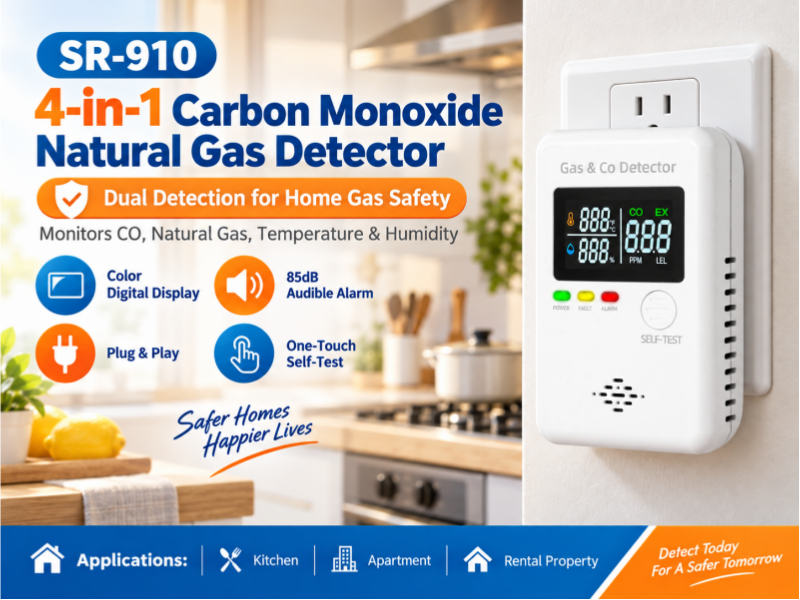
Key Features of the SR-910 CO and Natural Gas Detector
- 4-in-1 Monitoring: Combines CO, natural gas, temperature and humidity functions in one device.
- Time-Based CO Alarm: Uses different response periods at 50, 100 and 200 ppm CO concentrations.
- Natural Gas Warning: Features a specified methane/natural gas alarm threshold of 5% LEL.
- Wide AC Input: Supports AC 110–220V power for different electrical markets.
- Audible Warning: Produces an alarm sound level of at least 85 dB.
- Power Status Indicator: Includes a green LED that remains on during normal powered operation.
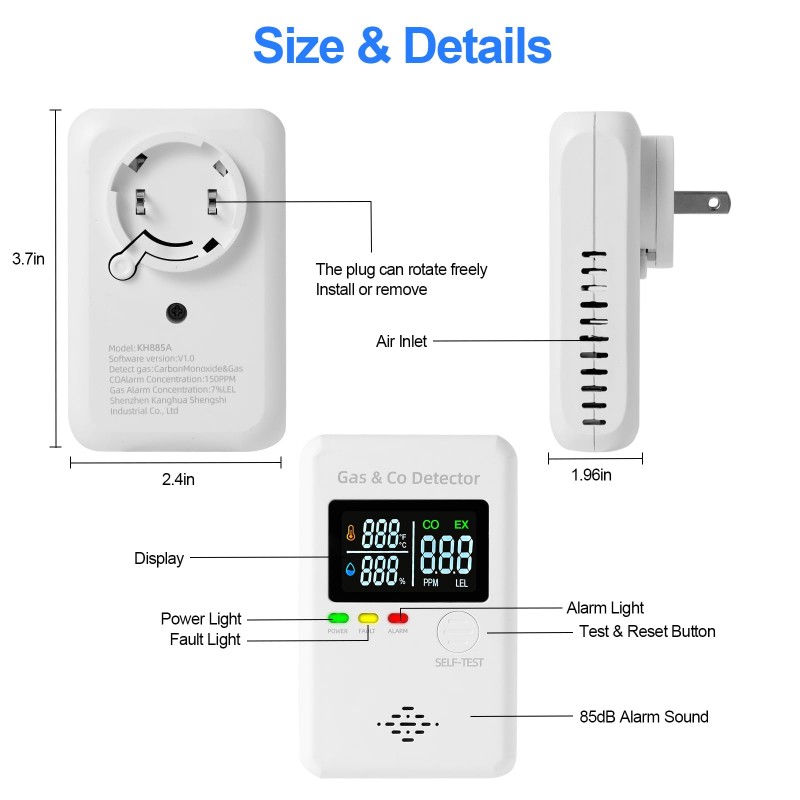
- Compact Housing: Measures 62 × 97 × 52 mm for space-conscious indoor applications.
- B2B Supply: SUMRING welcomes wholesale, OEM and ODM project inquiries.
For distributors and importers, the SR-910 CO and Natural Gas Detector offers a clear technical selling point: defined CO response times alongside natural gas detection. This makes its alarm specifications easier to compare during product selection.
SR-910 CO and Natural Gas Detector Specifications
The following specifications are based on the published SUMRING SR-910 product data. Buyers should confirm market-specific electrical and compliance requirements before placing orders.
| Parameter | Specification | Parameter | Specification |
|---|---|---|---|
| Model Number | SR-910 | Product Type | 4-in-1 CO & Natural Gas Detector |
| Power Supply | AC 110–220V | Alarm Current | <120 mA |
| Operating Temperature | -20°C to +50°C | Operating Humidity | 15%–90% RH |
| Alarm Sound Level | ≥85 dB | Power Indicator | Green LED, Always On |
| CO Response at 50 ppm | 60–90 minutes | CO Response at 100 ppm | 10–40 minutes |
| CO Response at 200 ppm | Within 1 minute | Natural Gas Alarm Threshold | 5% LEL |
| Dimensions | 62 × 97 × 52 mm | Monitoring Functions | CO, Natural Gas, Temperature, Humidity |
| Brand | SUMRING | OEM / ODM | Available for Discussion |
Technical Note: CO response times describe the published alarm behavior under specified concentration conditions. The 15%–90% RH value refers to the operating humidity range, not a confirmed humidity display measurement range. Certification documents, backup-power options and detailed sensor specifications should be confirmed separately.
How Does the SR-910 Gas Detector Work?
The SR-910 CO and Natural Gas Detector monitors two different gas hazards. Its alarm system evaluates the detected gas condition and activates an audible warning according to the relevant alarm settings.
Step 1: Connect the AC Power
The SR-910 requires a compatible AC 110–220V power supply. A green LED indicates that the detector is powered during normal operation. The power connection must meet the supplied installation instructions and local electrical requirements.
Step 2: Monitor Carbon Monoxide
The detector monitors carbon monoxide concentration. Its CO warning logic uses different response times for different concentration levels.
Step 3: Apply Time-Based CO Alarm Response
According to the published specifications, the alarm responds within 60–90 minutes at 50 ppm, within 10–40 minutes at 100 ppm, and within 1 minute at 200 ppm under the specified test conditions.
These are product response specifications. They should not be interpreted as safe exposure periods or proof of compliance with a particular CO alarm standard.
Step 4: Detect Natural Gas
The natural gas detection function monitors methane-related gas leakage. Its specified alarm threshold is 5% LEL.
LEL means Lower Explosive Limit. It describes the minimum gas concentration in air at which a flammable mixture can ignite under suitable conditions.
Step 5: Activate the Audible Warning
When the relevant alarm condition is met, the SR-910 provides an audible warning of at least 85 dB. Users should follow the product manual and established emergency procedures when an alarm sounds.
Why Do Different CO Alarm Response Times Matter?
Carbon monoxide exposure depends on both gas concentration and exposure duration. Therefore, CO alarm performance cannot be evaluated using one concentration value alone.
The SR-910 specifications provide three reference conditions:
- 50 ppm: Alarm response within 60–90 minutes.
- 100 ppm: Alarm response within 10–40 minutes.
- 200 ppm: Alarm response within 1 minute.
For B2B buyers, these figures help define the expected response behavior during technical evaluation. However, an alarm response table is not the same as a third-party test certificate.
The CDC carbon monoxide safety guide explains why CO detection and appropriate preventive measures are important. The EPA indoor carbon monoxide guide also discusses common CO sources and indoor air quality.
What Should Buyers Check Before Installing the SR-910?
The SR-910 CO and Natural Gas Detector should be evaluated for the intended indoor environment, gas source and local safety requirements.
Before installation, confirm the available AC voltage, correct outlet or connection configuration, required alarm coverage and suitable mounting position.
CO and methane have different physical characteristics. A combined detector must be positioned according to its approved installation instructions rather than an assumed universal mounting height.
Buyers should also verify the required product certifications. The published specifications do not establish certification to UL 2034, EN 50291 or other market-specific standards.
Because the product is AC powered and a backup battery is not listed in the published specifications, users should not assume that alarm operation continues during a power failure.
How Does SR-910 Differ from SR-909?
Both models monitor carbon monoxide, natural gas, temperature and humidity. However, they have different published specifications and product positioning.
The SR-910 emphasizes CO alarm response times at 50, 100 and 200 ppm. It measures 62 × 97 × 52 mm.
In comparison, the SR-909 gas detector emphasizes its large real-time digital display. Its published CO alarm concentration is 150 ppm, and its housing measures 75 × 79 × 53 mm.
Distributors can compare these models based on alarm behavior, display preferences, installation conditions and project specifications rather than treating them as identical devices.
FAQs
1. What does the SR-910 CO and Natural Gas Detector monitor?
It monitors carbon monoxide and methane/natural gas. It also includes temperature and humidity functions. These four functions are combined in one AC-powered detector with a digital display.
2. How long does the SR-910 take to alarm at 50 ppm CO?
The published response time at 50 ppm is 60–90 minutes under specified test conditions. This is a product performance figure, not a recommended or safe exposure duration.
3. What are the CO alarm response times at 100 ppm and 200 ppm?
At 100 ppm, the specified response time is 10–40 minutes. At 200 ppm, the specified response time is within 1 minute. Buyers should request supporting test information when evaluating regulatory compliance.
4. What is the natural gas alarm threshold of the SR-910?
The SR-910 has a published natural gas alarm threshold of 5% LEL. This specification relates to methane/natural gas detection and should not be assumed to apply to every combustible gas.
5. Can the SR-910 detect LPG as well as natural gas?
The published SR-910 specifications identify methane/natural gas detection. LPG detection is not separately confirmed. Buyers requiring propane or butane monitoring should request written confirmation of sensor compatibility.
6. Does the SR-910 need batteries or an AC power supply?
The SR-910 operates on AC 110–220V. The published specifications do not list a backup battery. Buyers should confirm the exact plug configuration and any backup-power requirements for their market.
7. How loud is the SR-910 alarm?
The audible alarm has a specified sound level of at least 85 dB. A green LED indicates normal powered operation. Further alarm indicator details should be checked against the supplied user manual.
8. Is the SR-910 available for wholesale, OEM or ODM orders?
SUMRING welcomes B2B wholesale and OEM/ODM inquiries. Buyers can discuss branding, packaging, documentation and market requirements. Available customization depends on technical feasibility, order quantity and applicable compliance requirements.
Wholesale SR-910 Gas Detectors from SUMRING
The SR-910 CO and Natural Gas Detector is suitable for B2B product evaluation where both CO and methane monitoring are required. Its concentration-dependent CO alarm response is a key specification for distributors comparing gas safety products.
For additional product options, explore the SUMRING multi-gas detector collection.
Buyers comparing detector configurations can also read When Is a Combined CO and Natural Gas Alarm Needed? for guidance on project requirements and product selection.
Looking for SR-910 wholesale pricing or OEM/ODM support? Contact SUMRING with your target country, estimated order quantity, required certifications and customization needs.