When Is a Combined CO and Natural Gas Alarm Needed?
A Combined CO and Natural Gas Alarm is a dual-gas safety device designed to monitor carbon monoxide and combustible natural gas with dedicated sensing functions in one unit. For commercial buyers, however, the important question is not simply whether two detection functions are better than one. The real question is whether both hazards actually exist in the intended application.
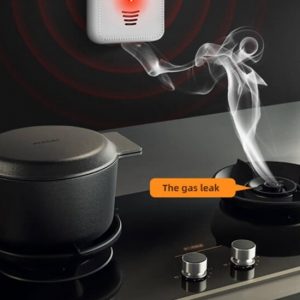
Apartments, hotels, rental properties, staff accommodation, boiler areas, and other buildings with fuel-burning equipment may face two different gas risks. Natural gas can escape from pipelines, valves, connectors, or appliances, while carbon monoxide can be produced when fuel does not burn completely.
The U.S. Consumer Product Safety Commission explains that carbon monoxide is produced by incomplete combustion of fuels including natural gas and propane. It also recommends appropriate CO alarms together with correct installation and maintenance of fuel-burning equipment.
For project buyers, this means detector selection should begin with a risk assessment, not simply a product feature comparison.
When Is Dual-Gas Detection Actually Needed?
A Combined CO and Natural Gas Alarm becomes relevant when a building contains both a combustible-gas leak source and a realistic carbon monoxide source.
Consider an apartment equipped with a natural-gas boiler. A damaged connection or valve can create a combustible-gas leak risk. At the same time, poor combustion, inadequate ventilation, or an exhaust problem can create a CO risk.
In this situation, monitoring only one hazard may leave a detection gap.
The same principle can apply to hotels with gas-fired water heating, rental properties using gas appliances, staff accommodation with gas heating, and small commercial premises containing fuel-burning equipment.
The decision should therefore be based on how gas enters, burns, and is exhausted from the building.
Which Projects Should Consider a Combined Alarm?
A practical B2B assessment can look like this:
| Project Scenario | Natural Gas Risk | CO Risk | Dual Detection |
|---|---|---|---|
| Apartment with gas boiler | Yes | Yes | Strongly worth evaluating |
| Rental property with gas heater | Yes | Yes | Recommended for assessment |
| Hotel with gas-fired equipment | Possible | Possible | Project-specific evaluation |
| Staff housing with gas appliances | Yes | Possible | Often appropriate |
| All-electric apartment | No | Low from installed appliances | Usually unnecessary |
| Location requiring separate code-listed devices | Depends | Depends | Verify compliance first |
This distinction is important because a Combined CO and Natural Gas Alarm should solve an identified project risk. Adding more sensing functions does not automatically make a detector suitable for every installation.
When May a Combined Alarm Not Be Necessary?
Dual detection is not always the correct specification.
An all-electric building without gas pipelines or fuel-burning appliances may have no normal natural-gas leak source. In such a project, a natural gas sensor may provide little additional value.
Another example is a commercial project whose local code, consultant specification, insurance requirement, or authority having jurisdiction requires separate certified gas and CO detection devices.
In those cases, the project specification takes priority over convenience.
This is an important distinction for distributors and importers. The goal should not be to sell the detector with the largest number of functions. The goal is to select a detector architecture that matches the actual hazard and regulatory requirements.
Combined Alarm or Two Separate Detectors?
This is one of the most important questions for procurement teams.
A combined device may reduce the number of products to source, simplify stock management, reduce wall or outlet space, and make the product proposition easier for residential and light-commercial channels.
Separate detectors, however, may offer more flexibility where different sensor locations are required.
Natural gas, primarily methane in many supply systems, behaves differently from carbon monoxide. Detector positioning therefore needs to follow the product manufacturer’s installation instructions and applicable local requirements.
A procurement team should never assume that one mounting position is automatically suitable simply because two sensors are integrated into one enclosure.
For larger projects, installation conditions should be reviewed before specifying a Combined CO and Natural Gas Alarm across every room or building type.
5 Questions B2B Buyers Should Ask Before Purchasing
Before approving a dual-gas alarm for distribution or a project, start with five practical questions.
What gases must the project detect?
Confirm whether the application uses natural gas, LPG, or another fuel. “Combustible gas” should not automatically be interpreted as compatibility with every gas.
What creates the carbon monoxide risk?
Identify boilers, furnaces, water heaters, fireplaces, cooking equipment, generators, or other combustion sources.
Where will the alarm be installed?
Room dimensions, appliance locations, ventilation, ceiling height, electrical outlets, and mounting restrictions can affect product selection.
Which certification or standard does the target market require?
For example, CPSC references the current UL 2034 safety standard for residential CO alarms in the United States. Buyers should confirm the applicable requirements for both CO and combustible-gas functions in their target market rather than assuming one certification covers everything.
Does the project require additional outputs?
Commercial buyers may need relay output, valve linkage, external sounders, visual indication, digital concentration display, network communication, or customized power supply options.
These questions move procurement away from feature-based buying toward project-based specification.
What Should Distributors Compare Between Suppliers?
For distributors, wholesalers, and private-label brands, sensor count is only one part of the evaluation.
The more important factors include sensor technology, supported gas type, alarm thresholds, response logic, operating voltage, expected sensor life, audible and visual warning methods, product testing, certifications, production consistency, packaging, documentation, and after-sales support.
OEM buyers should also confirm whether modifications affect certification or require additional testing.
For example, changing the enclosure color or logo may be relatively straightforward, while changing sensors, power architecture, firmware, alarm thresholds, or major electronic components can have much greater technical and compliance implications.
This is why a reliable CO and natural gas detector manufacturer should be able to discuss the application rather than simply provide a price list.
Why Does Project Type Matter More Than Feature Count?
A four-function or five-function detector can be attractive for retail channels because additional temperature, humidity, or display features increase perceived product value.
Commercial projects work differently.
An engineer, property operator, distributor, or importer usually starts with a specific risk: What needs to be detected? Where? Under which standard? How will an alarm be communicated? What happens after an alarm activates?
For projects that specifically require combustible natural gas and CO detection, a Combined CO and Natural Gas Alarm can provide a focused solution without adding unnecessary environmental monitoring functions.
That positioning also separates a dual-gas alarm from 4-in-1 products designed around broader multifunctional monitoring.
Can Combined Gas Alarms Be Used in Hotels and Rental Properties?
They can be considered when the property has relevant gas and combustion hazards, but selection should be based on the building’s equipment and local requirements.
A rental property using a gas boiler, for example, may have both leakage and combustion-related risks. A hotel using centralized equipment may require a different detector layout from a hotel using individual gas appliances in separate units.
Therefore, buyers should evaluate the gas source, combustion source, room function, installation location, and compliance requirement before choosing a single detector model for an entire property portfolio.
This approach is especially useful for property managers and distributors supplying multiple building types.
What Should an OEM or ODM Buyer Provide to the Manufacturer?
For an efficient project evaluation, the buyer should provide the target country, application environment, gas type, power requirement, expected quantity, required certifications, preferred alarm outputs, and any private-label requirements.
At Sumring, OEM and ODM discussions can then focus on whether an existing detector platform fits the project or whether configuration changes should be evaluated.
This is more useful than beginning with the question, “What is your cheapest dual-gas detector?”
For project procurement, the better question is:
Which detector configuration matches our gas risk, installation conditions, and target-market requirements?
FAQ
1.Does a Combined CO and Natural Gas Alarm detect both gases with one sensor?
Typically, the two hazards require different sensing functions because carbon monoxide and combustible natural gas have different detection characteristics. Buyers should review the specific detector architecture and technical datasheet.
2.Is a CO alarm enough if a building uses natural gas?
Not necessarily. A standard CO alarm is designed for carbon monoxide detection and should not automatically be assumed to detect natural gas leakage. Sumring already covers this distinction in its dedicated CO-versus-natural-gas educational content.
3.Is a Combined CO and Natural Gas Alarm suitable for apartments?
It may be appropriate where apartments use natural gas together with fuel-burning boilers, heaters, water heaters, or similar equipment. Project requirements and installation instructions should still be verified.
4.Can one combined detector replace two separate alarms?
Sometimes, but not automatically. Sensor placement, applicable standards, local regulations, product certification, and project specifications must be considered before replacement.
5.What should importers check before ordering?
Confirm gas type, detection range, alarm logic, sensor technology, power supply, installation requirements, certifications, target market, OEM requirements, warranty, and production consistency.
6.Can Sumring support OEM and ODM gas detector projects?
Sumring supports OEM and ODM discussions for B2B customers. Customization should be evaluated according to project requirements, technical feasibility, order quantity, and any applicable certification requirements.
Conclusion
A Combined CO and Natural Gas Alarm is most valuable when a project has two clearly identified hazards: combustible natural gas leakage and carbon monoxide produced by fuel combustion.
It should not be selected simply because “two functions are better than one.”
For distributors, property projects, importers, and safety equipment brands, the better procurement process is to identify the gas source, combustion source, installation environment, compliance requirements, and required outputs first.
Planning a hotel, apartment, rental-property, or distribution project? Send Sumring your target market, gas type, application, required certification, and estimated quantity. Our team can help evaluate whether a dual-gas detector or another gas detection configuration is better suited to your project.