How Should B2B Buyers Evaluate the SR-812DC Photoelectric Smoke and Heat Detector?
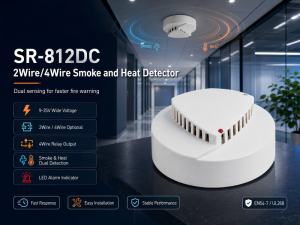
A photoelectric smoke and heat detector is a fire detection device that senses smoke through an optical chamber and monitors temperature using a heat-sensing element. Unlike a stand-alone household smoke alarm, a conventional detector is intended to communicate with a compatible fire alarm control system. The SUMRING SR-812DC combines infrared photoelectric smoke detection with a specified 57°C heat alarm point and is described in both 2-wire and 4-wire versions.
For distributors, contractors, and system integrators, selection means confirming the wiring version, zone behavior, current demand, circuit supervision, and destination-market evidence. These seven checks translate the SR-812DC sheet into a purchasing review.
1. How Does the Smoke-and-Heat Sensing Design Work?
The SR-812DC photoelectric smoke and heat detector uses an infrared optical chamber. Under normal conditions, little light reaches the receiving diode. When smoke enters the chamber, particles scatter infrared light toward the receiver; the electronic circuit processes this change and can produce an alarm signal. The product sheet also describes a built-in heat detector with a 57°C alarm temperature.
The manual does not confirm rate-of-rise detection or explain how the two channels combine alarm signals. Request engineering confirmation before making such claims in a tender.
2. What Should Buyers Check on the 2-Wire Version?
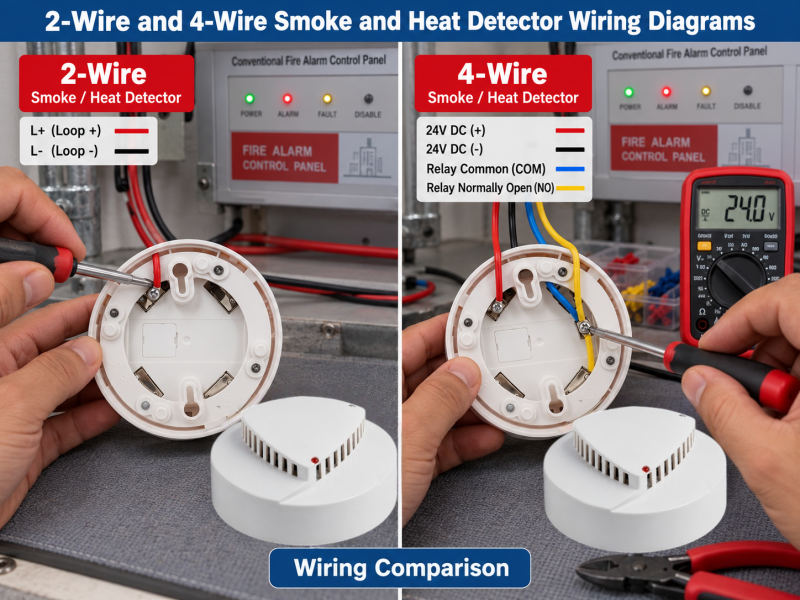
In a 2-wire configuration, the photoelectric smoke and heat detector receives power and communicates an alarm state through a conventional detector-zone circuit. The SR-812DC sheet identifies a 20 μA standby current and specifies alarm current of 35 mA at DC 12V or 83 mA at DC 24V. It also describes a remote LED indicator output, useful when the installed detector is difficult to view directly.
A DC 9–35V rating does not guarantee panel compatibility. Confirm alarm thresholds, reset, end-of-line (EOL) supervision, zone load, and remote LED wiring. For additional background, review how 2-wire photoelectric smoke detectors are selected for fire alarm panels.
3. Why Is the 4-Wire Relay Interface Different?
The 4-wire SR-812DC photoelectric smoke and heat detector separates detector power connections from the alarm relay interface. Its drawing labels two power inputs and an alarm contact pair marked common (COM) and normally open (N.O.). The sheet gives a relay contact rating of 0.5A at DC 28V.
Confirm circuit supervision, detector-power reset, and the end-of-line resistor and power-supervision relay shown in the manual. Their selection depends on the approved panel design. Test the complete circuit before commissioning.
4. Which SR-812DC Electrical Figures Need Verification?
The photoelectric smoke and heat detector operates at DC 9–35V according to the supplied manual. Its listed values differ between versions and, for the 4-wire product, between relay configurations. Record the exact ordered variant instead of mixing figures from different rows.
| Specification | 2-Wire Version | 4-Wire Version |
|---|---|---|
| Operating voltage | DC 9–35V | DC 9–35V |
| Standby current | 20 μA | 4 mA (N.O.); 13 mA (N.C.) |
| Alarm current | 35 mA @ 12V; 83 mA @ 24V | 19 mA (N.O.); 9 mA (N.C.), as printed |
| Alarm interface | Remote LED output | Relay output; 0.5A @ DC 28V contact rating |
| Smoke sensitivity | 0.2 ± 0.1 dB/m | 0.2 ± 0.1 dB/m |
| Heat alarm point | 57°C | 57°C |
| Dimensions | Ø100 × 46 mm | Ø100 × 46 mm |
The text mentions non-polarized input, yet the drawings label positive and negative terminals. Resolve this inconsistency with a current, variant-specific drawing; confirm the printed currents against the sample.
5. Where Can the Detector Be Installed Responsibly?
The SR-812DC photoelectric smoke and heat detector is specified for an ambient temperature range of -10°C to +50°C. The instructions caution against excessive dust and temperature extremes. They also call for a clear area around the detector, a wall clearance greater than 0.5 m, and detector-to-detector spacing below 15 m.
These notes cannot replace an engineered layout. Ceiling shape, airflow, obstructions, maintenance access, and local codes may require different spacing. The stated temperature range does not prove suitability for wet, steamy, or hazardous locations. When preparing cable routes, consult fire alarm cable selection for detector and control circuits.
6. How Should Contractors Test a Sample Before Ordering?
A sample of the photoelectric smoke and heat detector should be tested on the proposed control panel, not only on a bench power supply. Start by identifying the 2-wire or 4-wire base and confirming the correct wiring documentation. Check the panel’s normal condition and any fault indication before performing manufacturer-approved smoke and heat functional tests.
Record panel recognition, local red LED behavior, optional remote indication, and reset. For 4-wire versions, verify relay signaling, power supervision, and EOL arrangement. Test representative zone loading. Use qualified installers and applicable commissioning procedures.
7. What Documentation Should a B2B RFQ Include?
When sourcing a photoelectric smoke and heat detector, include the exact SR-812DC variant, panel make and model, zone voltage, preferred alarm interface, detector quantity per circuit, environmental conditions, required documents, delivery market, annual quantity, and branding requirements. Ask for a current data sheet, base-terminal drawing, sample test plan, and any certification documents matching the exact model.
The “Standard” row mentions EN54-7/UL268, but this is not proof of certification. Verify current model-specific listings and certificates before claiming compliance. OEM/ODM options require technical confirmation. For broader project planning, see the main components of a building fire alarm system.
FAQs
1. Is SR-812DC a stand-alone smoke alarm?
The supplied material describes conventional wired detector versions and panel connections. It does not document a built-in sounder or independent household alarm operation.
2. Does SR-812DC detect smoke and heat?
Yes. Its manual describes an infrared photoelectric smoke chamber and a built-in heat detector with a 57°C alarm point.
3. Are the 2-wire and 4-wire versions interchangeable?
No. Their alarm interfaces and current requirements differ. Select the version approved for the intended initiating circuit and panel.
4. Can the 4-wire version connect to any relay input?
Not automatically. Confirm contact ratings, circuit supervision, reset method, power supply, and panel compatibility before approval.
5. Can a remote LED be connected?
The sheet identifies a remote LED output for the 2-wire version. Validate indicator compatibility and follow the confirmed terminal diagram.
6. Is the heat detection rate-of-rise or fixed-temperature?
A 57°C alarm temperature is listed, but the manual does not substantiate a rate-of-rise function. Obtain engineering confirmation if required.
7. Is SR-812DC certified to EN54-7 or UL268?
Those standards appear on the specification sheet, but certification status cannot be confirmed without current model-specific certificates or listing records.
8. What should wholesalers request before a bulk purchase?
Request sample testing, the exact version and wiring sheet, panel compatibility confirmation, applicable compliance evidence, packaging specifications, and production terms.
Conclusion
The SR-812DC photoelectric smoke and heat detector offers combined optical smoke sensing and a stated 57°C heat alarm point in distinct 2-wire and 4-wire configurations. A sound B2B decision depends on confirming the required interface, checking electrical load, validating supervised panel operation, assessing site conditions, and reviewing current technical and compliance documents. Treat the datasheet as the starting point for sample approval—not as a replacement for engineering verification.