How Does an LED Emergency Light Work During a Power Failure?
How Does an LED Emergency Light Work During a Power Failure?
An led emergency light is a safety lighting device designed to provide temporary illumination when normal electrical power becomes unavailable. It typically uses a rechargeable battery, charging circuit, automatic changeover function, and LED light sources to support visibility along designated evacuation routes.
For commercial buildings, warehouses, hotels, offices, and public facilities, reliable backup illumination helps occupants recognize obstacles and navigate toward exits during a power interruption.
This guide explains how battery-powered lighting works, what technical specifications matter, and how B2B buyers can evaluate products before placing bulk orders.
How Does an LED Emergency Light Work?
A typical led emergency light operates through three basic stages: normal power, battery charging, and backup illumination.
1. Normal AC Power Operation
When utility power is available, the unit receives electricity through its AC input. An internal charging circuit maintains the rechargeable battery according to the product’s charging design.
Some units keep their LED lamps off during normal operation, while others support maintained illumination. The operating mode depends on the model.
2. Automatic Power Failure Detection
When normal power is interrupted, the control circuit detects the change and switches the lighting supply to the internal battery.
The transition must occur quickly enough to provide the required illumination for the intended application.
3. Battery-Powered Illumination
During the outage, stored battery energy powers the LED heads.
Once normal electricity returns, the unit resumes its normal operating mode and recharges the battery.
This automatic process reduces dependence on manual switching.
What Features Matter in a Dual-Head LED Emergency Light?
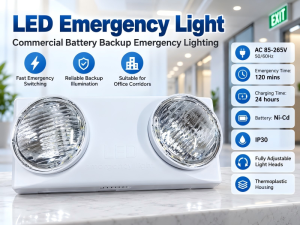
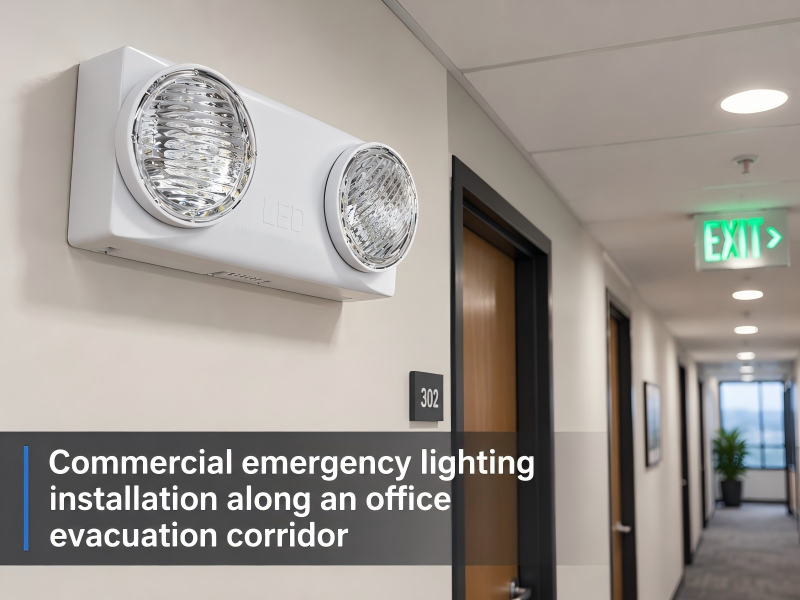
The SUMRING product shown in the photographs features two circular LED lighting heads mounted on a rectangular white housing.
Its packaging identifies several important specifications.
| Technical Feature | Product Information |
|---|---|
| AC Input | 85–265V, 50/60Hz |
| Lighting | Dual adjustable LED heads |
| Emergency Duration | 120 minutes, advertised |
| Switching Time | 1 second, specified |
| Charging Time | 24 hours |
| Battery Chemistry | Ni-Cd |
| Operating Temperature | −10°C to 50°C |
| Protection Rating | IP30 |
| Housing | Molded thermoplastic |
These specifications describe the photographed product configuration. Buyers should request the latest technical datasheet and test documentation before final approval.
The adjustable dual-head design allows installers to direct illumination toward specific areas.
For example, one head may face a corridor while the other illuminates a nearby doorway, subject to the project’s lighting calculations.
Why Is Battery Backup Important?
A rechargeable battery is the primary energy reserve in many self-contained lighting units.
A properly selected led emergency light can continue operating independently of normal AC power for its rated backup period.
However, advertised battery capacity alone does not establish performance.
Buyers must consider:
- Battery chemistry and rated capacity
- Emergency operating duration
- Charging and discharge characteristics
- LED power consumption
- Battery replacement requirements
- Temperature-related performance changes
For projects requiring a 90-minute emergency lighting battery backup, the complete unit should demonstrate sufficient illumination throughout the required duration.
The photographed product advertises 120 minutes of operation. That claim should be verified through applicable performance testing before being used for compliance decisions.
Where Should LED Emergency Lighting Be Installed?
The correct installation location depends on building occupancy, exit-route design, local regulations, and approved lighting calculations.
A commercial led emergency light may be specified for designated escape routes, corridors, stairways, exit approaches, and other areas requiring illumination when normal power fails.
Commercial Offices and Hotels
Backup illumination helps occupants navigate corridors, shared access areas, and approved evacuation routes.
Warehouses and Industrial Buildings
Lighting near designated exits and circulation routes supports visibility when normal lighting becomes unavailable.
Dust, moisture, temperature, and mounting conditions must be considered separately.
Schools and Public Facilities
Emergency lighting supports planned evacuation arrangements in areas where people may be unfamiliar with the building layout.
Retail Stores and Shopping Centers
Suitable lighting can help maintain visibility along designated exit pathways during an unexpected power interruption.
Important: An IP30-rated unit should not be assumed suitable for outdoor exposure, washdown locations, or areas requiring higher dust or moisture protection.
How Do LED Emergency Lights Differ From Exit Signs?
An led emergency light illuminates an area or escape route, while an exit sign identifies the designated exit or evacuation direction.
These products perform related but different functions.
| LED Emergency Lighting | Exit Sign |
|---|---|
| Illuminates an area | Identifies an exit |
| Supports route visibility | Provides directional information |
| May use adjustable LED heads | Uses illuminated letters or symbols |
| Requires suitable light distribution | Requires compliant sign visibility |
Some products combine both functions, but a dual-head lighting unit is not automatically an exit sign.
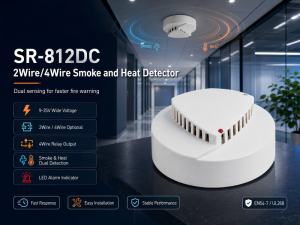
For a broader procurement overview, read SUMRING’s fire alarm products selection guide, which explains how detection, notification, emergency lighting, and exit signs support building safety planning.
What Should Buyers Check Before Installation?
Choosing an led emergency light involves more than reviewing its appearance or price.
For contractors and system integrators, the following checks are essential.
Confirm Electrical Compatibility
Verify the input voltage, frequency, power connection method, and applicable electrical installation requirements.
Evaluate Light Distribution
Check the number of LED heads, adjustment range, mounting height, and measured illumination.
A wide input-voltage range does not establish adequate light coverage.
Review Environmental Conditions
Confirm that the housing protection rating and operating temperature range match the actual installation environment.
Request Technical Documentation
Ask the manufacturer for installation instructions, wiring information, battery specifications, maintenance guidance, and available test reports.
Verify Regulatory Requirements
The required operating duration, illumination level, product approval, and inspection schedule vary across markets.
For United States projects, applicable building and fire codes, product listing requirements, and the authority having jurisdiction must be considered.
How Should LED Emergency Lights Be Tested and Maintained?
A battery-powered led emergency light should be inspected and functionally tested according to applicable codes and the manufacturer’s instructions.
A typical maintenance program includes visual inspection, operational testing, battery evaluation, and maintenance records.
Routine Functional Checks
Confirm that the fixture is securely mounted, the lighting heads are unobstructed, and the battery backup function operates correctly.
Qualified personnel should investigate any failure or abnormal condition.
Duration Testing
Some U.S. life-safety applications require monthly functional testing and annual extended-duration testing.
The testing interval and duration must follow the applicable adopted code and facility requirements.
Battery Maintenance
Rechargeable batteries gradually lose capacity through aging and use.
Replacement decisions should follow the manufacturer’s instructions and verified performance results.
A unit that illuminates briefly during a basic check may still fail to maintain adequate output throughout a required emergency period.
For U.S. workplace exit-route requirements, consult the Occupational Safety and Health Administration’s Exit Routes Standard, 29 CFR 1910.37.
How Can B2B Buyers Evaluate Manufacturers?
When sourcing an led emergency light for wholesale distribution or commercial projects, buyers should review both product performance and manufacturing capability.
Important procurement questions include:
- Is the technical datasheet consistent with the actual sample?
- Can the manufacturer provide applicable compliance documents?
- Has the complete unit been tested for its advertised runtime?
- Are batteries and replacement components available?
- What inspection procedures are used during production?
- Can packaging and labeling meet destination-market requirements?
- Are OEM or ODM options available for the selected product?
- What warranty and after-sales support can be provided?
SUMRING supplies fire-safety products for international B2B applications. Buyers can contact the company to confirm current emergency lighting specifications, available documentation, customization options, and order requirements.
FAQs
1. What is the main purpose of an led emergency light?
An emergency light provides temporary illumination when normal electrical lighting fails. It helps maintain visibility along designated routes and in areas requiring backup lighting.
2. How long should emergency lighting last?
The required duration depends on the applicable local code and building application. Many U.S. projects specify at least 90 minutes, but other requirements may apply.
3. Does emergency lighting turn on automatically?
Many non-maintained battery-backed fixtures activate automatically when normal power fails. Operation depends on the product design and installation.
4. What is a dual-head LED emergency lighting fixture?
It is a lighting unit with two LED heads, often adjustable, that can direct light toward different areas within the permitted installation arrangement.
5. Is emergency lighting the same as an exit sign?
No. Emergency lighting illuminates the route, while exit signs identify exits or directions. Both may be required in the same project.
6. Can an IP30 lighting unit be installed outdoors?
IP30 does not provide a water-ingress protection rating. Outdoor applications generally require equipment specifically suitable for the expected environmental exposure.
7. How often should emergency lighting be tested?
Testing depends on local requirements. Some U.S. applications require monthly functional checks and annual duration tests. Always follow the adopted rules.
8. What documents should wholesale buyers request?
Request the technical datasheet, installation instructions, battery information, available certification or listing documents, performance test reports, warranty terms, and sample approval records.
Conclusion
A reliable led emergency light is an important part of building evacuation planning because it supports visibility when normal lighting is interrupted.
For B2B buyers, the selection process should prioritize verified backup duration, suitable illumination, electrical compatibility, environmental protection, maintainability, and applicable compliance requirements.
The SUMRING dual-head product offers an adjustable LED lighting arrangement and advertised battery backup features. Final suitability should be established through the actual product documentation and project-specific evaluation.
Contact SUMRING to discuss emergency lighting requirements, technical specifications, sample evaluation, and OEM/ODM project inquiries.