How Should B2B Buyers Evaluate a 4-in-1 Plug-In CO and Natural Gas Detector?
A plug-in CO and natural gas detector is an AC-powered safety alarm that monitors carbon monoxide and methane/natural gas, while providing audible and visual warnings when specified alarm conditions occur. A four-function model may also display ambient temperature and relative humidity. For distributors, importers, and contractors, these features are only the starting point.
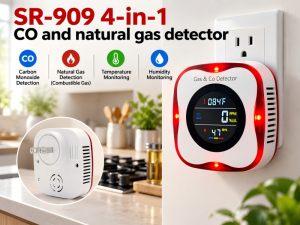
The SUMRING SR-909 combines gas monitoring, a color digital display, and a direct plug-in housing. This guide explains what its specifications mean, how buyers can evaluate installation suitability, and why verification matters before placing a wholesale order.
What Does the SR-909 Actually Monitor?
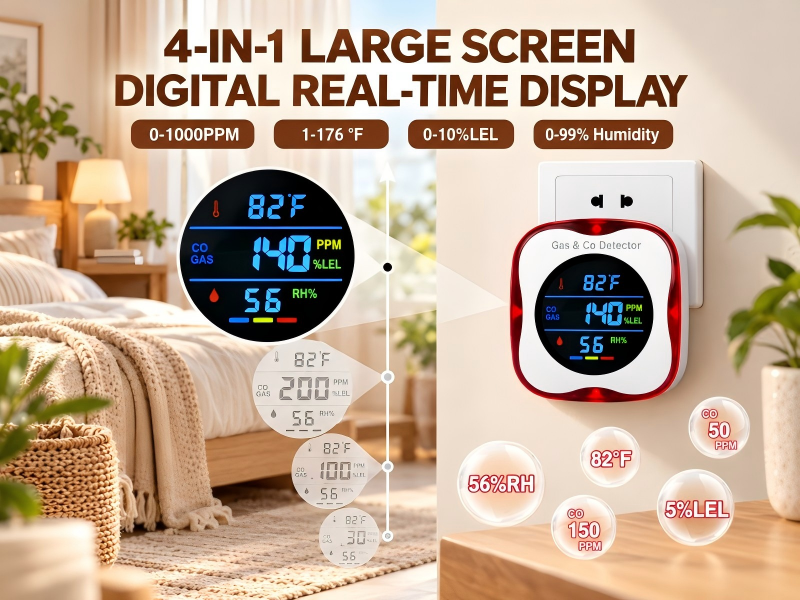
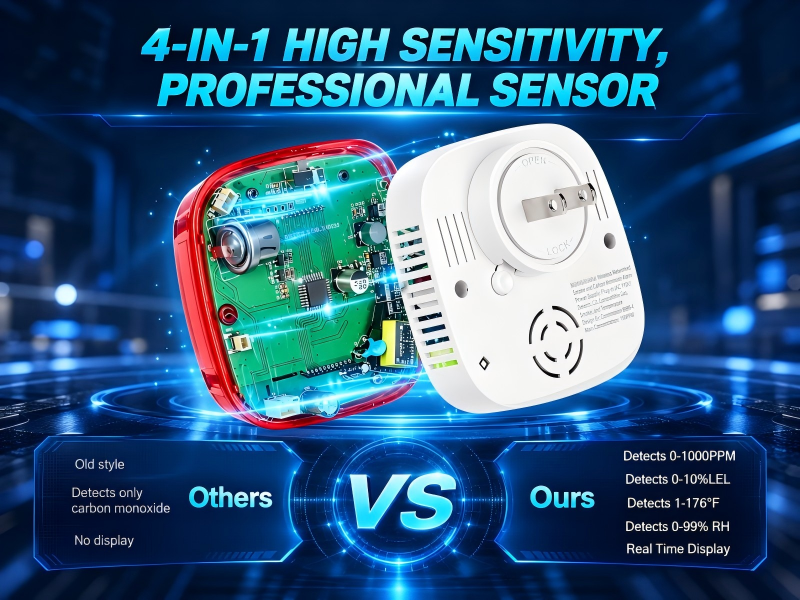
The SR-909 is described as a four-in-one detector with readings for carbon monoxide, natural gas, temperature, and humidity. Its display allows users to view several measurements without switching between separate screens.
A plug-in CO and natural gas detector is not necessarily a smoke alarm, an LPG alarm, or an industrial multi-gas instrument. Buyers should match the exact gas type to the site. Natural gas commonly contains methane, whereas LPG applications may require different sensor calibration and positioning.
For residential developments, a useful question is whether residents need a simple warning device, a numeric display, or an alarm that interfaces with other building equipment.
How Should Buyers Interpret PPM and %LEL?
Carbon monoxide readings are expressed in parts per million (ppm). Natural-gas readings may be expressed as a percentage of the lower explosive limit (%LEL). These values measure different risks and should not be treated as interchangeable.
The published SR-909 product specification lists a CO display range of 0–2,000 ppm, a gas display range of 0–10% LEL, a specified CO alarm concentration of 150 ppm, and a natural-gas alarm setting of 5% LEL. The concentration at which an alarm activates does not, by itself, establish every response time or regulatory requirement.
When evaluating a plug-in CO and natural gas detector, ask for the applicable alarm response profile, test conditions, sensor specifications, and model-specific technical documentation.
How Does the SR-909 Warn Occupants?
The SR-909 product page describes an audible warning of at least 85 dB together with flashing red indicators. Its digital screen shows readings that may assist with identifying an alarm condition. A Test/Reset control supports user-initiated function checks as described in the instructions.
For a plug-in CO and natural gas detector, the value of a visible screen is practical: users can distinguish environmental readings from the alarm’s warning indicators. However, a test-button check does not replace required sensor verification, periodic maintenance, or the replacement schedule specified by the manufacturer.
Buyers should request a clear English user manual, labeling artwork, fault-indication descriptions, and instructions for responding to alarms.
Why Do Plug Type and Installation Location Matter?
The SR-909 product page specifies AC 110–220 V operation and an approximately 180-second warm-up period. The plug type, local mains rating, outlet orientation, and uninterrupted access to power should all be checked for each destination market.
The critical limitation of a plug-in CO and natural gas detector is placement flexibility. Appropriate natural-gas alarm positioning may differ from ordinary outlet height, and carbon monoxide alarm placement also depends on local rules. A convenient outlet is not automatically an acceptable sensing location.
Therefore, contractors should review the current manufacturer’s installation instructions and applicable local codes before approving bulk deployments. If a specified room cannot accommodate the required detector location, select a different mounting or power configuration rather than compromise placement.
How Can Importers Verify Testing and Compliance?
Technical reports and certification records serve different purposes. A test report describes a particular sample, identified model, test method, and result. A product certification or listing requires separate verification through the relevant certification program.
Before importing a plug-in CO and natural gas detector, request documents that identify the exact commercial model, rated voltage, manufacturer, applicable standard editions, and intended sales territory. Confirm that the delivered label and construction match the evaluated version.
For products marketed as UL certified, buyers should independently check the manufacturer’s name, model, and file details through UL Product iQ. Do not assume that a document referencing UL 2034 or UL 1484 establishes a UL Listing. Market access and installation approval may also depend on local requirements.
Why Does the SR-909 Fit Some Projects Better Than Others?
A plug-in CO and natural gas detector can be appealing where an appropriately positioned AC outlet is available and buyers want integrated readings with audible and visual alerts. It may suit selected residential replacement programs and apartment specifications, subject to compliance and installation approval.
Other projects need different features. For example, customers requesting battery backup can review the 5-in-1 CO and gas detector with backup battery. Projects requiring optional valve linkage can evaluate the SR-918 CO and combustible gas alarm. These are different configurations, not interchangeable substitutes.
The SR-909 product specification should be checked against the project checklist before purchase.
How Should OEM and Wholesale Buyers Prepare an Inquiry?
A well-defined request saves sampling time. State the target country, gas application, required standards, expected quantity, plug and voltage configuration, installation environment, branding needs, and target delivery date.
For a plug-in CO and natural gas detector, ask whether custom packaging, manuals, brand artwork, and label layouts are available, and which changes would trigger fresh testing or documentation. Do not assume a redesigned housing or modified sensor automatically inherits existing test results.
SUMRING can discuss SR-909 wholesale supply and OEM/ODM requirements. Buyers should obtain written confirmation of the final specifications, available documents, sample acceptance criteria, and production terms before releasing a purchase order.
FAQs
1. What are the four functions of the SR-909?
It monitors carbon monoxide and methane/natural gas while displaying temperature and humidity. The functions should be treated as separate measurements, not four different hazardous gases.
2. Does the SR-909 detect smoke or LPG?
The published SR-909 description identifies CO and natural gas. Do not assume smoke or LPG detection without a model-specific specification confirming those functions.
3. What does 5% LEL mean?
It is the stated natural-gas alarm setting, expressed as a percentage of the gas’s lower explosive limit. It is not a carbon monoxide ppm reading.
4. Can the detector be installed in any wall outlet?
No. Power compatibility and sensing location must both comply with the manufacturer’s placement instructions and applicable local requirements.
5. Does the SR-909 need a warm-up period?
The published specification lists approximately 180 seconds. Follow the instructions for startup and any display-stabilization guidance.
6. Is a test report the same as a UL certification?
No. A report documents testing of an identified sample. A UL certification or listing must be independently verified for the relevant model and manufacturer.
7. Can OEM buyers customize the product?
Branding, labeling, packaging, and manuals can be discussed with SUMRING. Availability, minimum quantities, technical changes, and regulatory implications require written confirmation.
8. What should a wholesaler check before ordering?
Before purchasing a plug-in CO and natural gas detector, confirm the gas type, power and plug, alarm behavior, installation suitability, documentation, approvals, samples, warranty, and lead time.
Conclusion
Choosing a plug-in CO and natural gas detector requires more than comparing display graphics and advertised functions. Buyers should verify gas compatibility, response documentation, compliant placement, and model-specific certification status. Planning a wholesale order or residential safety project? Read our Plug-In CO and Natural Gas Detector Buying Guide to learn how to evaluate alarm performance, installation requirements, technical documentation, and OEM/ODM considerations before ordering.