How Does a Commercial Fire Alarm System Work? Complete Guide
A commercial fire alarm system is an integrated safety network that detects fire hazards, processes signals through a control panel, and activates alarms and emergency responses to protect occupants and property.
Understanding how fire alarm system works in commercial buildings is essential for building owners, facility managers, and safety engineers. A commercial fire alarm system is not just a siren—it is a coordinated life-safety infrastructure designed to detect threats early, communicate alerts instantly, and support safe evacuation.
In modern buildings, fire protection relies on multiple interconnected devices that continuously monitor smoke, heat, gas, and human-triggered alarms. When any abnormal condition is detected, the system activates a structured response chain that ensures rapid reaction and minimizes damage.
This article explains the complete process of how fire alarm system works in commercial buildings, including system components, detection logic, control mechanisms, and notification methods.
Core Components of a Commercial Fire Alarm System
To understand how fire alarm system works in commercial buildings, we must first look at its core components:
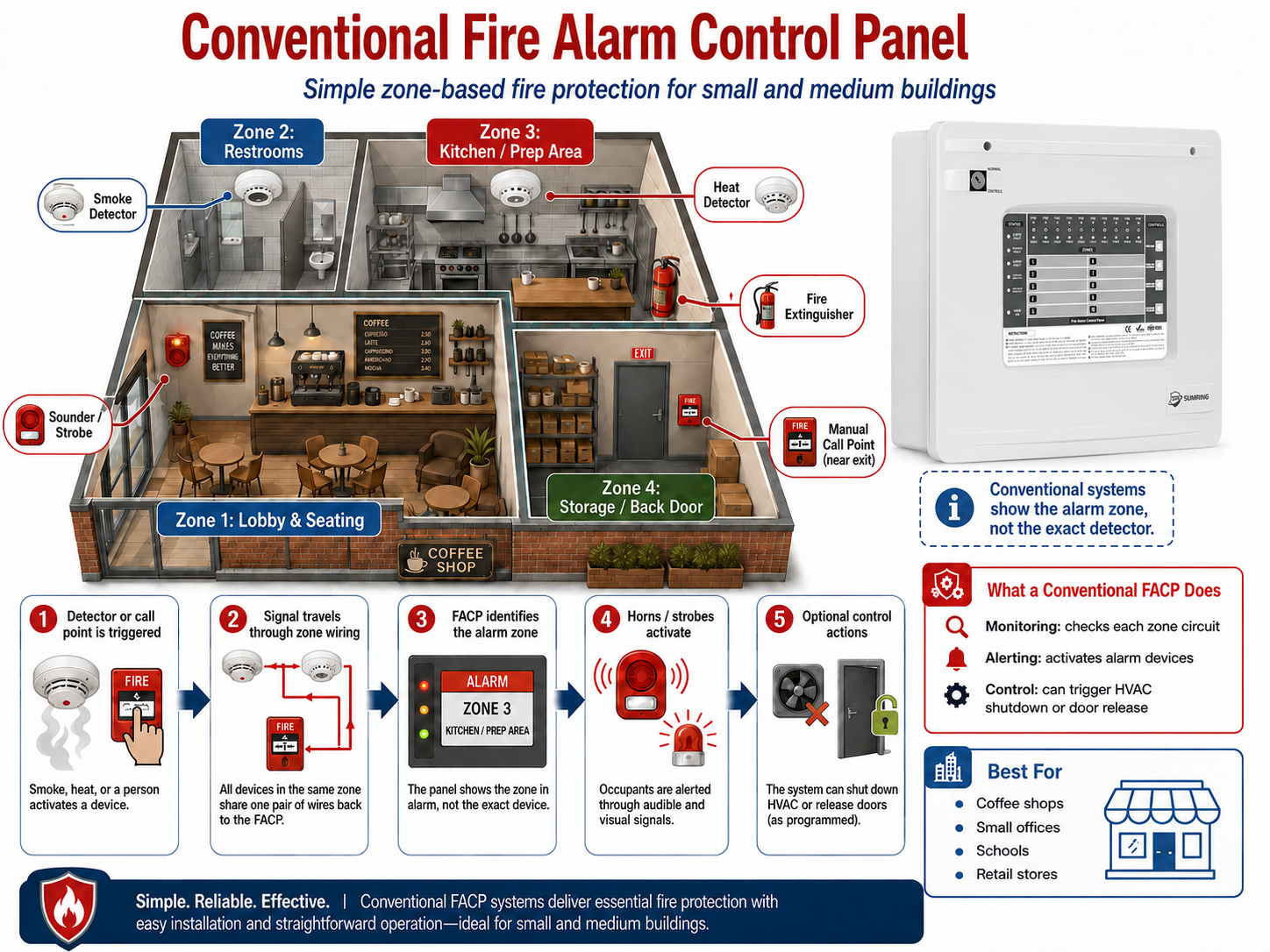
1.1 Fire Alarm Control Panel (FACP)
The control panel is the “brain” of the system. It:
- Receives signals from detectors
- Analyzes alarm conditions
- Activates notification devices
- Sends signals to monitoring systems or emergency services
For example, Sumring’s conventional control systems like SR-P03 provide zone-based monitoring, fault detection, and multi-output alarm control for commercial buildings.
1.2 Initiating Devices (Detection Layer)
These devices detect early signs of fire:
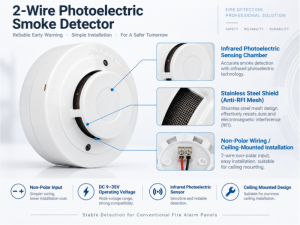
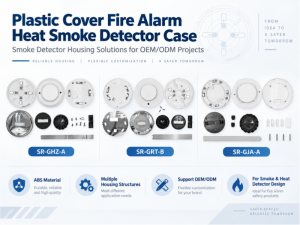
- Smoke detectors (photoelectric / ionization)
- Heat detectors (fixed temperature or rate-of-rise)
- Gas detectors (CO or combustible gas)
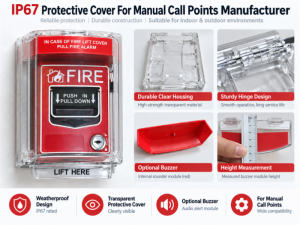
- Manual call points (break glass or push button)
Sumring devices such as SR-821THS (smoke + CO detector) and SR-503 heat detectors are widely used in commercial environments.
1.3 Notification Appliances
These alert building occupants:
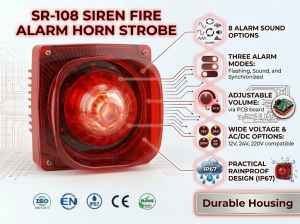
- Sirens
- Strobe lights
- Voice alarm systems
Devices like Sumring SR-A83 fire strobe siren ensure both audible and visual warnings during emergencies.
1.4 Power Supply System
Includes:
- Primary AC power
- Backup batteries
This ensures the system continues working even during power failure.
1.5 Building Safety Interfaces
These integrate with:
- Sprinkler systems
- Elevator recall
- Smoke ventilation
- Emergency lighting
2. Step-by-Step:
Now let’s break down how fire alarm system works in commercial buildings in a real operational sequence.
2.1: Detection of Fire Hazard
The process begins when a detector senses abnormal conditions:
- Smoke particles enter optical chamber
- Temperature rises rapidly
- Gas concentration increases
- Manual call point is activated
Each device continuously monitors environmental changes 24/7.
2.2: Signal Transmission to Control Panel
Once triggered, detectors send an electronic signal to the fire alarm control panel.
The reliability of this signal path also depends on conductor size, circuit length, resistance, insulation, and installation conditions. Contractors and system integrators can use this fire alarm cable selection guide to evaluate 2×0.75 mm² RVV construction, voltage drop, flame-test information, and project documentation before specifying system wiring.
The panel identifies:
- Which zone the alarm originated from
- Whether it is smoke, heat, or manual activation
- Whether it is a real alarm or fault condition
This zoning function is critical in how fire alarm system works in commercial buildings, especially in large complexes like malls, hotels, and offices.
2.3: Control Panel Decision Logic
The control panel processes signals using predefined logic:
- Single detector activation → warning or pre-alarm
- Multiple detectors → confirmed fire alarm
- Manual call point → immediate alarm priority
Advanced systems reduce false alarms by cross-checking multiple inputs.
2.4: Alarm Activation
Once confirmed, the system activates:
- Sirens (high decibel alert)
- Strobe lights (visual warning)
- Voice evacuation messages
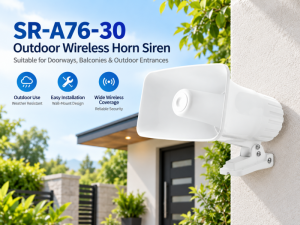
Devices like Sumring SR-A76-30 horn siren (up to 135dB) ensure alarms are heard even in noisy industrial environments.
2.5: Emergency System Integration
The fire alarm system may trigger additional building responses:
- Unlock emergency exits
- Activate smoke exhaust fans
- Shut down HVAC systems
- Recall elevators to ground floor
This integrated response is a key part of how fire alarm system works in commercial buildings.
2.6: Notification to Monitoring Center
Many commercial systems are connected to remote monitoring stations, which:
- Notify fire departments
- Send alerts to building managers
- Record incident logs
2.7 System Reset and Post-Alarm Review
After the incident is verified and the building is safe, authorized personnel reset the control panel, inspect the activated devices, record the event, and restore the system to normal monitoring status.
3.Types of Detection in Commercial Buildings
Smoke Detection
Detects visible and invisible combustion particles.
Heat Detection
Ideal for kitchens, garages, and industrial zones where smoke alarms may cause false triggers.
Gas Detection
Used for CO and combustible gas monitoring.
Sumring SR-918 series gas detectors provide real-time CO and LPG monitoring with LCD display and voice alerts.
Manual Activation
Human-operated call points provide immediate emergency triggering.
4. Role of Manual Call Point Covers in Fire Safety
In commercial environments, accidental activation is a major issue.
Protective accessories like Sumring IP67 manual call point covers help prevent:
- False alarms
- Vandalism
- Accidental damage
This improves reliability in how fire alarm system works in commercial buildings, especially in high-traffic areas such as airports, schools, and shopping malls.
5. System Architecture in Large Commercial Buildings
Large buildings often use zone-based architecture:
- Zone 1: Lobby
- Zone 2: Offices
- Zone 3: Parking area
- Zone 4: Mechanical rooms
Each zone reports independently to the control panel, improving response accuracy.
6. Importance of Compliance and Standards
For North American commercial projects, system designers should also review the requirements of NFPA 72, National Fire Alarm and Signaling Code and applicable local fire regulations.
Commercial fire alarm systems must comply with:
- EN54 (Europe)
- UL standards (USA)
- CE certification
- ISO9001 manufacturing quality
Sumring systems are designed with international compliance in mind, ensuring reliability across global markets.
7. Maintenance and Testing
Regular maintenance ensures system reliability:
- Monthly alarm testing
- Detector cleaning
- Battery checks
- Control panel diagnostics
For ceiling-mounted units, professional smoke detector maintenance tools can support controlled detector removal, cleaning, replacement, and reinstallation when the tool head is compatible with the detector housing and mounting base.
Without maintenance, even the best system may fail during emergencies.
For U.S. workplace applications, buyers and facility managers can also consult the OSHA fire detection systems requirements.
8. Sumring Fire Alarm Solutions Overview
As a professional manufacturer, Shenzhen Sumring Technology Co., Ltd. provides a full range of fire safety products including:
- Smoke detectors (SR-807, SR-821THS)
- Heat detectors (SR-503, SR-506P)
- Gas detectors (SR-918 series, SR-908DSZ)
- Fire alarm control panels (SR-P03)
- Sirens and strobes (SR-A83, SR-A76-30)
- Manual call point covers (SR-A08-P)
These products form a complete ecosystem that demonstrates how fire alarm system works in commercial buildings from detection to response.
9. Why Understanding Fire Alarm Systems Matters?
Knowing how fire alarm system works in commercial buildings helps:
- Improve safety planning
- Reduce response time
- Prevent property loss
- Ensure legal compliance
- Protect human life
FAQ:
1. How does a fire alarm system detect fire in commercial buildings?
It uses smoke, heat, gas, and manual detectors to identify early fire conditions.
2. What happens when a fire alarm is triggered?
The control panel activates alarms, strobes, and emergency building systems.
3. Do commercial fire alarms work during power failure?
Yes, backup batteries ensure continuous operation.
4. What is the role of the fire alarm control panel?
It processes signals and coordinates system-wide responses.
5. Can fire alarms be connected to emergency services?
Yes, many systems link to monitoring centers for automatic dispatch.
6. Where are heat detectors used in commercial buildings?
Kitchens, garages, and industrial zones.
7. Why are manual call points important?
They allow humans to trigger alarms instantly during emergencies.
8. How often should fire alarm systems be tested?
Typically once a month for basic checks and annually for full inspection.
Conclusion
If you are designing or upgrading your building safety system, choosing a fully integrated solution ensures complete protection. Explore professional-grade fire safety products from Sumring and build a smarter, safer commercial environment today.