

manual call point cover
31
2026-08
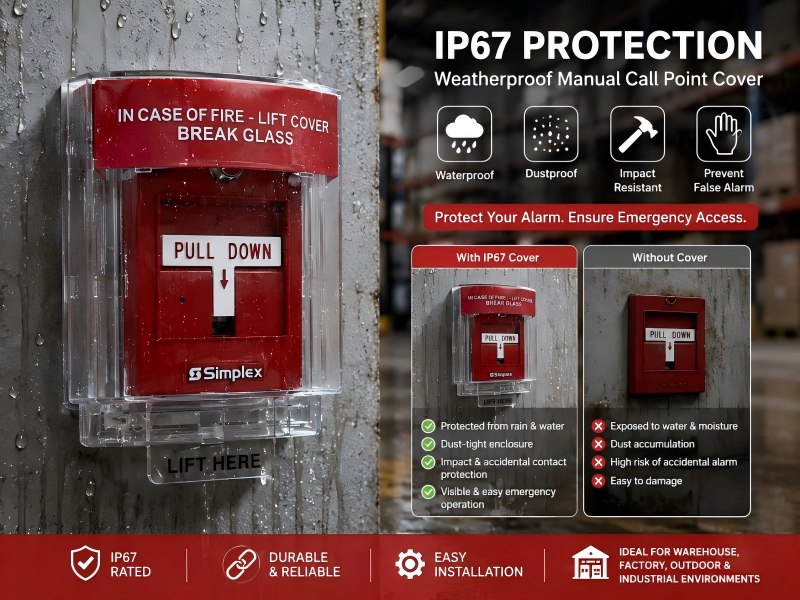
What Is an IP67 Weatherproof Manual Call Point Cover and Why Is It Important?
An IP67 Weatherproof Manual Call Point Cover is a protective enclosure installed over a fire alarm manual call point to help shield it from dust, water, accidental contact, physical damage, and unwanted operation while keeping the alarm point visible and accessible. It sounds like a small fire alarm accessory. In a real project, though, it can solve several very annoying problems. A manual call point may sit quietly on a wall for years. Yet it must work immediately when someone discovers a fire. Rain, dust, cleaning water, passing equipment, careless contact, and public misuse can all put that simple requirement at risk. That is why an IP67 Weatherproof Manual Call Point Cover is increasingly considered when engineers plan outdoor, semi-outdoor, industrial, and high-traffic fire alarm installations. For wholesalers and project contractors, the question is not simply, “Does the cover fit?” The better question is: Will it keep the manual call point protected without making emergency operation difficult? What Is an IP67 Weatherproof Manual Call Point Cover? A manual call point cover is normally a transparent protective housing fitted around a wall-mounted fire alarm activation point. The transparent structure keeps the alarm device easy to identify. A hinged front lid creates......
17
2026-08
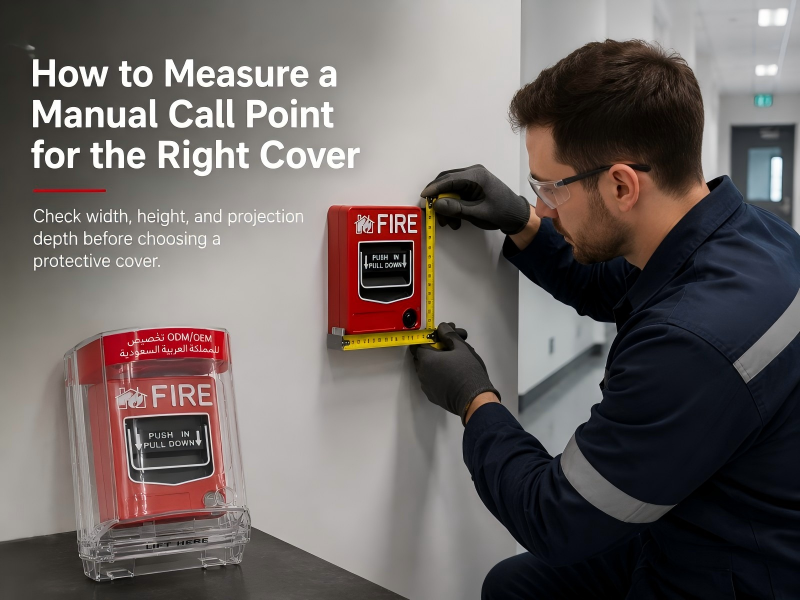
How to Choose the Correct Size Protective Manual Call Point Cover?
The correct manual call point cover size is determined by the installed call point’s width, height, projection depth, mounting box, cable entry, and the usable internal space of the protective cover. A protective cover can look large enough in a product photo and still fail during installation. Why? Because a manual call point is not flat. Its front face may be compact, but the installed unit can include a surface box, spacer, conduit, cable gland, waterproof fitting, or mounting plate. All these parts affect the real manual call point cover size required for a project. For one installation, getting the size wrong is frustrating. For a distributor buying 300 or 500 units, it can mean returns, project delays, and extra labor. So, before choosing a manual call point cover, measure the complete installed device—not just what you see from the front. What Size Manual Call Point Cover Do You Need? Start with three dimensions: Width × Height × Projection Depth Then check four more installation details: Back box or spacer Cable or conduit entry Lid opening clearance Available wall space The cover should provide enough usable internal space around the installed manual call point without touching the device or interfering......
27
2026-07
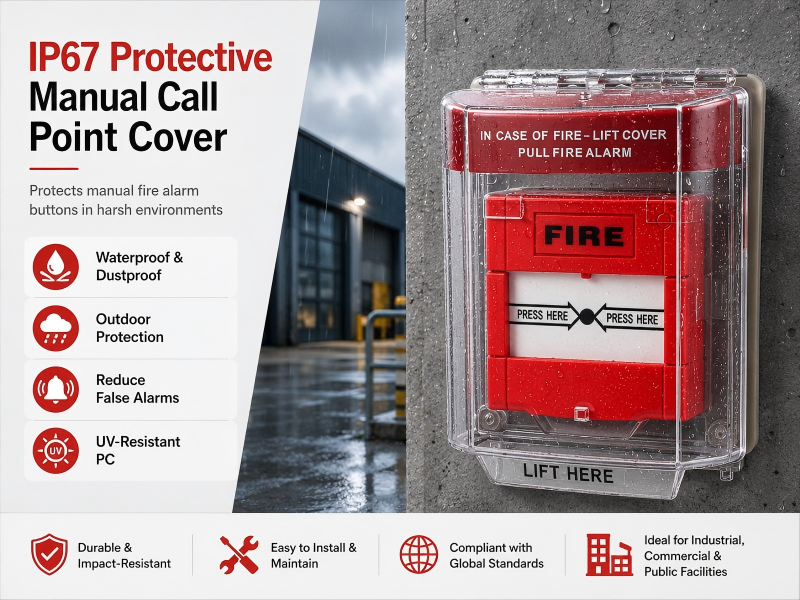
What Is an IP67 Protective Manual Call Point Cover?
An IP67 Protective Manual Call Point Cover is a weather-resistant safety cover designed to protect manual fire alarm call points from dust, rain, water spray, accidental impact, and false activation in demanding indoor or outdoor environments. So, What Does IP67 Really Mean? Let’s keep it simple. “IP” stands for Ingress Protection. The first number shows protection against solids like dust. The second number shows protection against water. Under IEC 60529-style rating logic, IP67 generally means the enclosure is dust-tight and protected against temporary immersion in water up to about 1 meter for 30 minutes. For a fire alarm accessory, that matters a lot. A manual call point may sit near an outdoor gate, a warehouse loading bay, a school corridor, a tunnel, a metro station, or a coastal facility where air feels damp enough to chew metal. Without a cover, dust, rain, cleaning water, UV exposure, and random bumps can slowly turn a reliable alarm point into a maintenance headache. That is where an IP67 Protective Manual Call Point Cover earns its keep. What Is a Manual Call Point? A manual call point is the red fire alarm button or break-glass unit that lets a person manually raise a fire......
08
2026-07
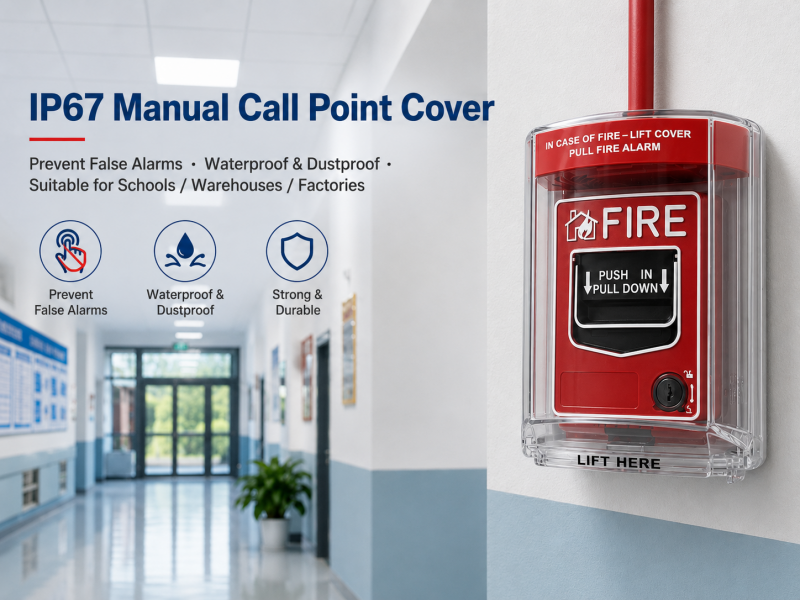
When Do You Need a Manual Call Point Cover with Alarm?
A manual call point cover with alarm is a protective accessory installed over a manual fire alarm call point to reduce accidental or malicious activation while keeping the emergency button visible and accessible. A manual call point cover with alarm becomes necessary when a fire alarm button is exposed to false triggering, public misuse, impact damage, harsh weather, or high-traffic contact. For schools, hospitals, factories, shopping malls, warehouses, hotels, and outdoor sites, it helps protect the manual call point without removing its emergency function. In B2B fire safety projects, the real value is not only device protection, but also fewer false alarms, easier maintenance, better site management, and a more reliable fire alarm system. Why Manual Call Points Need Extra Protection? Manual call points are designed for quick human activation during a fire emergency. That is exactly why they are usually installed in visible and reachable positions. However, this also makes them vulnerable. In public areas, someone may press the call point by mistake. In schools or transport stations, misuse can happen. In warehouses or factories, trolleys, forklifts, tools, or cleaning equipment may hit the device. In outdoor or semi-outdoor locations, rain, dust, moisture, and UV exposure can shorten the......
06
2026-07
Where Should You Install an IP67 Manual Call Point Cover?
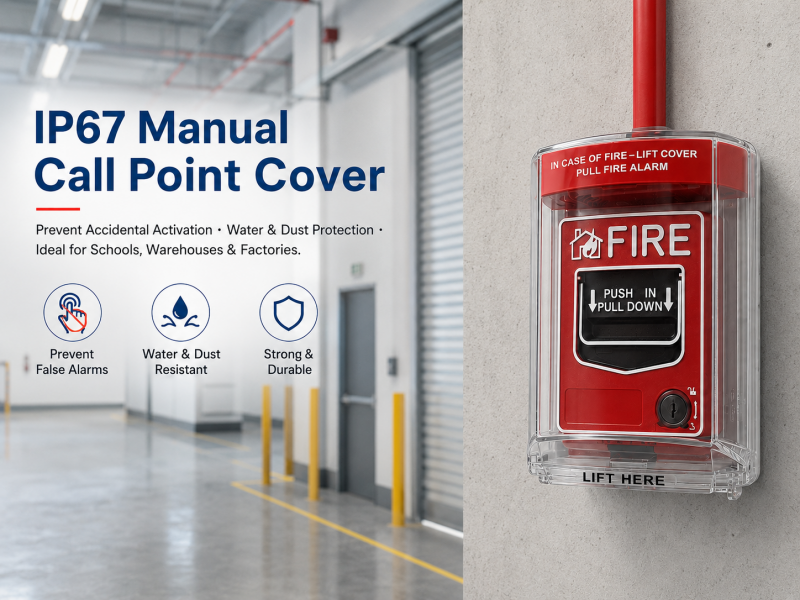
A manual call point cover is a protective enclosure installed over a fire alarm manual call point to help prevent accidental impact, dust, water ingress, and unwanted activation while keeping the alarm button visible and accessible. So, where should you install an IP67 manual call point cover? The simple answer is this: install it wherever a manual call point needs extra protection but must still be easy to find, reach, and operate during an emergency. Sounds simple, right? Well, not always. For B2B wholesalers, fire system contractors, and project buyers, the real question is not only “Can this cover protect the call point?” It is also “Will this cover support a safer, cleaner, more reliable fire alarm layout for the whole site?” Let’s break it down in a practical way. First Things First: Don’t Hide the Alarm The cover protects the manual call point. It must never turn the device into a puzzle. Manual call points are meant for fast human action. In UK guidance for non-residential premises, manual call points are normally positioned at exit doors, should be conspicuous, and should be no higher than 1.4 m from the floor; occupants should not need to travel more than 45......
03
2026-07
How an IP67 Manual Call Point Cover Helps Prevent Accidental Activation?
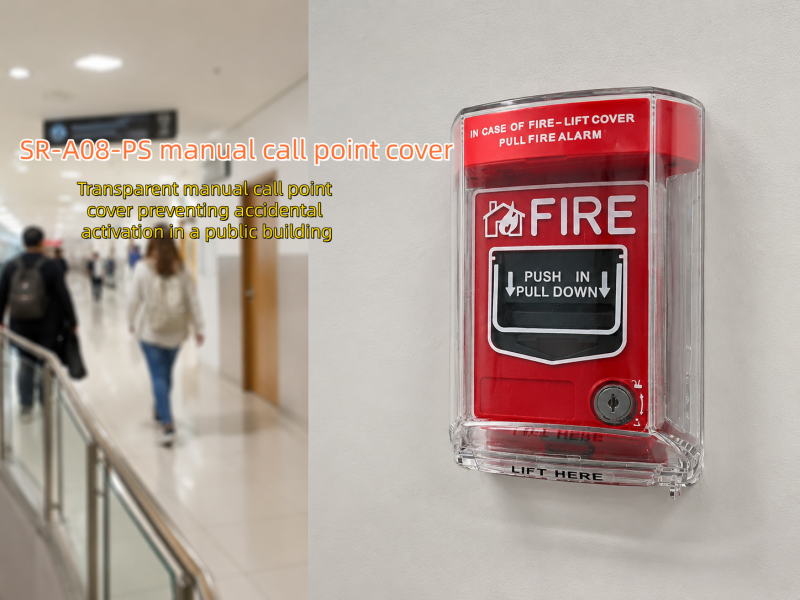
What an IP67 manual call point cover does Why accidental activation happens How IP67 protection helps in real projects Key benefits for wholesalers and engineering contractors Where to use it How to choose the right cover Sumring product value and project fit FAQ An IP67 manual call point cover is a protective enclosure designed to shield manual fire alarm buttons from water, dust, impact, and unwanted operation while keeping emergency access clear. Accidental activation sounds like a small issue—until it happens in a shopping mall, school, warehouse, airport, or factory during working hours. One false alarm can stop operations, trigger evacuation, delay production, and create a messy chain of calls between building managers, security teams, installers, and local fire authorities. And honestly, who wants that headache? For B2B wholesalers and fire safety engineering contractors, the problem is not only technical. It is also commercial. If a manual call point is too exposed, end users complain. If it is too hard to access, safety is questioned. The sweet spot is simple: protect the device, but don’t block its emergency function. That’s where an IP67 manual call point cover earns its place. So, What Does an IP67 Manual Call Point Cover......
01
2026-07
Manual Call Point Cover vs STI Cover: Which One Should You Choose?
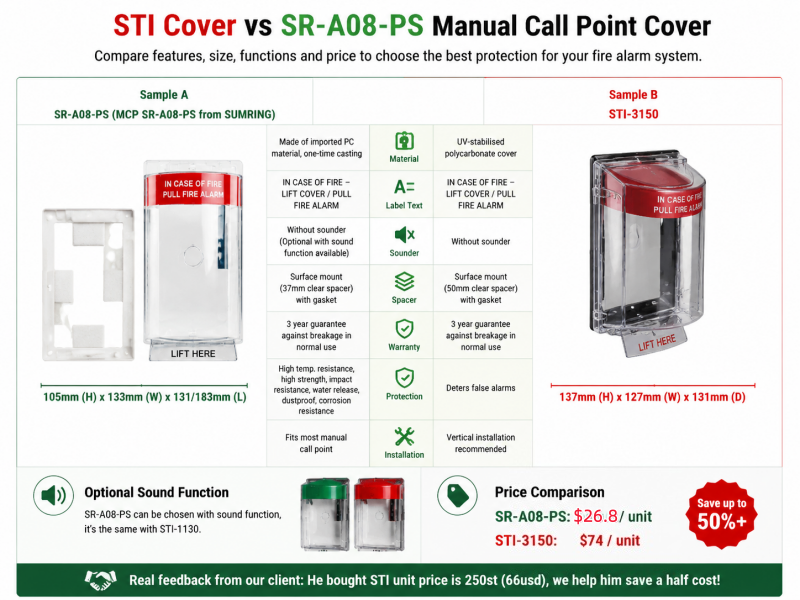
A manual call point cover is a protective fire safety accessory designed to prevent accidental activation, reduce false alarms, and protect emergency alarm buttons from environmental damage and misuse. In modern fire alarm systems, protecting manual call points (MCPs) is as important as the alarm system itself. Accidental triggering, vandalism, dust, and water exposure can all lead to false alarms and system disruption. The market is dominated by STI protective covers, but cost and installation flexibility are pushing many buyers to look for alternatives such as the SR-A08-PS manual call point cover. Based on real product comparison data between STI cover and SR-A08-PS, this guide helps you understand which solution is better for your project requirements. What Is a Manual Call Point Cover? A manual call point cover is installed over emergency fire alarm buttons to: Prevent accidental pressing Reduce false fire alarms Protect against dust, water, UV exposure Extend device lifespan Improve compliance in public environments It is widely used in: Schools Warehouses Hotels Commercial buildings Industrial facilities STI Cover vs SR-A08-PS: Core Comparison Table Feature STI Cover (STI-3150) SR-A08-PS Material UV-stabilised polycarbonate, one-time casting High-strength PC, impact & heat resistant Durability High impact & weather resistance Impact,......
17
2026-06
What Should You Check Before IP67 Manual Call Point Cover Placement?
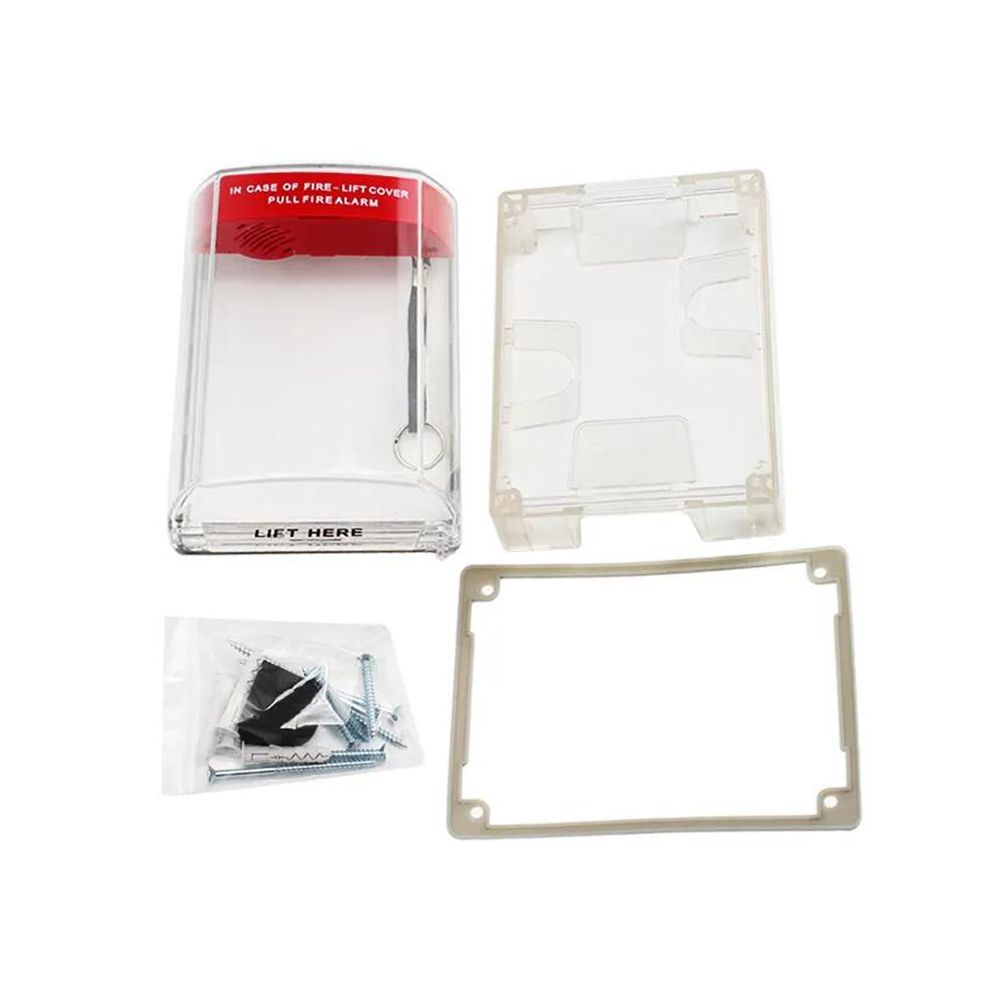
Manual call point cover placement is the process of checking whether a protective enclosure can be positioned around a fire alarm manual call point while maintaining visibility, emergency access, operating clearance, environmental protection and maintenance access. An IP67 protective cover may look simple on a product drawing. On a real project, however, the wall, door, back box, conduit, device depth and surrounding equipment can completely change whether the installation works. That is why this IP67 manual call point cover placement guide focuses on what contractors and project buyers should verify before drilling, installation or bulk ordering. For one alarm point, a placement mistake may mean a few minutes of rework. Across a hotel, warehouse, factory or commercial project with hundreds of devices, the same small mistake can affect installation schedules, labor and product compatibility. Why Check Manual Call Point Cover Placement Before Installation? The protective cover normally does not determine where the fire alarm manual call point should be located. The project fire alarm design and applicable local requirements determine the call point position. The cover is then fitted around that approved position when additional protection is required. Therefore, good manual call point cover placement starts by asking: Is the......
16
2026-06
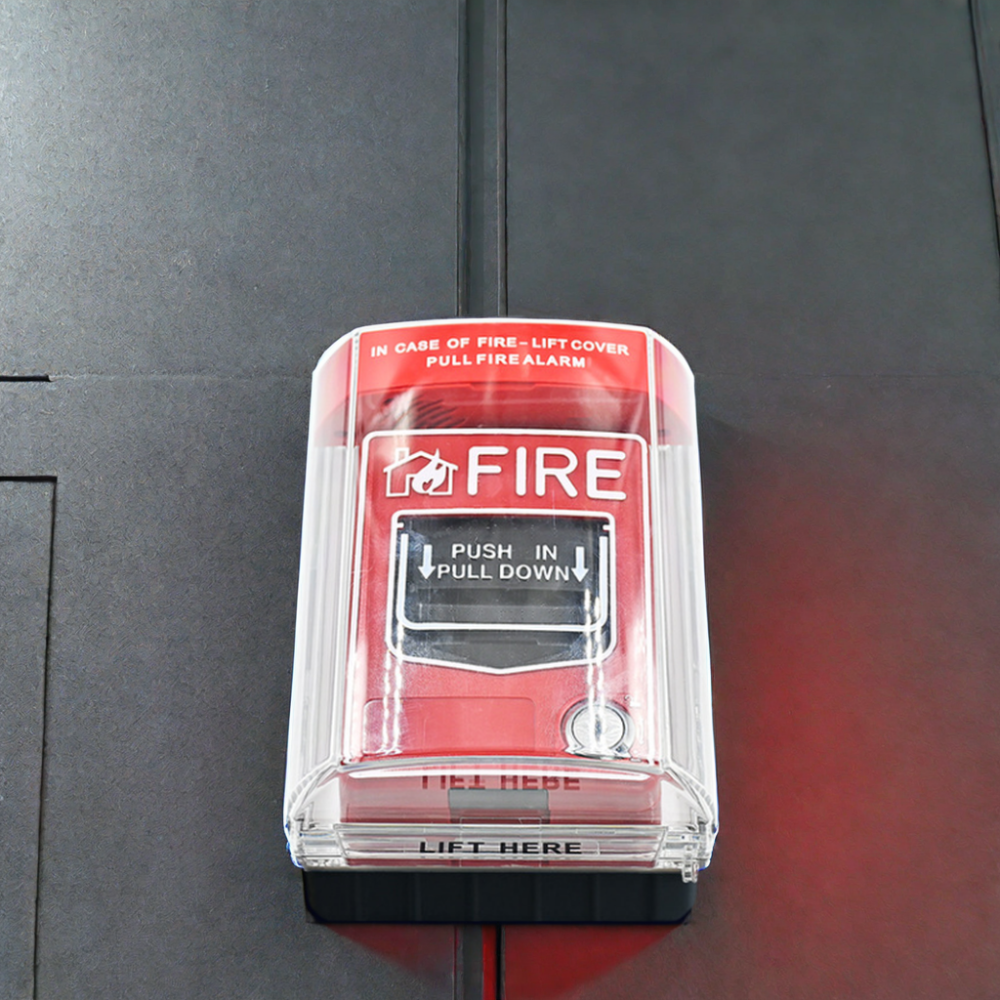
Why Do Commercial Buildings Need Call Point Covers?
16
2026-06
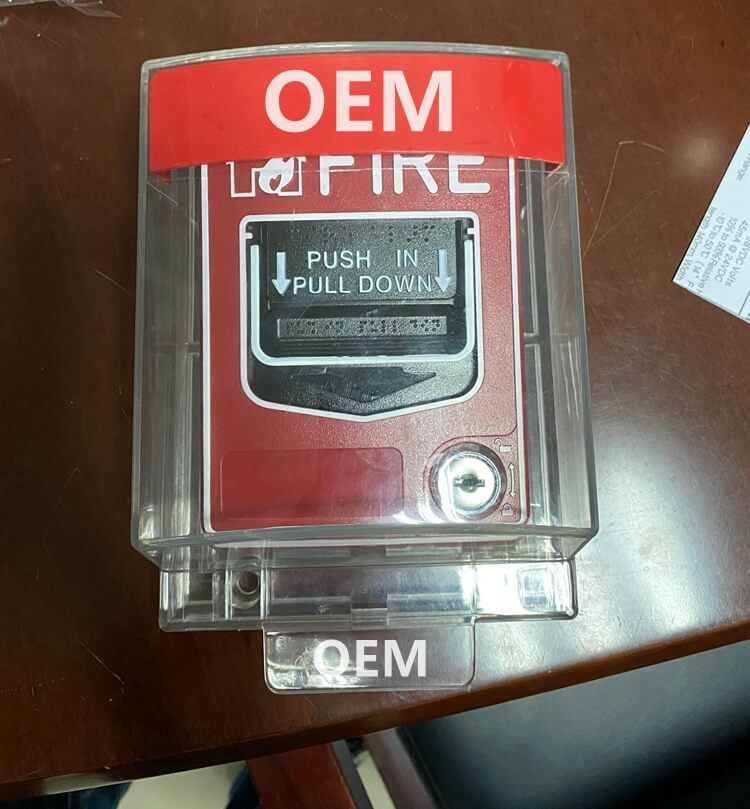
Do Fire Alarm Plastic Covers Really Protect Pull Stations?
fire alarm plastic cover
11
2026-06
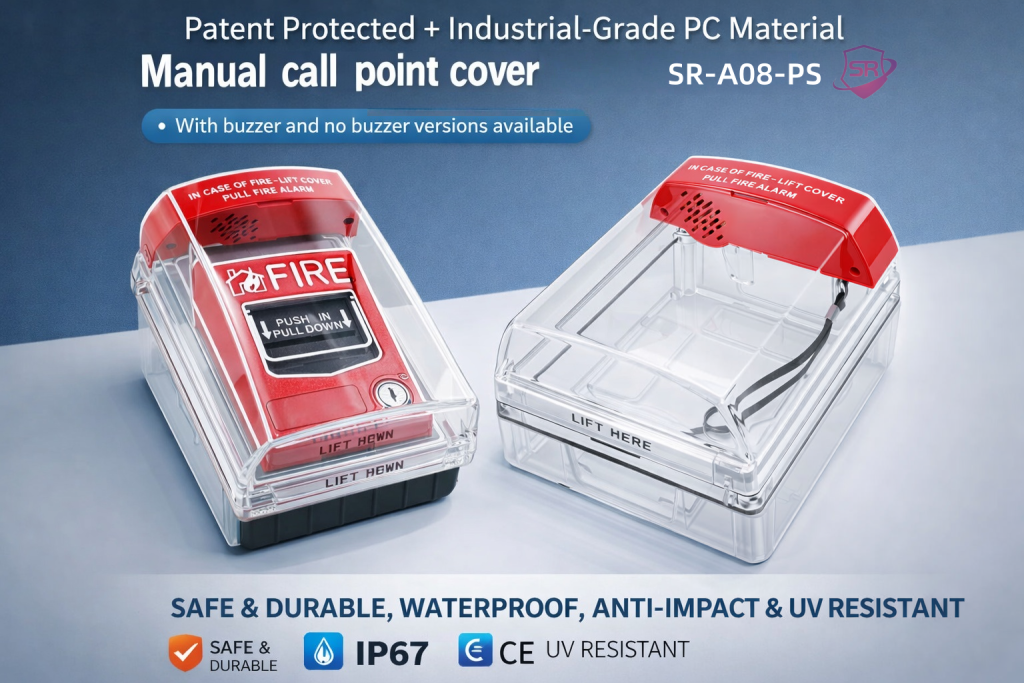
Why Do You Need a Manual Call Point Cover for Your Fire Alarm System?
10
2026-06
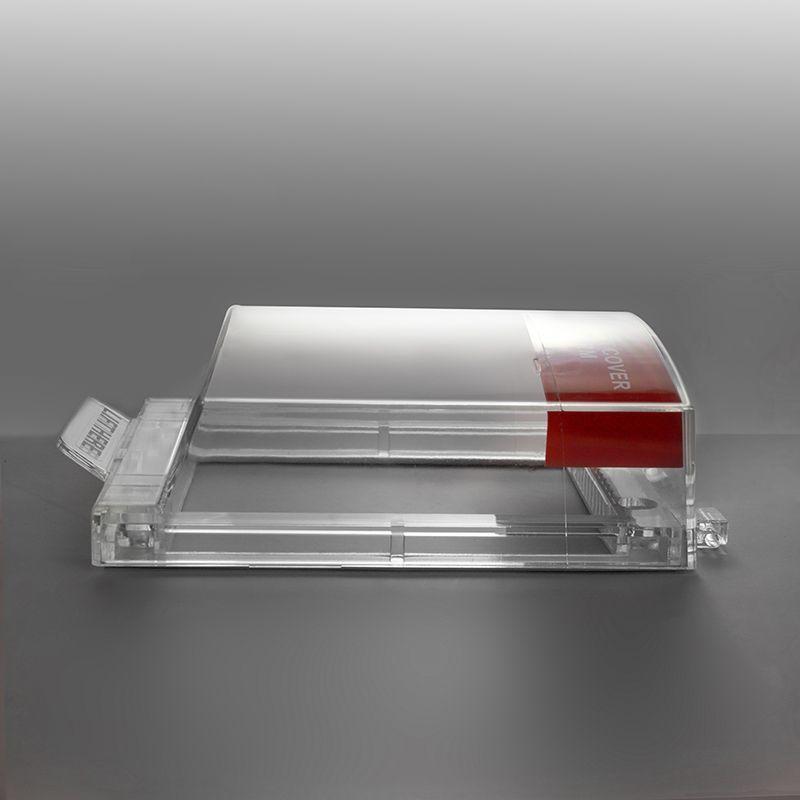
Do Fire Call Points Need a Manual Call Point Cover for Protection?
Let's Discuss Your Project
Contact us for suitable solution, and to meet your needs with maximum efficiency!
1. How can I become a SUMRING distributor?
We welcome global partners for fire alarm system distribution.You can apply for:Regional distributor rights,OEM branding cooperation,Project-based supply agreements,Long-term B2B partnership,Contact us to discuss your target market and business plan.
2. Why choose SUMRING fire alarm systems?
Our Key advantages include:Factory-direct fire alarm manufacturer pricing;Fast delivery for urgent engineering projects;Complete fire detection product portfolio;OEM/ODM customization capability;Stable quality control under ISO9001 system;Suitable for global mid-tier fire protection projects.
3. Do you provide technical support for fire alarm systems?
Yes, we provide full technical support including:Fire alarm system installation guidance,Wiring and configuration support,Troubleshooting assistance,Project-based consultation for distributors and contractors.
4. What shipping methods are available for fire alarm products?
We offer global logistics solutions:Sea freight (main export via Shenzhen / Hong Kong ports),Air freight,Express delivery (DHL, FedEx, UPS, TNT),China-Europe Railway Express (for EU markets).