How an IP67 Manual Call Point Cover Helps Prevent Accidental Activation?
- What an IP67 manual call point cover does
- Why accidental activation happens
- How IP67 protection helps in real projects
- Key benefits for wholesalers and engineering contractors
- Where to use it
- How to choose the right cover
- Sumring product value and project fit
- FAQ
An IP67 manual call point cover is a protective enclosure designed to shield manual fire alarm buttons from water, dust, impact, and unwanted operation while keeping emergency access clear.
Accidental activation sounds like a small issue—until it happens in a shopping mall, school, warehouse, airport, or factory during working hours. One false alarm can stop operations, trigger evacuation, delay production, and create a messy chain of calls between building managers, security teams, installers, and local fire authorities.
And honestly, who wants that headache?
For B2B wholesalers and fire safety engineering contractors, the problem is not only technical. It is also commercial. If a manual call point is too exposed, end users complain. If it is too hard to access, safety is questioned. The sweet spot is simple: protect the device, but don’t block its emergency function. That’s where an IP67 manual call point cover earns its place.
So, What Does an IP67 Manual Call Point Cover Actually Do?
A manual call point is made for human action. When someone sees a fire, they press or break the call point to trigger the fire alarm system. Simple, direct, and fast.
But here’s the catch: because manual call points are usually installed in visible, easy-to-reach areas, they are also easy to bump, splash, hit, or misuse.
An IP67 manual call point cover acts like a clear safety guard. It covers the manual call point while still allowing people to see and access it during an emergency. Think of it like a helmet for the alarm button—not hiding it, not weakening it, just giving it practical protection.
The IP67 rating means the cover is built to resist dust and temporary water immersion under defined test conditions. In daily use, that matters a lot. Dusty warehouse? Wet outdoor corridor? Cleaning water in a public area? Coastal air? No problem, or at least far fewer problems.
Why Do Manual Call Points Get Activated by Accident?
You know what’s funny? Many false activations are not caused by system failure. They are caused by normal human movement and normal site conditions.
Common causes include:
- Someone bumps into the manual call point with a cart or trolley
- Children press it out of curiosity in schools or public areas
- Workers hit it during loading, repair, or decoration
- Rainwater or dust affects the exposed device
- Cleaning staff spray water near the wall-mounted unit
- Vibration or impact happens in industrial sites
In other words, the call point is doing its job by staying accessible. The problem is that the environment is rougher than the device expects.
This is especially true in B2B projects. A contractor may install hundreds of manual call points across a logistics park, hotel group, school campus, or industrial plant. One weak spot becomes repeated after-sales trouble. Nobody likes getting that call: “Your alarm system keeps going off for no reason.”
The Big Win: Physical Protection Without Blocking Emergency Use
The main purpose of an IP67 manual call point cover is to reduce accidental contact. It adds a protective layer between the user and the alarm button.
In normal conditions, the cover stays closed. If someone brushes against it, leans a box near it, or splashes water over it, the call point is less likely to be triggered. During a real emergency, people can still open the cover and operate the button.
That balance is key.
For engineering contractors, this means safer installation in high-traffic areas. For wholesalers, it means a product that solves a clear pain point for dealers, installers, and project buyers. It is not a decorative accessory. It is a risk-control part.
A good cover should be:
- Easy to recognize
- Easy to open during emergency use
- Strong enough for public and industrial environments
- Clear enough to show the manual call point inside
- Compatible with common call point sizes
- Suitable for indoor and outdoor installation
When these points are met, the cover becomes a quiet but valuable part of the fire alarm system.
Why IP67 Matters More Than People Think?
Some buyers may ask, “Do we really need IP67? Isn’t a basic plastic cover enough?”
Well, sometimes a basic cover is enough. For a clean indoor office corridor, maybe yes. But projects are not always that gentle.
Let me explain.
IP67 protection is useful when manual call points are installed in tougher spaces. Dust can enter small gaps and affect device cleanliness. Water can enter during rain, cleaning, or humid weather. In outdoor and semi-outdoor locations, these small problems build up over time.
An IP67 manual call point cover helps reduce that exposure. It gives the installer more confidence when placing call points in demanding environments.
For example, in a warehouse, forklifts move around all day. In a school, students pass by the wall every few minutes. In a factory, dust and moisture may be part of daily life. In a seaside project, salt air and humidity can be nasty—quietly nasty. A stronger protective cover helps keep the call point safer and cleaner.
Where Is an IP67 Manual Call Point Cover Most Useful?
The product is especially suitable for projects where accidental touch, impact, or weather exposure is likely.
Typical application areas include:
Schools and universities
Students are curious. That’s not a crime; it’s just human nature. A protective cover helps prevent playful pressing while keeping the emergency button visible.
Shopping malls and supermarkets
Public traffic is heavy. Bags, carts, strollers, and cleaning machines may hit wall-mounted devices.
Warehouses and logistics centers
Forklifts, pallets, and moving goods create a higher risk of impact. A cover can help reduce unnecessary alarm events.
Factories and workshops
Dust, moisture, vibration, and staff movement can all increase false activation risk.
Hospitals and care facilities
False alarms may disturb patients and create stress. Protection matters, but emergency access must remain simple.
Outdoor corridors and semi-open areas
Rain, wind, dust, and humidity make IP67 protection much more valuable.
Parking lots and underground spaces
These areas often have moisture, dust, and vehicle movement. A protected manual call point is a smart move.
What B2B Buyers Should Check Before Ordering?
For wholesalers and engineering contractors, product selection should not stop at appearance. A cover may look simple, but the details decide whether it works well on site.
Before ordering an IP67 manual call point cover, check these points:
- Material strength: High-strength PC material is commonly used because it offers impact resistance and clear visibility.
- Waterproof and dustproof design: The cover should match IP67 protection needs for harsher locations.
- Size compatibility: It should fit most common manual call points, exit buttons, or emergency buttons.
- Alarm option: Some models include a buzzer to warn when the cover is opened.
- Reset method: A key reset design helps site managers restore the cover after inspection or activation.
- Customization: Text, color, label, and packaging options can help wholesalers serve local markets better.
- Installation simplicity: Contractors care about time. A cover that installs cleanly saves labor cost.
Here’s the key point: a good cover reduces problems after installation. That matters more than saving a few cents on the first order.
How It Helps Engineering Contractors Reduce After-Sales Trouble?
Engineering contractors live in the real world. On paper, a fire alarm system may look perfect. On site, things get bumped, sprayed, scratched, and misunderstood.
An IP67 manual call point cover helps contractors reduce repeated service calls caused by accidental activation or environmental exposure. That means fewer site complaints, fewer emergency visits, and a better project reputation.
It also helps during system handover. When the contractor explains that manual call points are protected against accidental contact, the building owner feels more secure. Not flashy. Not dramatic. But very practical.
And in fire safety, practical wins.
Why Wholesalers Like This Product Category?
For wholesalers, manual call point covers are useful add-on products. They pair naturally with manual call points, fire alarm panels, sounders, strobes, and fire alarm accessories.
The buying logic is easy for customers to understand:
“You already need manual call points. Do you also want to reduce accidental activation and protect them from water, dust, and impact?”
That is a simple sales conversation.
Because the product solves a visible problem, it can support repeat orders from installers, distributors, public facility suppliers, and project contractors. It is also suitable for OEM and ODM customization, especially when local language labels or brand packaging are needed.
Why Sumring’s IP67 Manual Call Point Cover Fits Project Demand?
Sumring’s manual call point cover series is designed for B2B fire alarm and security projects where durability, compatibility, and stable supply matter.
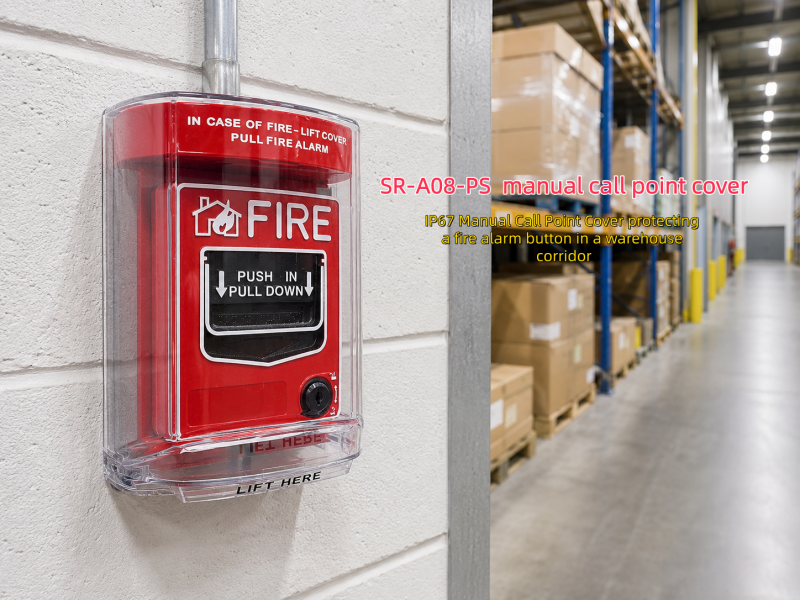
For example, Sumring’s SR-A08 series is made for manual call points, emergency buttons, exit buttons, and similar wall-mounted safety devices. It uses strong PC material, supports waterproof and dustproof protection, and can be used in indoor, outdoor, and semi-outdoor environments.
For project buyers, this means fewer worries about accidental touch, dust, rain, or public-area misuse. For wholesalers, it means a practical accessory with clear selling points. For contractors, it means smoother installation and fewer return visits.
You know what? Sometimes the most valuable part of a fire alarm system is not the loudest device. It is the small part that prevents trouble before anyone notices.
Final : Small Cover, Big Difference
An IP67 manual call point cover may look like a small accessory, but it plays a serious role in fire alarm projects. It helps prevent accidental activation, protects against water and dust, reduces public misuse, and improves the long-term reliability of manual call point installations.
For B2B wholesalers, it is a smart product to add to fire alarm accessory lines. For engineering contractors, it helps reduce site problems and protect project quality. For building owners, it brings peace of mind without making emergency operation harder.
And that’s the real value, isn’t it? A safety device should be ready when needed—and protected when not.
FAQ:
1. What is an IP67 manual call point cover used for?
An IP67 manual call point cover is used to protect manual fire alarm buttons from accidental activation, dust, water, impact, and public misuse while keeping the button accessible during emergencies.
2. Can an IP67 manual call point cover stop false fire alarms?
It can help reduce false alarms caused by accidental pressing, impact, or environmental exposure. It does not replace proper fire alarm system maintenance, but it lowers a common risk.
3. Is an IP67 manual call point cover suitable for outdoor use?
Yes, an IP67-rated cover is suitable for many outdoor and semi-outdoor locations because it offers strong resistance to dust and water exposure.
4. Where should manual call point covers be installed?
They are commonly installed in schools, warehouses, factories, shopping malls, hospitals, parking areas, outdoor corridors, and other high-traffic or harsh environments.
5. Does the cover make emergency operation slower?
A well-designed cover should not block emergency use. It adds a protective step, but people can still open the cover and activate the manual call point when needed.
6. What material is good for a manual call point protective cover?
High-strength PC material is widely used because it is clear, durable, impact-resistant, and suitable for public safety device protection.
7. Can wholesalers customize manual call point covers?
Yes. Many B2B buyers request custom colors, labels, warning text, logos, packaging, or buzzer options for local market needs.
8. Why should contractors add IP67 covers to fire alarm projects?
Contractors use IP67 manual call point covers to reduce accidental activation, improve device protection, lower after-sales service pressure, and make installations more reliable in demanding sites.