How Are Smoke and CO Combo Alarms Quality-Tested Before Shipment?
The term smoke and CO alarm testing means verifying a combination alarm’s smoke sensor, carbon monoxide sensor, electronics, warning functions, and batch consistency before shipment. Factory screening, laboratory performance evaluation, and certification testing are different activities.
For overseas distributors, contractors, and private-label brands, documented checks help reduce quality disputes and costly returns. A convincing supplier audit follows the product from purchased components through functional inspection to shipment release.
Why Must Both Sensing Functions Be Verified Separately?
A combination alarm contains two different safety functions. A buzzer test cannot demonstrate sensor performance, and passing a smoke test does not prove CO detection.
A credible smoke and CO alarm testing plan therefore separates smoke-channel verification, CO-channel verification, shared electronics, and complete-device checks. Buyers should request the approved test plan, applicable acceptance criteria, and records identifying the model and production lot.
Which Incoming Materials Should Be Inspected?
Incoming checks may cover sensors, circuit boards, battery contacts, sounders, LEDs, housings, and packaging. Each component needs defined acceptance criteria and an appropriate inspection method. Incoming inspection records should identify supplier lots and document any rejected materials. For international purchasing programs, this creates a clearer basis for resolving recurring component problems.
In a dual-sensor smoke and CO alarm inspection, an unapproved component substitution can affect performance or certification scope. smoke and CO alarm testing should therefore include documented component-change approval.
How Do Factories Check the Smoke-Detection Channel?
Factories can evaluate sensing-chamber operation, signal processing, fault indication, and repeatability against approved specifications using validated equipment. Importers should ask how reference equipment is maintained and whether test results are traceable to the exact product revision. A pass/fail sticker alone offers limited assurance without the associated criteria.
Routine screening is not the same as standard-based laboratory testing of fire scenarios or nuisance-alarm resistance. smoke and CO alarm testing needs methods appropriate to each stage; one quick check is not certification evidence.
How Is the CO Sensor Response Evaluated?
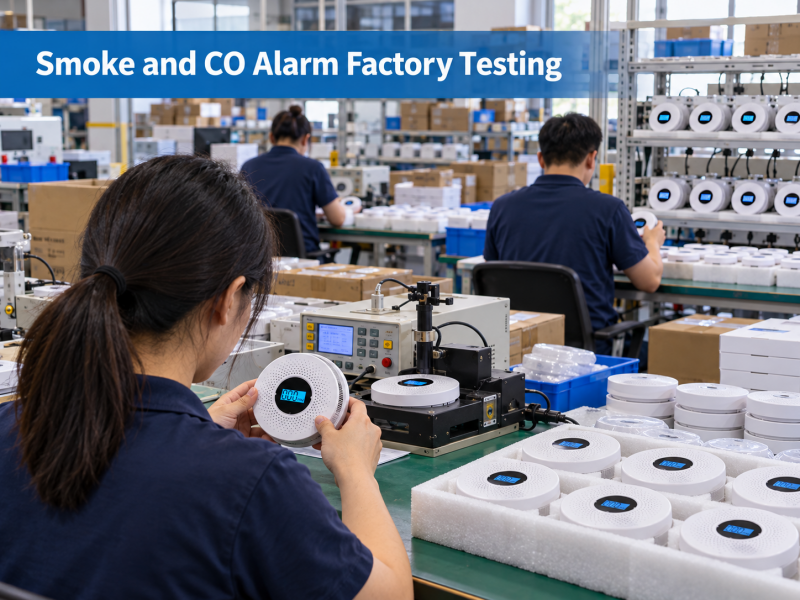
The CO channel needs separate verification. Qualified laboratories assess its response under professionally controlled conditions; production screening uses defined, approved procedures.
As part of smoke and CO alarm testing, CO alarm response time verification should consider acceptance criteria, equipment calibration records, and failure-handling rules. A test button is not proof of CO sensor response. Request a separate explanation of factory screening versus type testing, especially if the selected market requires independently evaluated response performance.
What Electrical and User-Interface Tests Matter?
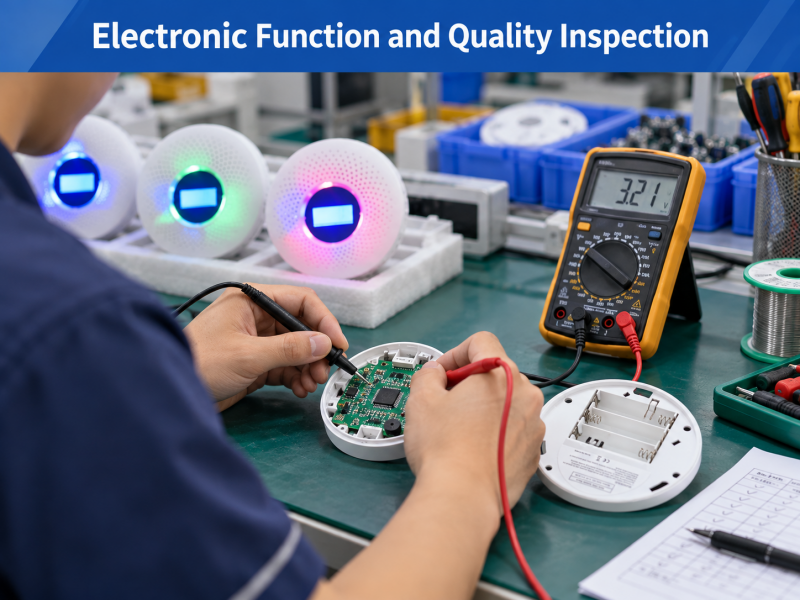
Depending on the design, finished-unit checks may cover power, standby current, audible output, indicators, test/hush functions, low-battery alerts, fault warnings, and recovery.
Under smoke and CO alarm testing, verify only the features on the approved specification. OEM changes to voice, display, power, or enclosure may require an updated plan. The inspection record should identify the configuration actually shipped, including options that change audible messages or display indications.
How Are Durability and Environmental Risks Evaluated?
Design validation may assess temperature, humidity, handling, vibration, and storage risks. Routine production screening does not necessarily repeat these qualification tests. The critical distinction is whether the evidence demonstrates design suitability, continued production consistency, or both.
Request the sample ID, dates, methods, and results. A smoke and CO alarm factory testing plan should distinguish 100% checks, sampled checks, and periodic validation.
Why Do Batch Traceability and Corrective Actions Matter?
Batch traceability should connect materials, production dates, work instructions, inspection results, and shipments. For orders distributed across several countries, lot identification also helps distributors manage complaints and identify affected stock without treating every delivered unit as the same batch.
Failures require segregation, investigation, corrective actions, and reinspection. This makes smoke and CO alarm testing a repeatable quality process.
What Happens During Final and Pre-Shipment Inspection?
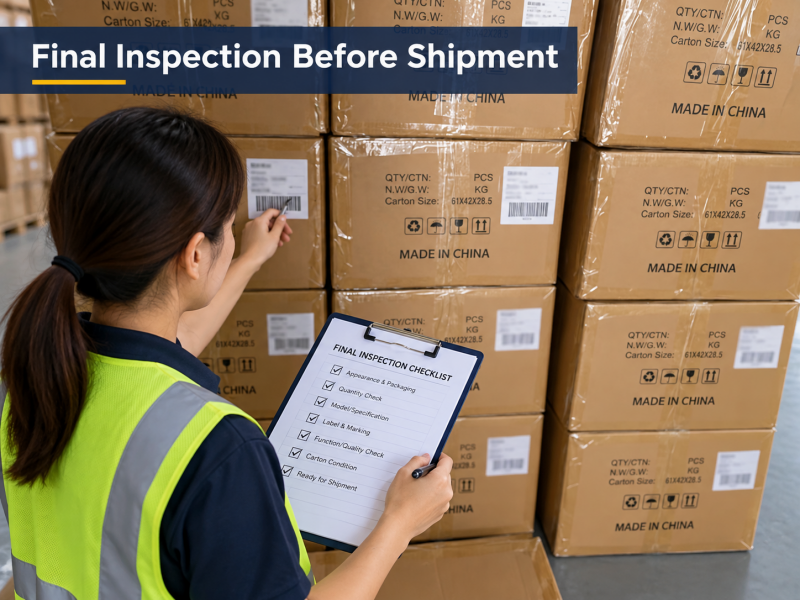
A complete smoke and CO alarm testing program should include pre-shipment inspection. Inspectors compare products with approved samples, covering model, housing, labels, manuals, barcodes, accessories, packaging, and agreed functional checks.
The report should identify the lot, sampling approach, findings, and release decision. Buyers can arrange independent inspection, but factory checks do not replace certification. Before dispatch, agree on sampling rules, defect classifications, acceptance decisions, and the procedure for any corrective inspection. These requirements should be written into the purchase agreement, not left until loading day.
How Can OEM and ODM Changes Affect Quality Approval?
OEM smoke and CO alarm quality control covers more than logos. Battery configuration, sensors, firmware, plastics, labels, and manuals can affect safety or approval scope.
For smoke and CO alarm testing on private-label orders, agree on a golden sample, bill of materials, revisions, inspection plan, and change alerts. Changes to certified characteristics may require re-evaluation. An approved sample should be retained as a reference for appearance and configuration, while controlled technical documents define the performance requirements that cannot be assessed visually.
Which Standards and Documents Should Importers Verify?
Standards vary by market. In the U.S., UL 217 addresses smoke alarms and UL 2034 covers CO alarms; combination units may need both. In Europe, EN 14604 covers smoke alarms and EN 50291-1 addresses CO alarms.
Do not assume a specific model is certified. Verify certificate scope, exact model, holder, and issuing body; obtain applicable reports, datasheets, labeling, and inspection records. See the UL Solutions certification overview.
What Quality Evidence Should B2B Buyers Request From SUMRING?
SUMRING states that it operates under ISO 9001 quality management and supports OEM/ODM. However, system-level credentials do not prove model-specific results.
For model-specific quality assurance, request inspection stages, available records, sample approval, and defect handling. See the SUMRING manufacturer profile and SR-821THS detector specifications; confirm current details before ordering. Buyers should also establish in writing which inspections and documents will accompany their particular shipment, rather than assuming identical quality evidence is available for every product line.
For related decisions, see the smoke and CO combo alarm buying guide and battery-operated detector guide.
FAQs:
1. Does the test button verify both sensors?
Not necessarily. It usually checks specified electronic or warning functions; actual sensor performance requires separate validated evaluation.
2. Is factory testing the same as third-party certification?
No. Internal production inspection and accredited or recognized conformity assessment serve different purposes.
3. Must every unit receive the same tests?
Not always. Testing frequency depends on the approved control plan, product requirements, and applicable standards.
4. Can buyers request inspection records?
Yes. Ask which lot-level reports, sample records, or other evidence the manufacturer can provide.
5. What should an OEM golden sample include?
The agreed configuration, labeling, packaging, hardware or firmware revision, and documented approval criteria.
6. What if an inspected unit fails?
The manufacturer should follow documented containment, investigation, corrective-action, and reinspection procedures.
7. Does ISO 9001 prove an alarm meets UL requirements?
No. Quality-management certification does not establish product compliance with a particular safety standard.
8. When should importers approve shipment?
After reviewing the agreed inspection evidence, outstanding issues, contractual criteria, and required compliance documents.
Conclusion
Reliable smoke and CO alarm testing combines separate sensing verification, production controls, traceable inspection, and acceptance records. Buyers need model- and lot-specific evidence.
Planning a wholesale or OEM/ODM order? Contact SUMRING with the market, order quantity, standards, and inspection requirements to discuss samples and records.