What Are 12 Essential Fire Alarm System Inspection Checklist Items?
A fire alarm system inspection checklist is a structured document used by facility managers, contractors, maintenance teams, and property operators to verify that a commercial fire alarm system is ready for normal operation and emergency response. It should cover equipment status, site conditions, records, responsibilities, corrective actions, and final system restoration.
For commercial projects, the goal is not only to prove that one device activates. A useful checklist creates a repeatable process for finding defects, tracking unresolved issues, coordinating maintenance, and keeping evidence for audits or applicable local requirements.
Why Commercial Facilities Need a Structured Checklist?
Large facilities may include multiple floors, zones, tenants, interfaces, and service teams. Without a standardized fire alarm system inspection checklist, important tasks can be missed between visits.
A strong checklist should answer four questions: What was checked? What was found? Who owns the corrective action? Has the system been returned to normal service?
12 Key Checks for Commercial Projects
1. Confirm Inspection Scope and Responsibility
Define the building, floor, zone, system section, and equipment included in the visit. Record the date, inspector, facility representative, and service company where applicable.
The scope should match the site plan and maintenance program so no area is missed.
2. Review Previous Defects and Open Actions
Before new testing begins, review the previous report. Identify unresolved faults, repeated false alarms, isolated devices, temporary bypasses, or parts waiting for replacement.
A fire alarm system inspection checklist should connect current findings with earlier actions so recurring problems and overdue repairs are visible.
3. Verify Access, Visibility, and Site Conditions
Check whether fire alarm equipment remains visible and accessible. Renovation, furniture, storage racks, partitions, decorations, or tenant changes can create new obstacles after installation.
Record blocked equipment, inaccessible test locations, and areas where maintenance staff cannot work safely.
4. Check the Control Panel Status Before Testing
Confirm whether the panel is in normal condition or showing an alarm, fault, disablement, supervisory, or communication message.
Record abnormal indications before resetting anything. This preserves useful diagnostic information and prevents an existing fault from being hidden during testing.
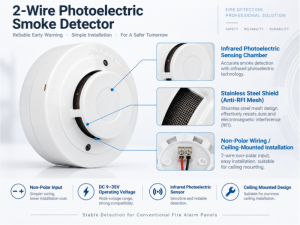
5. Organize Detector Testing by Area and Risk
Organize testing by location and risk. Give extra attention to areas affected by dust, humidity, airflow changes, construction work, heat, or repeated nuisance alarms.
For multi-zone projects, the fire alarm system inspection checklist should show the area tested, test method, and whether the correct zone or location was displayed at the panel.
6. Verify Manual Activation Points
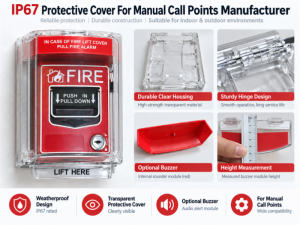
Check manual call points or pull stations for access, visibility, condition, labeling, activation, signal transmission, and reset.
Also review whether room or traffic-flow changes have made a device difficult to reach. If a protective cover is installed, confirm that it remains clear and usable.
7. Confirm Occupant Notification Coverage
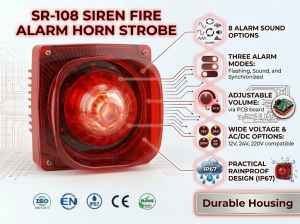
Test representative sounders, bells, horns, strobes, or combined devices according to project requirements.
Look for new barriers such as partitions, machinery noise, tenant fit-outs, or changed room use that may affect how alarms are heard or seen.
8. Review Main and Standby Power Conditions
Record normal power status, charger indication, battery condition, terminal condition, and any power-related fault history.
Where permitted by the system procedure, verify the required power changeover function. Assign any power issue to a named corrective-action owner.
9. Check Interfaces and Cause-and-Effect Functions
Commercial systems may interface with doors, lifts, smoke-control equipment, shutdown functions, remote monitoring, or other building safety systems.
Use approved project documentation or a cause-and-effect matrix to verify selected functions. The fire alarm system inspection checklist should record the input tested, expected output, actual result, and any mismatch.
10. Identify Building or Layout Changes
Ask whether walls were moved, rooms changed use, ceilings were replaced, machinery was added, tenants renovated spaces, or devices were relocated.
A system may remain electrically functional while building changes create new access, visibility, or coverage concerns that require engineering review.
11. Classify Defects and Assign Corrective Actions
Do not record every problem simply as “fail.” Classify findings by urgency and operational impact.
Useful categories include immediate attention, planned corrective action, monitor, and engineering review. Add a responsible party and target date for every open item.
This turns the fire alarm system inspection checklist into a management tool rather than a one-time test sheet.
12. Restore the System and Close the Inspection
After testing, confirm that temporary isolations, bypasses, test modes, disabled outputs, and monitoring arrangements have been restored as required.
Review the panel again and confirm the system is in its intended normal condition. Give the facility representative the inspection record, open-defect list, and recommended follow-up actions.
Recommended Record Fields
Use a consistent format:
| Field | Record |
|---|---|
| Site / Building | Project or facility name |
| Area / Zone | Floor, room, loop, or zone |
| Inspection Item | Function or management point |
| Result | Pass, fail, monitor, or N/A |
| Defect | Clear description |
| Corrective Action | Repair, replace, review, or retest |
| Responsible Party | Facility, contractor, integrator, or supplier |
| Target Date | Planned closure date |
| Retest Status | Open or verified closed |
How Often Should a Commercial Fire Alarm System Be Inspected?
Inspection frequency should follow the applicable local code, authority requirements, system standard, manufacturer instructions, site risk, and maintenance contract.
A warehouse, hotel, hospital, factory, and office may require different schedules. Facility managers should not copy a generic frequency from another country or project. Define the schedule for the specific site and document who is responsible for each test and service visit.
B2B Procurement Considerations
For distributors, contractors, and project buyers, inspection efficiency can affect long-term operating cost. Consider clear zone identification, readable fault information, practical testing, stable power supervision, simple reset procedures, and compatible field devices.
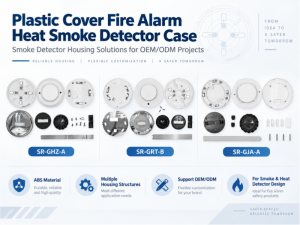
For OEM or ODM projects, buyers may also require customized labels, enclosure options, voltage configurations, language markings, packaging, or product combinations for regional projects.
Sumring supports project-oriented OEM/ODM cooperation for overseas distributors, system integrators, and commercial buyers. Product selection should always match the intended application and local project requirements.
FAQ
1. What is a fire alarm system inspection checklist?
It is a structured record used to verify system condition, selected functions, site changes, defects, corrective actions, and restoration after inspection.
2. Who should use it?
Facility managers, maintenance teams, contractors, system integrators, building owners, and authorized service personnel can use it according to their responsibilities.
3. Should every device be tested during every visit?
The required scope depends on the applicable standard, maintenance program, system type, and local rules. Follow the approved schedule for the specific project.
4. Why include building changes?
New partitions, machinery, storage layouts, ceilings, or room uses can affect device access, visibility, or coverage.
5. What happens when a defect is found?
Record it clearly, assign responsibility, set a target date, complete corrective work, and retest the affected function before closure.
6. Can this format be used across multiple sites?
Yes. A standardized fire alarm system inspection checklist helps teams compare recurring issues, overdue actions, and maintenance performance across facilities.
Conclusion
A commercial inspection should produce more than a pass-or-fail result. It should give facility managers a clear view of system status, unresolved risks, responsibilities, and next actions.
Using a fire alarm system inspection checklist built around these 12 checks helps commercial teams connect technical testing with facility management, corrective-action tracking, and long-term maintenance planning.
Need a fire alarm solution for a commercial project, distribution market, or OEM/ODM program? Contact Sumring with your system type, target market, required functions, and estimated quantity to discuss a project-oriented solution.