Welcome to Shenzhen Sumring Technology Co., Ltd.

BLOG

Winter Carbon Monoxide Safety Guide for Residential Projects

Classification: BLOG Author: sumringxadmin Time: April 3, 2026

Winter carbon monoxide safety for residential projects is a planned approach to reducing CO exposure risks through suitable detector selection, correct placement, maintenance planning, and project-specific alarm configuration.

For housing developers, distributors, property managers, landlords, contractors, and safety product importers, winter CO protection involves more than purchasing individual alarms.

Cold weather increases the operating time of furnaces, boilers, fireplaces, gas water heaters, and other fuel-burning equipment. At the same time, residential buildings are often kept more tightly closed to retain heat.

A successful winter carbon monoxide safety program therefore needs to consider building type, sleeping areas, heating sources, installation method, maintenance requirements, target-market standards, and long-term replacement costs.

This guide explains how B2B buyers can develop a practical residential CO alarm solution for apartments, rental properties, housing developments, hotels, dormitories, and similar projects.

Why Is Winter Carbon Monoxide Safety Important for Residential Projects?

Residential projects normally contain many different potential CO risk environments.

They may include:

  • Apartments with gas boilers or water heaters
  • Houses with fireplaces or furnaces
  • Rental properties with different heating systems
  • Buildings connected to enclosed parking areas
  • Dormitories and residential accommodation
  • Properties using backup generators during winter power failures

Carbon monoxide is especially difficult to manage because occupants cannot reliably detect it through smell, sight, or taste.

For project buyers, winter carbon monoxide safety is therefore not simply a product issue. It is a building safety planning issue.

A detector must be selected according to the actual application rather than choosing one product for every location.

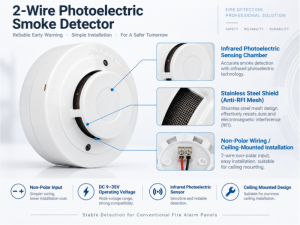
combination smoke and carbon monoxide alarm

Step 1: Map the CO Risk Areas Before Selecting Detectors

The first stage of a residential CO project should be risk mapping.

Instead of asking, “Which CO alarm is cheapest?”, project buyers should first determine where CO could originate and where occupants require warning.

Important areas may include sleeping zones, corridors near bedrooms, living floors, rooms with fuel-burning equipment, attached-garage interfaces, and apartments using gas heating.

The U.S. Consumer Product Safety Commission recommends CO alarms on every level of a home and outside sleeping areas. It also recommends following the manufacturer’s installation instructions and avoiding unsuitable positions such as locations where furniture or curtains may cover the alarm.

Local building regulations can differ, so winter carbon monoxide safety specifications should always be checked against the destination country’s applicable codes and project requirements.

Step 2: Choose the Right CO Alarm Configuration

Different residential projects require different detector configurations.

Standalone CO Alarm

A battery-powered standalone alarm can be suitable for apartments, rental properties, existing homes, and retrofit projects where additional wiring is difficult.

For example, Sumring’s SR-907-2 uses an electrochemical CO sensor, LCD display, battery supply, audible alarm, LED indication, and low-battery warning.

Standalone products can help simplify winter carbon monoxide safety upgrades in existing residential buildings.

Smoke and CO Combination Alarm

Some projects require both fire smoke detection and carbon monoxide monitoring.

A combined unit can reduce the number of devices installed in a room while simplifying procurement and maintenance.

The Sumring SR-821THS combines photoelectric smoke detection and CO detection with battery operation, sound and flash warning, test/hush functions, and low-battery indication.

For apartment developers and housing projects, buyers should compare separate detectors and combination alarms based on project specifications rather than product price alone.

Step 3: Evaluate the Specification Before Bulk Procurement

A professional winter carbon monoxide safety tender should define technical requirements before requesting quotations.

B2B buyers should normally compare:

Detection technology: Electrochemical sensing is commonly used for residential CO detection.

Power supply: Battery, replaceable battery, sealed battery, AC power, or AC with backup power may suit different applications.

Alarm indication: Audible alarm, LED indication, LCD display, voice warning, or connected notification may be required.

Installation method: Wall mounting, ceiling mounting, plug-in installation, or wired installation can affect labor costs.

Maintenance functions: Low-battery indication, fault warning, test button, hush function, and end-of-life indication can simplify property management.

Target-market requirements: Certification and standards should be confirmed before mass production according to the country and project.

For example, CPSC advises U.S. consumers to choose CO alarms meeting the applicable UL 2034 requirements.

Manufacturers should never assume that one certification automatically satisfies every market.

Step 4: Calculate Project Cost, Not Only Unit Price

Lowest unit price does not always produce the lowest project cost.

A winter carbon monoxide safety procurement calculation should also include installation labor, batteries, maintenance frequency, packaging, replacement schedule, warranty support, spare units, logistics, and after-sales service.

Consider a large apartment project with thousands of detectors.

Even a small difference in battery replacement frequency or installation time can create significant lifecycle costs.

This is why developers and distributors increasingly evaluate total cost of ownership rather than simply comparing FOB prices.

Step 5: Plan Maintenance Before Winter Begins

Detector deployment is only the beginning of a residential CO protection program.

CPSC recommends testing CO alarms monthly and maintaining or replacing batteries according to product instructions. It also advises keeping outdoor fuel-burning appliance vents clear so CO does not accumulate inside buildings.

For property managers, winter carbon monoxide safety preparation can include:

pre-season detector testing, battery inspection, alarm replacement checks, heating-system servicing, vent inspection, tenant instructions, and maintenance records.

For large residential portfolios, assigning each alarm an installation date or maintenance record can make future servicing easier.

Step 6: Consider OEM and ODM Requirements Early

Distributors and private-label brands should define customization requirements before confirming the final detector model.

Typical OEM carbon monoxide detector projects may involve logo printing, customized packaging, manuals, labels, carton marks, language versions, and product appearance requirements.

ODM projects may involve more substantial product changes depending on quantity, target market, certification requirements, and development scope.

For winter carbon monoxide safety programs covering multiple countries, multilingual packaging and installation instructions can be particularly important.

Sumring supports OEM and ODM cooperation for distributors, wholesalers, brands, and project customers. Product configuration, MOQ, sample testing, certification requirements, and customization scope should be confirmed before bulk production.

How Should B2B Buyers Build a Residential CO Alarm Product Mix?

A distributor serving several customer groups may benefit from offering more than one CO solution.

For example:

A basic standalone CO detector may target rental properties and retrofit projects.

An LCD CO detector may suit customers who want visible concentration information.

A smoke and CO combination alarm may be suitable for residential projects requiring integrated detection.

Multi-function gas and CO detectors may address applications where both combustible gas and carbon monoxide monitoring are required.

This portfolio approach makes winter carbon monoxide safety procurement more flexible and helps distributors address multiple residential applications without relying on one universal model.

Residential Project Procurement Checklist

Before placing a bulk order, confirm the building type, expected quantity, target country, applicable standards, detection function, sensor technology, power supply, alarm output, installation method, packaging requirements, OEM/ODM requirements, sample approval process, production lead time, warranty terms, and spare-unit requirements.

This project-first approach can reduce specification mistakes and make winter carbon monoxide safety deployment easier to manage.

FAQ

1. What is winter carbon monoxide safety for residential projects?

Winter carbon monoxide safety refers to the planning, selection, installation, testing, and maintenance of CO alarms to reduce carbon monoxide exposure risks during colder months.

2. Which residential projects normally require CO alarms?

Applications may include apartments, rental housing, private homes, dormitories, hotels, residential developments, and buildings containing fuel-burning equipment or connected garages.

3. Should buyers choose standalone or combination CO alarms?

It depends on the project specification. Standalone alarms provide dedicated CO monitoring, while smoke and CO combination alarms integrate two detection functions into one device.

4. Where should residential CO alarms be installed?

Placement should follow local regulations and manufacturer instructions. CPSC recommends CO alarms on every level of a home and outside sleeping areas.

5. What should distributors check before ordering CO alarms?

Important factors include sensor technology, power source, alarm output, installation method, target-market certification, packaging, warranty, MOQ, and production lead time.

6. Can CO alarms be customized for private-label brands?

Yes. Depending on the product and order quantity, OEM options may include logos, packaging, manuals, labels, and multilingual materials. More extensive ODM development should be evaluated separately.

7. How can property managers improve winter CO detector maintenance?

Create a pre-winter inspection schedule covering detector testing, batteries, replacement dates, heating equipment, vents, and maintenance records.

8. Can Sumring supply CO detectors for residential projects?

Sumring provides carbon monoxide detectors, combination smoke and CO alarms, and multi-function gas detection products for distributors, wholesalers, contractors, and project buyers. OEM and ODM options can be discussed according to quantity, specifications, and destination-market requirements.

Conclusion

Effective winter carbon monoxide safety requires more than adding an alarm to a purchasing list.

Residential developers and distributors should combine risk assessment, suitable detector selection, correct placement, certification review, maintenance planning, and lifecycle cost analysis.

For projects involving apartments, rental properties, housing developments, hotels, or private-label distribution, Sumring can help evaluate suitable CO detector configurations, OEM/ODM requirements, samples, packaging, and bulk-order specifications.

Planning a residential CO detector project for the coming winter? Send Sumring your target market, required quantity, application, and technical requirements to discuss a suitable project solution.

Get Free Quote


    Let's Discuss Your Project

    Contact us for suitable solution, and to meet your needs with maximum efficiency!


      1. How can I become a SUMRING distributor?
      We welcome global partners for fire alarm system distribution.You can apply for:Regional distributor rights,OEM branding cooperation,Project-based supply agreements,Long-term B2B partnership,Contact us to discuss your target market and business plan.
      2. Why choose SUMRING fire alarm systems?
      Our Key advantages include:Factory-direct fire alarm manufacturer pricing;Fast delivery for urgent engineering projects;Complete fire detection product portfolio;OEM/ODM customization capability;Stable quality control under ISO9001 system;Suitable for global mid-tier fire protection projects.
      3. Do you provide technical support for fire alarm systems?
      Yes, we provide full technical support including:Fire alarm system installation guidance,Wiring and configuration support,Troubleshooting assistance,Project-based consultation for distributors and contractors.
      4. What shipping methods are available for fire alarm products?
      We offer global logistics solutions:Sea freight (main export via Shenzhen / Hong Kong ports),Air freight,Express delivery (DHL, FedEx, UPS, TNT),China-Europe Railway Express (for EU markets).