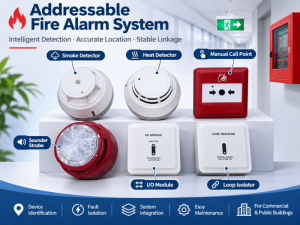

what is the residential heat detector?
How Should B2B Buyers Specify Residential Heat Detectors for Multi-Unit Housing?
residential heat detectors are fire detection devices that monitor surrounding temperature and signal an alarm when a defined heat condition is reached. Unlike smoke detectors, they do not identify airborne combustion particles. Their main purpose is to add temperature-based protection in locations where ordinary smoke detection may be unsuitable.
For distributors, contractors and apartment developers, residential heat detectors are not interchangeable commodities. The right choice depends on room conditions, detection method, warning arrangement and the regulations applicable to the building. A detector intended for a conventional control panel is not necessarily a self-contained household alarm.
Why Does Residential Heat Detection Need a Room-by-Room Plan?
A shared residential building contains different fire risks. Bedrooms and escape routes normally need smoke alarms or detectors specified under local rules because smoke warning can occur well before a room becomes extremely hot. Kitchens and attached garages present different conditions: cooking aerosols, vehicle fumes and dust can interfere with smoke sensors.
Heat detection can provide supplementary coverage where it is appropriate. However, a heat device should not replace required smoke alarms. The U.S. Fire Administration’s heat alarm guidance specifically discusses garage applications and the importance of choosing suitable interconnected equipment.

What Are the Seven Checks Before a B2B Purchase?
1. Define the Room, Occupancy and Fire Risk
Start with a room schedule rather than a product catalog. Identify kitchens, garages, plant rooms, utility spaces and other areas where smoke detection may be problematic. Then record whether each space serves an individual dwelling or a shared building system.
The location determines who needs warning, what environmental conditions are normal and whether equipment must communicate with a central panel. For a heat detector for apartment buildings inquiry, a single specification may not suit every room. Early coordination with the fire protection designer reduces costly product changes after samples arrive.
2. Confirm Fixed-Temperature or Rate-of-Rise Operation
residential heat detectors generally follow two detection principles. A fixed-temperature heat detector for kitchens responds when its sensing element reaches a specified temperature, provided the room conditions and product rating allow this use. A rate-of-rise design responds to an unusually rapid temperature increase. Some products combine the methods, but this must be documented for the selected model.
Thermal lag matters in both designs. Heat takes time to travel from the surrounding air into the sensing element, so the device may activate after the room air passes its nominal threshold. Ask suppliers for the rated response characteristics instead of treating a temperature figure as an exact alarm time.
3. Match the Temperature Rating to the Environment
Before placing residential heat detectors in garages or unconditioned spaces, assess likely temperature extremes. For heat alarms for attached garages, a low threshold may be unsuitable where summer temperatures approach that value. A higher rating, however, may produce a later warning during a fire.
Check the operating temperature range, humidity limits, protection against contamination and the conditions stated in the installation manual. Do not select equipment for an attic simply because it is described as suitable for residential use. The design must match both normal ambient conditions and the applicable fire safety requirements.
4. Specify Standalone or Panel-Connected Architecture
For conventional fire alarm projects, residential heat detectors may send signals through a compatible initiating circuit, while standalone heat alarms can warn locally through an integrated sounder. These are different architectures with different installation and supervision requirements.
When evaluating a two-wire heat detector for a fire alarm panel, check supply voltage, detector base, interface, standby and alarm current, reset behavior and end-of-line supervision where applicable. Ask whether the warning needs to reach other dwelling units or a building management location. Explore Sumring’s conventional two-wire heat detector overview when evaluating panel-based designs.
5. Review Placement, Spacing and Access
Document residential heat detector installation requirements, including ceiling geometry, beams, ventilation and maintenance access. Because heated air rises, ceiling position is often important, but airflow, sloped ceilings and obstructions can delay heat transfer. Never assume one detector covers an entire room without checking the manufacturer’s rated spacing.
When contractors specify residential heat detectors, they should also plan testing access and coordination with adjoining smoke alarm coverage. The final mounting position and device quantity must follow the applicable design code, approved documents and product instructions, not a generic online diagram.
6. Verify Certification and Product-Specific Evidence
International procurement requires evidence for the exact product variant and destination market. Buyers should request the current datasheet, installation manual, relevant test or certification records and labeling details. EN 54-5 may be relevant to heat detectors in certain fire detection systems; household heat alarm requirements may differ by region.
Do not assume that a manufacturer’s general CE, EN or other certification statement proves every model is approved for a particular project. For each detector, a matching model number, approval scope and local acceptance are more useful than a collection of unrelated certificates.
7. Compare Samples, Maintenance and OEM Supply Terms
A sample review should cover alarm indication, sounder if provided, wiring, mounting fit, documentation and maintenance instructions. Check how the device is tested without damaging a non-resettable element. Compare replacement guidance, packaging language and spare-part support.
For importers managing multiple developments, residential heat detectors should be assessed as a repeatable supply program rather than a one-time purchase. Confirm the approved configuration, batch traceability, lead time, branding options and who is responsible for project approval. Sumring can discuss OEM/ODM requirements, subject to the capabilities of the chosen model.
How Can Heat and Smoke Devices Form One Project Specification?
A sound residential design uses complementary detectors rather than selecting one sensor for the entire property. Smoke alarms are central to warning in sleeping and circulation areas. Heat devices may provide extra coverage for selected rooms with steam, dust or normal combustion particles. Confirm that the specific devices and controller support any required interconnection.
Buyers comparing sensing choices can review Sumring’s photoelectric smoke and heat detector selection checks and its fire alarm products for B2B projects. These resources help separate a standalone household product from a panel-connected device.
FAQs
1. Can a heat detector replace a required smoke alarm?
No. Heat sensing usually responds later than smoke sensing in many residential fires. Required smoke alarm coverage must remain in place.
2. Do all heat detectors activate at 57°C?
No. The alarm point depends on the model and its temperature classification. Confirm the exact rating and environmental suitability.
3. Are heat alarms recommended for garages?
They can be appropriate as supplementary protection. Select a garage-suitable model and follow local requirements, product instructions and approved system design.
4. Can independent heat alarms be connected together?
Some models support interconnection; others do not. Obtain written compatibility information before designing linked warnings.
5. What does thermal lag mean for purchasers?
It means the heat-sensing element does not instantly reach the temperature of the surrounding air. Real response depends on the device design and heating conditions.
6. What documents should a contractor request?
Request a datasheet, wiring diagram where applicable, operating limits, installation instructions, model-specific compliance evidence and maintenance guidance.
7. How should wholesalers compare residential heat detectors from suppliers?
Compare approved applications, alarm architecture, verified technical data, sample performance, documentation, delivery commitments and after-sales support.
Conclusion
residential heat detectors can strengthen a residential fire detection plan when selected for appropriate spaces and integrated with the required smoke alarm coverage. For B2B buyers, room classification, thermal response, panel compatibility and model-specific evidence deserve as much attention as unit price.
Preparing an apartment or housing project RFQ? Share the target country, room schedule, system type and quantity with Sumring to discuss suitable product options and OEM/ODM feasibility.