How Should Buyers Specify Mains-Powered Heat Alarms for Projects?
Mains Heat Detector: Technical Selection for B2B Projects
A mains heat detector is a heat-sensing fire alarm device powered by a building’s fixed electrical supply. It monitors temperature and activates an alarm when a preset threshold or abnormal temperature rise is detected. Some standalone alarms include standby power, while other detectors connect to a fire alarm control panel. Buyers must identify the required product type before comparing models.
What Does “Mains-Powered” Mean?
“Mains-powered” describes the power source, not the sensing method or system architecture. A standalone heat alarm normally receives AC power and uses an integral sounder. A panel-connected detector operates through a compatible fire alarm circuit and reports to a control panel. These products are not interchangeable.
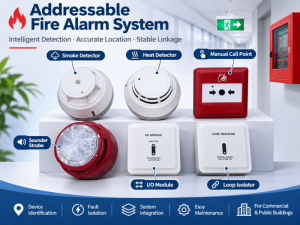
Confirm whether the project needs a standalone alarm, an interconnected network, or a detector for a conventional or addressable system. The datasheet should state voltage, frequency, standby power, wiring, alarm output and compatibility limits. Do not assume every unit can connect to a panel or link with another brand. In procurement documents, specify the required system architecture clearly.
How Does It Detect Heat?
A heat-sensitive element, often a thermistor, monitors temperature. When the measured temperature reaches a defined threshold, the electronics activate an alarm or send a signal to the connected system. A fixed-temperature heat detector operates at a specified threshold; a rate-of-rise heat detector responds to unusually rapid temperature increases. Combination products use both principles.
Choose the method according to background temperature and project risk. Check the manufacturer’s response data. For more detail, read SUMRING’s fixed-temperature heat detector guide.
For reference, SUMRING’s SR-506P mains-powered heat alarm is described with a thermistor sensor, an approximate 57°C trigger point, rate-of-rise sensing, an 85 dB sounder and a 9V alkaline backup battery. These are model-specific details, not universal specifications. Request the latest datasheet to confirm the exact version being quoted.
Where Are Mains-Powered Heat Alarms Suitable?
Heat alarms are considered for kitchens, garages, laundry rooms, boiler spaces and workshops where cooking fumes or steam may cause unwanted smoke-alarm activations. Assess each commercial environment against its fire strategy.
A mains heat detector is not a substitute for smoke detection throughout a building. Heat detection generally responds later than smoke detection, so bedrooms, corridors and escape routes need the arrangement specified by local regulations. A mains-powered heat alarm for kitchen applications should be one part of a coordinated system, not a universal replacement for smoke alarms.

Backup Power and Interconnection
A mains-powered alarm relies on the building’s electrical installation. A standby battery or another approved supply may keep it operating during a power interruption. Check the backup type, whether it is replaceable or sealed, its stated service life, low-battery warning and replacement instructions.
Interconnection is a separate feature to verify when sourcing a mains heat detector. Some products support wired links, others use radio communication, and some operate independently. Confirm the maximum number of linked units, compatible models and whether one alarm triggers all connected alarms. Review the mains heat alarm wiring requirements before installation. Similar housings or voltage ratings do not prove compatibility.
For Scotland, the Scottish Government’s domestic technical handbook gives local guidance on mains alarms, standby supplies and interconnection. It is not universal; installers must follow local rules and manufacturer instructions. The domestic-system framework is also covered by BS 5839-6, published by the British Standards Institution.
Mains-Powered vs Battery-Powered Heat Alarms
The main difference is the primary power arrangement. A mains-powered unit connects to the building supply and may include standby power. A battery-powered heat alarm uses an internal battery. Either type may use fixed-temperature or rate-of-rise sensing. When comparing a mains heat detector with a battery model, assess the full system design, not only unit price.
For new-build housing or refurbishment projects, a mains-powered interconnected arrangement may be specified by local requirements. For retrofit locations where wiring is difficult, a battery-powered product may be considered if permitted by the fire strategy. Compare the complete system design, not only the unit price. A mains powered heat alarm with battery backup offers another power source during an outage, but its capacity and maintenance requirements still need checking.
B2B Procurement Checklist
Before approving a mains heat detector for distribution or a project, request these details:
-
Electrical rating: AC voltage, frequency, power consumption and wiring method for the destination market.
-
Detection performance: Fixed-temperature threshold, rate-of-rise function, sensing element and operating conditions.
-
Standby supply: Battery chemistry, replacement method, low-battery indication and backup requirements.
-
Alarm and interconnection: Sound output, wired or wireless linking, and maximum linked quantity.
-
Compliance documents: Applicable certificates, test reports, declarations and labels for the exact model and variant.
-
Installation and maintenance: Mounting requirements, environmental limits, test procedure and replacement recommendations.
-
Supply support: Packaging, manuals, spare-part policy, lead time and technical response arrangements.
This review helps importers, distributors, contractors and property developers avoid choosing a product that meets a headline specification but does not fit the intended system.
What Should OEM and ODM Buyers Discuss with a Manufacturer?
Start with the destination market and intended application. Share the required electrical input, backup arrangement, detection method, interconnection preference, sounder requirement, dimensions, packaging language and target compliance route. The manufacturer can then confirm which items are standard and which need engineering review.
Request a datasheet, wiring diagram, installation manual, sample evaluation plan and confirmation of certification scope before a volume order. For private-label packaging or language customization, agree on artwork approval, labeling and document revisions. A reliable mains heat detector supplier should explain product limitations as clearly as its selling points.
Why Work with SUMRING?
SUMRING manufactures fire alarm and gas safety products for international distributors, contractors and brand owners. Its range includes heat detectors, smoke alarms, gas detectors, fire alarm control panels and audible-visual warning devices. For buyers evaluating a mains heat detector, SUMRING can provide product information and OEM/ODM discussions based on the target market and project configuration.
The SR-506P is one mains-powered heat alarm option in the SUMRING range. Request current documentation to confirm its input, backup configuration, detection characteristics and applicable certifications. Requirements vary by market.
FAQs
1. What is a mains-powered heat alarm?
A mains heat detector is a heat-sensing alarm or detector powered primarily by a building’s electrical supply. It may be standalone or panel-connected.
2. Does it need a backup battery?
Not every design uses the same backup arrangement. Many standalone mains-powered alarms include a battery or another standby supply. Confirm this in the datasheet.
3. Can it replace a smoke alarm?
No. Heat and smoke detection respond to different fire indicators. Use each type only where permitted by the project fire strategy and local requirements.
4. What is the difference between fixed-temperature and rate-of-rise detection?
Fixed-temperature detection activates at a preset temperature. Rate-of-rise detection responds to an unusually rapid increase. Some products combine both methods.
5. Can mains-powered heat alarms be interconnected?
Some models support wired or wireless interconnection, while others are standalone. Check compatible models, maximum unit quantity and wiring or radio-link requirements.
6. Is a heat alarm suitable for a kitchen?
A heat alarm is often considered for kitchens because cooking fumes and steam are less likely to activate it than a smoke alarm. Follow local rules and the building’s fire-risk assessment.
7. What should importers request from a manufacturer?
Request the datasheet, wiring diagram, manual, compliance documents, packaging details and confirmation of the exact configuration.
Conclusion
Selecting a mains heat detector involves more than confirming an AC connection. Buyers must distinguish standalone alarms from panel-connected detectors, verify sensing and backup, check interconnection and confirm local compliance. Review the specification before sampling or bulk purchasing.