How do fas fire alarm system operation ?
Fire alarm system operation is the process by which detectors, manual call points, control panels, and alarm devices work together to detect a fire condition and initiate an appropriate warning or safety response.
A Fire Alarm System, commonly abbreviated as FAS, continuously monitors connected initiating devices such as smoke detectors, heat detectors, manual call points, and sprinkler monitoring devices. When one of these devices identifies an alarm condition, it sends a signal to the fire alarm control unit. The panel processes the information and activates programmed outputs such as sounders, bells, strobes, remote signaling equipment, or other building safety interfaces.
In practical terms, an FAS follows a simple chain:
Detection → Signal Transmission → Control Panel Processing → Alarm Notification → Safety Response
However, the actual design can be significantly more sophisticated depending on whether the project uses a conventional, addressable, or integrated fire alarm system.
What Is Fire Alarm System Operation?
Fire alarm system operation describes how all components of a fire detection and alarm system communicate and respond when conditions change.
The fire alarm control unit, or FACU, acts as the central processing point. According to NFPA guidance, initiating devices can include smoke detectors, heat detectors, carbon monoxide detectors, water-flow switches, pressure switches, and manually activated devices. These devices transmit information to the control unit, which determines how the system should respond.
Under normal conditions, the fire alarm panel continuously monitors system circuits and connected devices.
When an initiating device changes state, the control panel receives that information and identifies it as an alarm, supervisory, or trouble condition depending on system configuration.
For example, when smoke reaches the sensing chamber of a compatible smoke detector, the detector can initiate a signal. The control panel then processes that signal and may activate horns, fire alarm bells, sounder strobes, visual indicators, or remote monitoring outputs.
The process happens quickly because early detection and notification are central functions of an effective FAS.

Conventional Fire Alarm System Operation
A conventional fire alarm system organizes detectors and manual call points into zones.
When a device activates, the fire alarm control panel normally identifies the affected zone rather than the exact detector. For example, the display might indicate “Zone 3 – Second Floor” rather than identifying one individual smoke detector.
NFPA describes conventional initiating device circuits as circuits where activation causes the entire connected zone to enter an alarm state.
This architecture is commonly considered for smaller buildings or projects where simple zoning is sufficient.
Addressable Fire Alarm System Operation
An addressable system works differently.
Every compatible device has an individual address. The fire alarm control panel can therefore determine which particular detector, module, or manual call point has changed status.
Honeywell describes the key distinction similarly: conventional panels identify the activated zone, while addressable systems can provide point-level identification of individual devices.
Addressable systems are especially useful in larger buildings where technicians or emergency personnel need more precise location information.
Why Is Fire Alarm System Operation Important for Fire Safety Projects?
Correct fire alarm system operation affects far more than whether a bell sounds.
In commercial buildings, factories, warehouses, hotels, hospitals, schools, shopping centers, and industrial facilities, the system must reliably recognize abnormal conditions and deliver the correct response.
The control panel may need to manage several types of information simultaneously. An alarm signal can indicate a possible fire. A trouble signal can indicate problems such as circuit or equipment faults. A supervisory signal can indicate a monitored fire protection condition that requires attention.
The fire alarm system may also interact with other building systems where permitted by the project design.
Depending on local regulations and engineering requirements, these interfaces may involve smoke control, fire doors, elevators, suppression systems, ventilation equipment, remote monitoring, or emergency communication equipment.
For contractors and procurement teams, this means component selection should never be based only on individual product specifications. The complete system architecture, compatibility, installation environment, and required response logic must also be considered.
Key Features to Consider Before Buying
When evaluating equipment for fire alarm system operation, buyers should first determine whether the project requires a conventional or addressable architecture.
Compatibility is one of the most important considerations. A detector, manual call point, sounder, module, or control panel should not be assumed compatible simply because the operating voltage appears similar. Communication protocol, circuit design, electrical characteristics, panel programming, and manufacturer requirements can all affect compatibility.
Power requirements also deserve attention. Fire alarm systems generally rely on primary electrical power together with an appropriate secondary or standby power arrangement according to the applicable system design and local requirements.
Environmental conditions must also be reviewed. An indoor smoke detector installed in a clean office faces very different conditions from equipment installed in a humid plant room, outdoor loading area, underground parking facility, or dusty warehouse.
For exposed locations, procurement teams may need to evaluate enclosure design, ingress protection, operating temperature, corrosion resistance, mounting method, and protective accessories.
Notification methods should be selected according to the project. A facility may require bells, sounders, horns, strobes, sounder strobes, speakers, or combinations of these devices.
Certification is another major purchasing factor. Requirements differ between countries and project specifications.
The EN 54 series, for example, is a multi-part family covering fire detection and fire alarm system components, including control and indicating equipment, sounders, power supplies, heat detectors, smoke detectors, flame detectors, and manual call points.
For U.S.-based projects, NFPA 72 is an important reference for fire alarm and signaling systems; the current NFPA material identifies the 2025 edition of NFPA 72.
Buyers should always confirm which standard, certification, listing, or local authority requirement applies to the specific project rather than assuming one certificate is suitable for every market.
Best Applications for Fire Alarm System Operation
A properly designed FAS can serve many types of facilities, but system configuration should reflect building size, occupancy, risk level, local requirements, and emergency response strategy.
Warehouses often require broad-area detection and clearly divided zones or addressable point identification. Factories may require detectors selected for challenging environmental conditions and interfaces with other safety equipment.
Hotels and apartment buildings require reliable detection and occupant notification across multiple floors and rooms. Hospitals may involve more complex alarm strategies because evacuation procedures can differ from ordinary commercial buildings.
Schools, offices, shopping centers, underground parking areas, industrial parks, logistics facilities, and public buildings can also require different combinations of detection, manual initiation, notification, monitoring, and control.
For large facilities, addressable systems can provide an important operational advantage because individual device identification can help maintenance teams locate an activated or faulty device more efficiently.
How to Choose a Reliable Supplier?
A fire alarm supplier should be evaluated as part of the overall project supply chain rather than simply as a source of low-cost detectors.
Start by determining whether the supplier understands complete fire alarm system operation. A capable supplier should be able to discuss control panels, detectors, manual call points, notification appliances, circuit configuration, accessories, and basic compatibility requirements.
Quality control is equally important. Ask how incoming materials, PCB assemblies, finished products, functional alarms, and outgoing shipments are inspected.
For international projects, request model-specific certification information before placing the final order. Do not rely only on general statements such as “CE available” or “EN54 products available.” Confirm the certificate holder, product model, applicable standard, and documentation relevant to your target market.
OEM and ODM capability can also be valuable for distributors and system integrators requiring customized branding, housings, packaging, labels, functions, or project-specific accessories.
Finally, consider production lead time, technical communication, spare-product support, export experience, documentation, and after-sales response. These factors often become more important than a small difference in unit price during long-term projects.
Common Buying Mistakes to Avoid
One common mistake is selecting components only by price.
Low initial cost can become expensive if devices cannot communicate with the existing panel, generate repeated faults, or require replacement after installation.
Another mistake is ignoring the installation environment. Equipment suitable for indoor offices may not be appropriate for outdoor or high-moisture areas.
Certification assumptions are another risk. EN 54, UL-related requirements, CE requirements, local civil defense specifications, and other approval systems are not interchangeable. The project consultant, authority having jurisdiction, or specification should determine what documentation is required.
Buyers should also avoid ordering detectors, manual call points, modules, and alarm devices separately without checking system compatibility.
Finally, after-sales and technical support should not be overlooked. Fire alarm projects can continue for years, making product continuity, documentation, spare parts, and engineering communication important elements of supplier evaluation.
Why Choose Sumring for Fire Alarm and Security Solutions?
Sumring focuses on fire alarm and security alarm products for overseas distributors, contractors, system integrators, and project buyers.
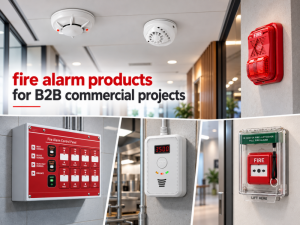
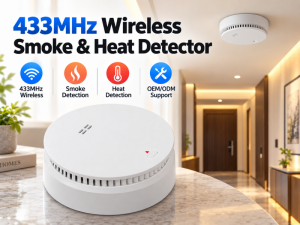
Its product range covers solutions such as fire alarm control panels, smoke and heat detectors, manual call points, alarm bells, sounders, visual alarm devices, gas detection products, and protective accessories.
For B2B customers, one important advantage is the ability to support OEM and ODM requirements. Projects may involve customized branding, product appearance, packaging, labels, accessories, or engineering changes depending on order quantity and technical feasibility.
Sumring also works with international project customers, which helps the team understand that product selection involves more than price. Compatibility, required certification, installation environment, production consistency, delivery schedule, and long-term support all influence a successful project.
For projects requiring specific standards such as EN 54, UL-related listings, CE requirements, or regional approvals, customers should confirm the exact certification status of the selected model with Sumring before specification or purchase.
FAQ
1. What does FAS mean in fire alarm systems?
FAS stands for Fire Alarm System. It refers to the complete system used to detect fire-related conditions, process signals, notify occupants, and perform programmed fire safety functions.
2. How does a fire alarm system operate?
Fire alarm system operation normally follows four main stages: a detector or manual device initiates a signal, the control panel receives and processes it, notification appliances activate, and programmed safety or monitoring outputs respond.
3. What is the main purpose of a fire alarm control panel?
The fire alarm control panel acts as the central controller. It monitors connected circuits or devices, processes alarm, supervisory, and trouble signals, and activates programmed outputs.
4. What triggers a fire alarm system?
Depending on the design, a system can be triggered by smoke detectors, heat detectors, manual call points, sprinkler water-flow devices, flame detectors, or other approved initiating devices.
5. What is the difference between conventional and addressable fire alarm systems?
A conventional system typically identifies an activated zone, while an addressable system assigns individual addresses to compatible devices so the panel can identify a specific alarm point.
6. Can fire alarm systems control other building equipment?
Yes. Depending on system design and applicable regulations, a fire alarm system may interface with equipment such as smoke control systems, fire doors, elevators, ventilation equipment, suppression systems, or remote monitoring systems.
7. What certification should a fire alarm system have?
Requirements depend on the country and project. EN 54 is commonly associated with fire detection and alarm system components in European and related markets, while U.S. projects may reference NFPA requirements and applicable UL standards or listings. Always verify the exact project specification.
8. How should B2B buyers choose a fire alarm system supplier?
Evaluate system compatibility knowledge, quality control, model-specific certification, production capability, OEM/ODM support, delivery time, export experience, documentation, technical support, and long-term after-sales service.
Conclusion
Understanding fire alarm system operation helps procurement teams select equipment based on the complete safety system rather than individual products.
A typical FAS begins with detection or manual activation, transfers the signal to the fire alarm control panel, processes the event, activates notification devices, and may initiate additional programmed safety functions.
Conventional systems generally identify alarm zones, while addressable systems can identify individual devices. The right choice depends on building size, project specifications, system complexity, local regulations, maintenance requirements, and budget.
For distributors, contractors, and fire alarm system integrators sourcing detectors, control panels, manual call points, alarm bells, sounders, or customized fire safety products, Sumring can support product selection and OEM/ODM project discussions based on specific application requirements.