What is a fire alarm bell ?
What Is a Fire Alarm Bell?
A fire alarm bell is an audible notification device that produces a distinctive ringing sound when activated by a compatible fire alarm system. Its primary purpose is to warn building occupants of a potential fire emergency and support an appropriate emergency response.
These devices are commonly found in schools, factories, residential buildings, commercial offices, and public facilities.
For fire safety distributors, electrical contractors, wholesalers, and system integrators, understanding operating voltage, sound performance, system compatibility, and customization options is essential when selecting equipment for different projects.
How Does a Fire Alarm Bell Work?
A traditional alarm bell converts electrical energy into mechanical movement. When activated, an internal striking mechanism repeatedly strikes the metal bell housing to produce an audible warning.
Within a typical conventional fire alarm system, the notification process involves four stages:
-
Detection: Smoke or heat detectors identify conditions associated with a potential fire.
-
Manual activation: Occupants can initiate an alarm through a manual call point when necessary.
-
Signal processing: The fire alarm control panel receives the initiating signal and activates the appropriate notification circuit.
-
Audible notification: Connected bells produce a warning sound according to the system configuration.
A fire alarm bell serves as an output device rather than a detection device. It does not independently detect smoke, heat, or flames.
This distinction helps contractors identify the correct equipment when preparing system specifications and purchasing lists.

What Voltage Does a Fire Alarm Bell Use?
DC 24V is a common operating voltage for conventional fire notification equipment. Some products also support DC 12V, while certain alarm bell designs operate on AC 220V.
A 24V DC fire alarm bell is frequently considered for conventional low-voltage fire protection systems. However, products with different voltage ratings are not automatically interchangeable.
Buyers must check the power requirements, current consumption, circuit supervision, and control panel compatibility before approving equipment.
Reference Product Specifications
The following specifications provide a reference for evaluating a conventional indoor notification device.
| Parameter | Specification |
|---|---|
| Brand | SUMRING |
| Model | SR-A91 |
| Operating voltage | DC 12V/24V |
| Rated current | 20 mA |
| Sound pressure | 96 dB/m(A), as published |
| Diameter | 150 mm (6 inches) |
| Weight | 480 g |
| Application | Indoor notification |
| Customization | Subject to order confirmation |
Confirm the latest specifications and approved configuration with the manufacturer before purchasing.
Where Are Alarm Bells Commonly Used?
A fire alarm bell can support emergency notification in various buildings when permitted by the applicable system design.
Schools and Educational Facilities
School corridors, administrative areas, and shared spaces may require recognizable emergency signals. Fire warnings must remain distinguishable from ordinary school bells.
Factories and Warehouses
Industrial environments often contain machinery and other sources of background noise. Notification equipment should be selected according to actual acoustic conditions.
Commercial Office Buildings
Offices may use audible notification devices in shared corridors, reception areas, and circulation spaces, depending on their approved fire protection plans.
Residential Buildings
Apartment complexes may incorporate centrally controlled alarm bells in common areas. Sleeping areas can have additional notification requirements.
For every application, device placement, accessibility, and alarm coverage require professional assessment.
What Should Buyers Check Before Purchasing a Fire Alarm Bell?
International buyers should evaluate five practical factors before confirming bulk orders.
1. Sound Pressure
Sound output should be considered alongside background noise, room layout, measurement distance, and building occupancy. A higher advertised decibel value does not automatically ensure adequate coverage.
2. Electrical Compatibility
Confirm the rated voltage, current consumption, and compatibility with the designated control equipment.
3. Installation Environment
Indoor equipment should not be assumed suitable for exposed outdoor locations. Moisture, dust, temperature, and environmental protection requirements must be reviewed.
4. Product Documentation
Request current technical specifications and any model-specific approvals required by the destination market.
5. System Requirements
Determine whether the project requires bells, electronic sounders, visual alarms, or voice notification.
For a broader equipment selection guide, explore our fire alarm products for commercial projects.
For applicable workplace projects in the United States, buyers can also consult OSHA employee alarm system requirements.
How Do Fire Bells Differ From General Alarm Bells?
Both devices can produce audible signals, but their intended applications may differ.
General alarm bells can be used for school schedules, industrial signaling, or other routine notifications. Fire notification devices are selected specifically to communicate emergency conditions.
Ordinary signaling equipment should not automatically be substituted for approved fire system components.
The distinction involves more than housing color or operating voltage. Buyers must also evaluate alarm recognition, system integration, notification requirements, and applicable product approvals.

Can SUMRING Provide Customized Alarm Bells?
As an OEM fire alarm bell manufacturer, SUMRING supports customization discussions for international distributors, private-label brands, and engineering procurement customers.
Available options may include:
-
Customized housing colors
-
Brand logos and product labels
-
Packaging artwork and printing
-
Customer-specific sound output requirements, subject to engineering review
Customization should be evaluated before production because changes to electrical or mechanical characteristics may affect performance and approval scope.
Buyers should confirm sample requirements, order quantities, technical specifications, packaging artwork, and production schedules before authorizing manufacturing.
This approach helps establish clear acceptance criteria for both standard wholesale orders and customized projects.
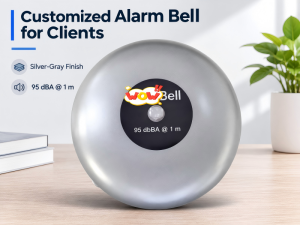
For distributors and OEM buyers requiring non-standard product configurations, SUMRING also supports customized colors, wiring requirements, and product labels. Discover our Customized Alarm Bell for Clients case involving a 1,000-unit US customer order.
FAQs
1. What is a fire alarm bell used for?
It provides an audible emergency warning when activated by a compatible alarm system, helping occupants recognize a potential fire emergency.
2. Can an alarm bell detect smoke independently?
No. Conventional bells receive activation from compatible control equipment. Separate initiating devices provide automatic detection or manual alarm initiation.
3. Why is DC 24V commonly used?
Many conventional fire alarm control panels provide low-voltage notification outputs. Nevertheless, voltage alone does not establish electrical or functional compatibility.
4. Can a standard indoor bell be installed outdoors?
Not necessarily. Outdoor installations require equipment suitable for the expected environmental exposure and applicable project requirements.
5. Is a fire bell sufficient for every building?
No. Certain buildings require visual notification, specific audible signal patterns, voice evacuation systems, or additional accessibility measures.
6. Does SUMRING support OEM and ODM orders?
Yes. Branding, labels, packaging, and selected customization requirements can be discussed with SUMRING. Engineering feasibility, documentation, and order conditions require confirmation.
Conclusion
A fire alarm bell remains a practical audible notification device for suitable fire protection applications.
Selecting the correct equipment requires attention to operating voltage, sound performance, installation conditions, system compatibility, and local compliance requirements.
SUMRING supports international fire safety distributors, contractors, wholesalers, and OEM/ODM customers with product selection and customization discussions.
Planning a new fire protection project or expanding your distribution portfolio?
Contact SUMRING with your target market, required voltage, order quantity, and customization needs to discuss a suitable solution.