How Does a Gas Detector Work With a Solenoid Valve?
A gas detector solenoid valve system detects unsafe LPG or natural gas, activates an audible and visual alarm, and sends a control signal that helps close the gas supply.
What Is a Gas Detector Solenoid Valve System?
A combustible gas detector monitors the surrounding air for LPG, methane, propane, or natural gas. When gas reaches the preset alarm level, the unit activates its buzzer and warning light.
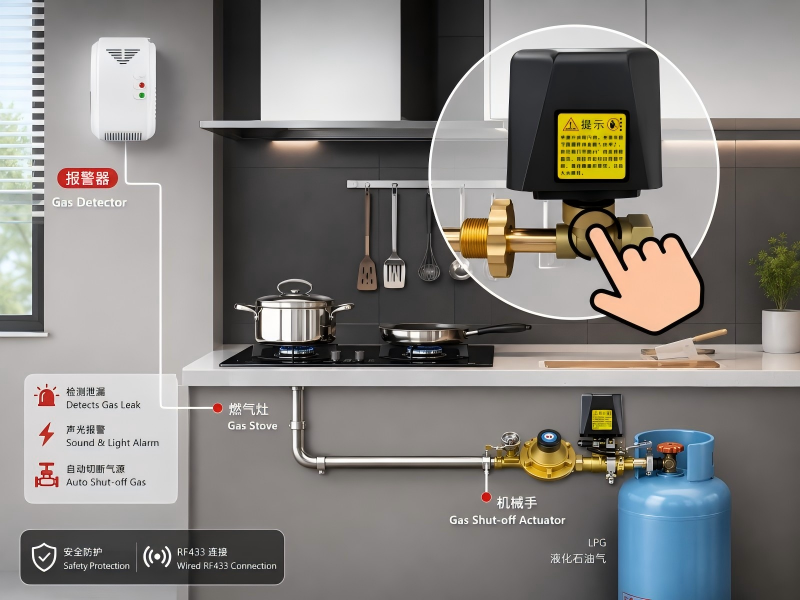
A detector with relay output, powered valve output, or RF433 linkage can also communicate with an external shutoff device. This may be a pipeline solenoid valve or a motorized manipulator installed on an existing manual valve.
The gas detector solenoid valve is the active part of this safety loop. The detector identifies the hazard, while the linked valve helps reduce continued gas flow in homes, restaurants, rentals, and utility spaces.
How Does Automatic Gas Shutoff Work?
A typical automatic gas shutoff system follows six steps:
- The detector samples the surrounding air.
- Gas reaches the programmed alarm threshold.
- Sound and light warnings activate.
- A relay, powered output, or RF433 module sends a trigger signal.
- The connected valve or manipulator closes.
- The system remains isolated until the site is checked and safely reset.
A gas detector solenoid valve does not detect gas independently. It depends on the gas detector or control panel for the trigger signal. The detector output and valve input must therefore be compatible.
Some gas detectors can control both a shutoff valve and an exhaust fan. This depends on the number of outputs, relay contact rating, wiring method, and overall project design.
Why Is a Gas Alarm Alone Sometimes Not Enough?
A standalone gas alarm warns people about a leak, but it cannot stop the gas supply without an external shutoff device.
Consider an LPG leak in an unattended restaurant kitchen. The detector may activate correctly, yet no employee is present to close the cylinder valve. Gas may continue entering the room until someone responds.
A compatible gas detector solenoid valve helps shorten this response gap. After receiving the alarm signal, the shutoff device can isolate the gas supply without waiting for someone to reach the manual valve.
The system does not replace ventilation, inspection, regular maintenance, or emergency procedures. Instead, it adds an automatic control layer after gas is detected.
What Are the Main Safety Benefits?
Faster Automatic Response
The system can initiate gas shutoff after receiving a valid alarm signal. The actual closing time depends on the design of the solenoid valve or motorized manipulator.
Less Dependence on Human Reaction
Automatic linkage is valuable at night, during unattended periods, or in commercial kitchens where employees may be working away from the LPG cylinder or pipeline valve.
Audible, Visual, and Physical Protection
The detector warns nearby people through sound and light. The valve helps control the fuel source. Together, they offer a broader response than an alarm-only product.
Controlled Manual Reset
Many gas shutoff devices remain closed until they are manually reset. This encourages users to identify the leak, ventilate the area, repair the problem, and confirm safe conditions before restoring the gas supply.
A gas detector solenoid valve therefore supports both early warning and active gas isolation.
Is the Solenoid Valve Included With the Detector?
Usually, it is not automatically included.
Terms such as “supports solenoid valve,” “valve linkage,” and “relay output” describe product compatibility. They do not necessarily mean the detector package includes the valve, manipulator, cable, gas regulator, power adapter, or pipe fittings.
Before ordering, B2B buyers should request a packing list covering the detector, shutoff device, communication module, power supply, cable, fittings, and accessories.
This check can prevent missing components, inaccurate price comparisons, installation delays, and unnecessary after-sales disputes.
How Do You Choose a Compatible Gas Detector Solenoid Valve?
Compatibility should be evaluated as a complete system rather than by product appearance alone.
Confirm the Target Gas
The detector must be designed for LPG, methane, natural gas, propane, or the specific gas used at the installation site.
Check the Output Method
Identify whether the detector provides a dry-contact relay, DC-powered output, pulse signal, or RF433 wireless command.
A gas detector solenoid valve will not operate correctly when its input method does not match the detector output.
Match Voltage and Electrical Load
Check the detector voltage, valve operating voltage, trigger current, and relay contact capacity. Similar voltage labels do not always guarantee direct compatibility.
For example, a DC12V detector may provide only a dry-contact relay rather than a powered DC12V valve output.
Verify the Shutoff Design
Confirm whether the project requires:
- Normally open solenoid valve
- Normally closed solenoid valve
- Latching gas shutoff valve
- Motorized valve manipulator
- Manual-reset shutoff device
The selected design should match the gas installation and emergency response plan.
Match the Gas Line
Verify the pipe diameter, thread standard, flexible hose fitting, operating pressure, gas flow direction, and regulator arrangement.
Review Destination-Market Requirements
Certifications and installation rules vary by country and application. Commercial kitchens, boiler rooms, hotels, and engineered projects may require approved equipment and qualified installers.
Where Is the System Commonly Used?
A gas detector solenoid valve system is often selected for commercial kitchens, LPG cylinder areas, cafés, apartments, rentals, boiler rooms, and senior living facilities.
It may also be used in:
- Restaurants and hotels
- Street food kiosks
- School kitchens
- Gas equipment rooms
- Small industrial workshops
- Unattended rental properties
- LPG storage and supply areas
Detector positioning must follow the target gas and the manufacturer’s installation instructions.
LPG is heavier than air and normally accumulates near lower areas. Methane and natural gas are generally lighter than air and tend to rise. Incorrect mounting height may delay detection.
What Should You Do After a Gas Alarm?
Do not reset the valve immediately after the alarm stops.
Avoid operating electrical switches, producing sparks, or creating ignition sources. Follow the site emergency procedure, shut off the main supply manually when it is safe, and ventilate the area.
The gas detector solenoid valve should only be reset after the leak source has been identified, repaired, and the area has been confirmed safe.
Reset procedures vary between pipeline solenoid valves and motorized manipulators. Always follow the product manual and applicable local installation requirements.
FAQs
1. What does a gas detector solenoid valve do?
It receives an alarm signal from a compatible gas detector and helps isolate the LPG or natural gas supply.
2. Can a gas detector work without a shutoff valve?
Yes. The detector can still provide sound and light warnings, but it cannot automatically stop gas flow.
3. Is the solenoid valve included in the detector package?
Not always. Many product listings describe valve compatibility, while the valve, manipulator, cable, and fittings are sold separately.
4. Can RF433 replace wired valve linkage?
RF433 can be used in a compatible wireless system. The detector and receiver must use the same frequency, coding method, and communication protocol.
5. Can one detector control a valve and an exhaust fan?
Some models can. The number of outputs, relay rating, power supply, and wiring design must be confirmed before installation.
6. Can one detector monitor both LPG and natural gas?
Only when the product specifications confirm support for both gases. Sensor calibration and mounting position must also match the selected gas.
7. Does the valve reopen automatically?
Many safety shutoff products require manual reset. The exact operating and reset method depends on the valve design.
8. What information should buyers provide for a quotation?
Provide the target gas, detector quantity, valve quantity, pipe size, operating voltage, gas pressure, output method, RF433 requirement, certification needs, destination market, and estimated order volume.
Conclusion
An alarm tells people that a gas leak exists. A compatible gas detector solenoid valve adds automatic action by helping isolate the gas supply.
SUMRING supplies wired and RF433 gas detection solutions for distributors, restaurant projects, installation contractors, and OEM/ODM buyers.
Send us your target gas, pipe size, operating voltage, required valve type, certification requirements, destination country, and order quantity. Our team can help prepare a matched detector-and-shutoff configuration before quotation, reducing compatibility risks, missing accessories, and installation delays.