Do you know the theoretical knowledge of conventional control panel ?
A conventional control panel is the central control and indicating unit of a zoned fire alarm system that monitors detectors and manual call points and activates alarm outputs when a fire or fault condition occurs.
For fire alarm distributors, contractors, system integrators, and project buyers, understanding this operating principle is essential. A control panel is not simply another component on a purchasing list. Its zone capacity, detector compatibility, output configuration, standby power, fault supervision, and compliance requirements can determine whether the whole fire alarm system works correctly.
Conventional technology remains relevant because it offers a relatively straightforward architecture, predictable installation, and practical maintenance for projects where device-level identification is not required. Honeywell describes conventional systems as zone-based systems in which the panel normally identifies the activated area rather than the individual initiating device.
What Is a Conventional Control Panel?
A conventional control panel, more precisely called a conventional fire alarm control panel or FACP, receives electrical signals from fire detection circuits and controls the response of connected notification and auxiliary devices.
A typical conventional system divides a property into separate zones. For example:
- Zone 1 – Reception and lobby
- Zone 2 – Ground-floor offices
- Zone 3 – Warehouse
- Zone 4 – Electrical and plant room
Smoke detectors, heat detectors, manual call points, waterflow switches, or other compatible initiating devices may be connected within these circuits, depending on the panel design.
When one device activates, the electrical condition of that circuit changes. The panel recognizes the change and indicates an alarm for the corresponding zone.
This is the main theoretical principle behind conventional fire alarm technology.
The panel normally tells maintenance staff or emergency responders, for example, that “Zone 3” is in alarm. It does not normally tell them that “Smoke Detector No. 27” caused the alarm. Addressable systems work differently because individual devices can have their own addresses or identities.
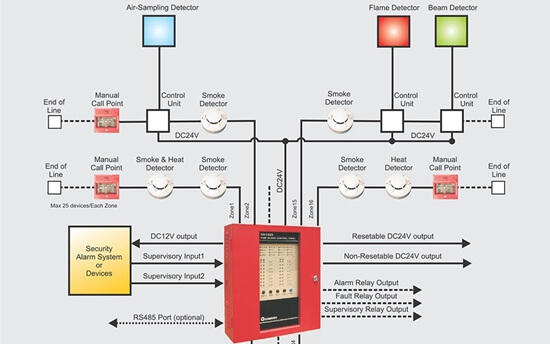
How Does a Conventional Control Panel Work?
The operating process can be simplified into five stages:
1. Normal monitoring
Under normal conditions, the control panel continuously supervises its connected fire alarm circuits.
Depending on the system architecture, end-of-line components and circuit supervision methods help the panel determine whether the wiring remains in its expected electrical condition.
2. Detection or manual activation
A smoke detector, heat detector, manual call point, or other initiating device changes the electrical condition of the detection zone when activated.
3. Signal recognition
The conventional control panel detects this change and determines which zone is affected.
4. Alarm indication
The relevant zone indicator illuminates and the panel may operate its internal buzzer or display alarm information.
5. Output activation
The panel can then energize compatible notification circuits or relay outputs connected to equipment such as fire alarm bells, sounders, strobes, remote indicators, or other approved interfaces.
Commercial conventional panels may also monitor wiring, AC input, batteries and other system conditions. Specific functions depend on the panel model and system design.
Why Is a Conventional Control Panel Important for Fire Safety Projects?
The control panel acts as the coordination point between detection and notification.
A detector alone can sense a fire-related condition, but a building fire alarm system must also process that condition, identify the affected area and initiate the required warning response.
Clear Zone Identification
For a properly designed conventional installation, the building is divided into logical geographical zones.
If Zone 2 represents the first floor, an alarm on Zone 2 immediately directs personnel toward that area. This simplifies emergency investigation even though the exact detector is not individually identified.
Straightforward System Architecture
A conventional system can be easier to understand for projects with a limited number of zones and uncomplicated building layouts.
This makes the technology particularly useful where sophisticated point identification or complex programming is unnecessary.
Practical Maintenance
Technicians can diagnose many system conditions by working zone by zone.
Good zone planning is therefore important. If too many rooms or unrelated areas are grouped into one zone, locating an activated detector may take longer.
Fire Alarm Output Control
A conventional panel may operate sounders, bells, strobes, alarm relays and other compatible outputs when an alarm occurs.
The exact output arrangement should always be checked against the manufacturer’s documentation and the requirements of the particular project.
Continuous Fault Supervision
A fire alarm system should not only respond to fire conditions. It must also provide appropriate indication when monitored circuits or critical power supplies develop faults.
Commercial panels may supervise detection circuits, notification circuits, mains power and standby batteries, although available supervision features differ between models.
Key Features to Consider Before Buying
B2B buyers should never select a conventional control panel only by comparing its purchase price.
Several technical factors have a greater effect on installation reliability and long-term project cost.
1. Number of Zones
First determine the required zone capacity.
Conventional panels are available in configurations such as 2-zone, 4-zone, 8-zone and other capacities, depending on the manufacturer.
The correct number should be based on the project’s fire alarm design rather than simply the building’s total floor count.
Allowing reasonable room for future changes may also be useful where the project is likely to expand.
2. Detector Compatibility
This is one of the most important purchasing checks.
Do not assume that any conventional smoke detector can be connected to any conventional control panel.
Verify:
- Detector operating voltage
- Standby and alarm current
- Detector circuit type
- Reset requirements
- End-of-line arrangement
- Maximum permitted devices
- Manual call point compatibility
- Manufacturer compatibility documentation
Compatibility should be confirmed through actual technical documentation rather than appearance, voltage alone, or the word “conventional.”
3. Detection Circuit Supervision
Ask how the panel supervises its field wiring.
A suitable system design should be capable of distinguishing normal conditions from relevant alarm and fault conditions according to the panel architecture.
End-of-line resistors or other specified components must use the correct values defined by the manufacturer. Never substitute a resistor merely because it looks physically similar.
4. Alarm Output Capacity
Check how many sounder or notification circuits are provided and how much electrical load they can support.
Calculate the current requirement for every bell, horn, sounder and strobe connected to the circuit.
The total load must remain within the manufacturer’s specified limits.
5. Relay and Auxiliary Outputs
B2B and engineering projects may require interfaces for equipment beyond audible alarms.
Depending on the system design, these could include alarm relays, fault relays, remote signaling equipment or other approved fire safety interfaces.
Never assume a relay is suitable for controlling a particular external load directly. Check contact ratings, interface requirements and applicable codes.
6. Main and Standby Power
Fire alarm panels commonly use mains power together with rechargeable standby batteries.
Buyers should verify panel power-supply capacity, battery requirements, charger capability and the standby requirements applicable to the target market.
Battery sizing should be based on real system current calculations, not simply the largest battery that physically fits inside the enclosure.
7. User Interface
A practical conventional control panel should make common system conditions easy to recognize.
Useful indications may include:
- Fire alarm
- Zone alarm
- Zone fault
- System fault
- Power status
- Sounder status
- Disabled conditions
Clear labels and logical controls can reduce operator mistakes during commissioning, maintenance and emergencies.
8. Standards and Certification
Certification requirements depend on the country, installation type and authority having jurisdiction.
For European-market projects, EN 54 may be relevant. BS EN 54-2 covers requirements, testing and performance criteria for control and indicating equipment, while power-supply equipment is addressed separately within the EN 54 series.
Buyers should therefore request certification for the exact panel model being purchased. A manufacturer’s other certified fire alarm products do not automatically make every control panel certified to the same standard.
Best Applications for a Conventional Control Panel
Conventional technology is generally strongest when the building layout is relatively simple and identifying the activated zone provides enough information for emergency response.
Typical applications can include:
- Small warehouses
- Workshops
- Retail stores
- Restaurants
- Small hotels
- Schools
- Offices
- Apartment common areas
- Small factories
- Commercial units
- Parking facilities
- Small industrial buildings
For example, a four-zone shop or warehouse may be divided logically into reception, sales area, storage area and plant room.
In this situation, device-by-device identification may provide limited additional value compared with the extra system complexity.
Large hospitals, airports, large hotels, industrial campuses and high-rise buildings may instead benefit from addressable systems because individual point identification, advanced programming and easier expansion can become much more valuable.
The correct choice depends on the project—not simply whether conventional or addressable technology is newer.
How to Choose a Reliable Supplier?
For wholesalers and contractors, choosing the panel supplier can be just as important as choosing the panel itself.
Evaluate Manufacturing and Engineering Capability
Ask whether the supplier actually understands complete fire alarm systems rather than only selling isolated components.
A capable supplier should be able to discuss detectors, manual call points, alarm notification devices, circuit requirements and system compatibility.
Request Technical Documentation
Before placing a large order, request relevant documents such as:
- Datasheets
- Installation instructions
- Wiring diagrams
- User manuals
- Compatibility information
- Available certification documents
These materials help engineering teams evaluate the product before installation.
Confirm Certification Model by Model
Never rely on statements such as “our factory has EN54 products.”
Ask exactly which model is certified and to which standard.
This is especially important for tenders, government projects and markets where fire alarm products require third-party approval.
Check OEM/ODM Capability
For distributors building their own brands, useful customization may include logo printing, enclosure labeling, manuals, packaging and project-specific configurations where technically feasible.
Any modification that could affect a certified product should be reviewed carefully because certification may apply only to an approved construction.
Review Quality Control
Ask how incoming components, PCB assemblies, finished panels and functional outputs are tested.
A lower unit price provides little benefit if field failures cause repeated site visits.
Assess Technical Support
Good suppliers should help customers confirm wiring, detector compatibility, commissioning requirements and fault diagnosis.
For system integrators, this support can significantly reduce installation risk.
Common Buying Mistakes to Avoid
One frequent mistake is purchasing the cheapest conventional control panel without checking whether it works correctly with the project’s existing detectors and notification devices.
Another is selecting the number of zones only from today’s design. If expansion is likely, a panel with no spare capacity may quickly become a limitation.
Buyers should also avoid:
- Assuming all conventional detectors are universally compatible
- Ignoring sounder circuit current limits
- Using incorrect end-of-line components
- Mixing certification requirements between different models
- Ignoring battery calculations
- Failing to check input and output voltage requirements
- Purchasing before reviewing wiring diagrams
- Treating a conventional panel like an addressable panel
- Ignoring technical support and spare-part availability
For international projects, local codes and approval requirements should be confirmed before mass purchasing or installation.
Why Choose Sumring for Fire Alarm and Security Solutions?
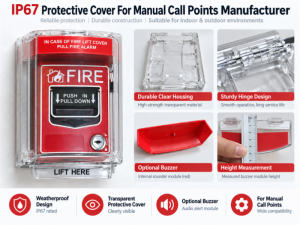
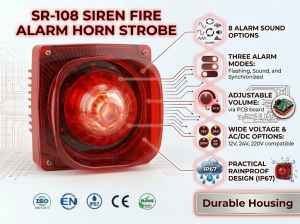
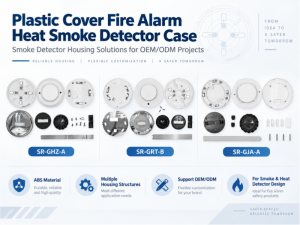
Sumring supplies fire alarm control panels together with related conventional fire alarm products such as smoke detectors, manual call points, sounders and other alarm devices.
This wider product scope can be useful for distributors and system integrators because compatibility discussions can begin at the complete-system level rather than treating every component as an independent purchase.
According to Sumring’s current company information, the company focuses on fire alarm solutions, operates under an ISO 9001 quality management system and provides OEM/ODM services, including project-oriented product and branding support. Sumring also states that selected products carry certifications such as EN54, EN14604, CE or RoHS; certification should always be confirmed for the exact model required by a project.
For B2B customers considering a conventional control panel, Sumring can also assist with detector selection, wiring and configuration questions, troubleshooting and project-based consultation.
This is particularly useful when a buyer needs not only the panel but also compatible conventional detectors, manual alarm devices and alarm notification equipment for one project.
FAQ
1. What is a conventional control panel?
A conventional control panel is a fire alarm control unit that divides a building into detection zones. When a detector or manual call point activates, the panel normally identifies the affected zone rather than the exact individual device.
2. How does a conventional control panel detect a fire alarm?
The panel continuously monitors its detection circuits. When a connected detector or manual call point creates the specified alarm electrical condition, the panel recognizes the change, indicates the affected zone and activates configured alarm outputs.
3. What is the difference between conventional and addressable control panels?
A conventional panel normally identifies the alarm by zone. An addressable panel can assign individual identities to connected devices, allowing the system to identify the specific detector, module or call point that generated the event.
4. How many zones should a conventional control panel have?
It depends on the building layout and fire alarm design. Common configurations include 2, 4 and 8 zones, while other capacities are available. Buyers should consider both current requirements and reasonable future expansion.
5. Can any conventional smoke detector connect to any conventional panel?
No. Compatibility should be confirmed using manufacturer documentation. Operating voltage, alarm characteristics, current consumption, circuit design and reset requirements can vary between detectors and panels.
6. Where is a conventional fire alarm panel commonly used?
Conventional systems are commonly considered for smaller offices, shops, workshops, warehouses, restaurants, schools, apartment common areas and other buildings with relatively straightforward layouts.
7. Does a conventional control panel require backup batteries?
Fire alarm control equipment commonly incorporates standby battery arrangements, but required capacity and standby duration depend on the panel, connected system load and applicable local requirements. Battery sizing should be calculated for the specific installation.
8. What should B2B buyers check before ordering conventional control panels?
Buyers should verify zone capacity, detector compatibility, sounder circuit capacity, power requirements, battery specifications, fault supervision, relay outputs, certification, manuals, quality control, OEM/ODM requirements and supplier technical support.
Conclusion
A conventional control panel remains a practical fire alarm solution for many small and medium-sized projects.
However, simplicity should never be confused with unrestricted compatibility.
Professional buyers should evaluate zone capacity, circuit supervision, detector compatibility, alarm output loading, standby power, certification, documentation and technical support before making a purchasing decision.
For distributors, contractors and system integrators sourcing conventional fire alarm equipment, Sumring can help review project requirements and recommend suitable combinations of control panels, smoke or heat detectors, manual call points and notification devices.