12V vs 24V Fire Alarms: Which Is Better for Your Fire Safety Project?
How Should B2B Buyers Choose Between 12V and 24V Fire Alarm Systems?
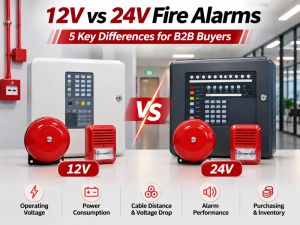
12V vs 24V Fire Alarms refers to the comparison between fire alarm equipment designed to operate at nominal direct current voltages of 12 volts and 24 volts. These voltage ratings influence power distribution, current demand, cable requirements, equipment compatibility, and overall system design.
Although both voltage options are available in the fire safety industry, they are not automatically interchangeable. Selecting the wrong voltage can result in equipment malfunction, compatibility problems, and unnecessary replacement costs.
For fire safety distributors, contractors, wholesalers, and system integrators, understanding 12V vs 24V Fire Alarms is essential for developing reliable and commercially competitive fire protection solutions.
What Are the Main Differences Between 12V vs 24V Fire Alarms?
The fundamental difference is the nominal operating voltage. However, buyers should evaluate more than the voltage printed on a product label.
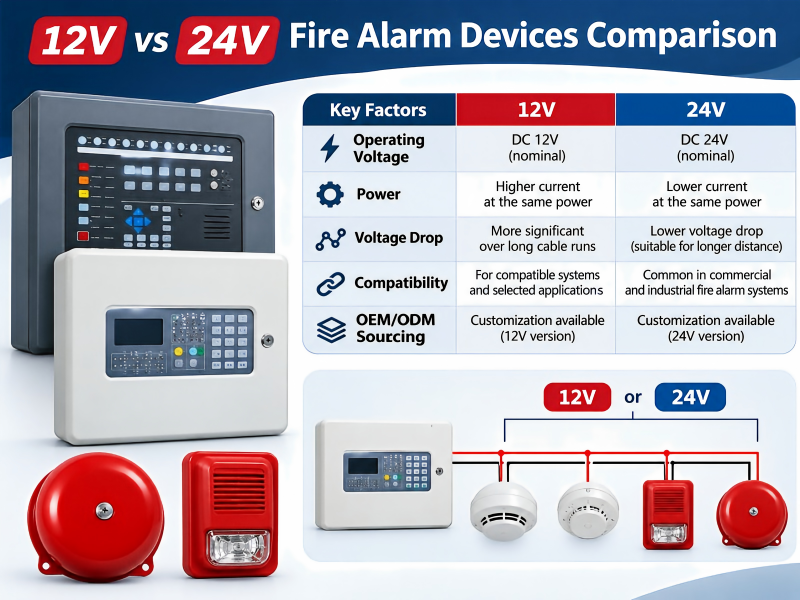
| Comparison | 12V Fire Alarms | 24V Fire Alarms |
|---|---|---|
| Nominal voltage | DC 12V | DC 24V |
| Current at equal power | Higher | Lower |
| Relative voltage drop at equal power | Higher | Lower |
| Typical applications | Compatible compact or specialized systems | Centralized commercial fire alarm systems |
| Extended cable networks | May face greater limitations | Generally more favorable |
| Power supply | Compatible 12V output | Compatible 24V output |
| System expansion | Design-dependent | Often suitable for larger networks |
| Equipment compatibility | Model-specific | Model-specific |
A 12V DC fire alarm system may be appropriate for compatible compact installations. A 24V DC fire alarm system is commonly specified for centralized building fire protection projects.
Neither voltage automatically guarantees better detection accuracy, louder alarms, or regulatory compliance.
How Does Operating Voltage Affect Current Consumption?
When evaluating 12V vs 24V Fire Alarms, buyers should understand the relationship between voltage, current, and electrical power.
For equipment consuming the same amount of electrical power, a higher operating voltage generally requires less current.
For example, consider a theoretical electrical load of six watts.
| Electrical parameter | 12V | 24V |
|---|---|---|
| Power | 6W | 6W |
| Current | 0.5A | 0.25A |
In this simplified comparison, the 24V load requires half the current.
However, actual fire alarm bells, smoke detectors, horns, and visual notification devices may have different electrical characteristics. Their operating currents must be obtained from model-specific technical documentation.
Procurement teams should request both standby and maximum alarm current specifications rather than estimating consumption from nominal voltage alone.
Why Is Voltage Drop Important in Fire Alarm Projects?
One important engineering consideration in 12V vs 24V Fire Alarms is the effect of electrical resistance over extended cable networks.
Fire alarm voltage drop refers to the reduction in voltage between a power source and connected equipment due to electrical resistance.
At equivalent power demand and conductor resistance, a 24V system generally experiences a smaller voltage drop and lower resistive power losses than a 12V system.
This can be advantageous in buildings with distributed alarm equipment, including hotels, warehouses, shopping centers, schools, and office complexes.
However, higher voltage does not eliminate cable limitations. Qualified system designers must verify minimum equipment operating voltage, cable resistance, simultaneous alarm demand, and emergency power conditions.
Buyers should request documented voltage-drop assessments before approving equipment for extensive installations.
Which Voltage Is Suitable for Different Building Applications?
The choice between 12V vs 24V Fire Alarms should reflect the approved system architecture rather than building size alone.
Twelve-volt equipment may be relevant to compatible compact alarm installations, specialized monitoring equipment, and certain security-integrated applications.
Twenty-four-volt equipment is widely used in centralized conventional and addressable fire alarm installations.
| Application | Procurement consideration |
|---|---|
| Small monitoring installation | Compatible power and signaling requirements |
| Hotels and office buildings | Centralized monitoring and notification |
| Warehouses and factories | Distributed equipment and cable networks |
| Shopping centers | System capacity and expansion |
| Existing buildings | Compatibility with installed equipment |
Contractors should identify the control panel and project specifications before selecting the operating voltage.
A residential or commercial application alone is not sufficient evidence that a particular voltage is acceptable.
Are 12V and 24V Fire Alarm Devices Interchangeable?
Equipment compatibility is a critical consideration when sourcing 12V vs 24V Fire Alarms.
A device rated exclusively for 12V should not be connected to a 24V circuit. Likewise, a 24V-only device cannot be assumed to operate reliably from a 12V supply.
Some manufacturers offer dual-voltage equipment, but support for both voltages does not establish universal compatibility.
Buyers should verify:
- Permitted operating voltage range.
- Control panel and signaling compatibility.
- Maximum alarm current.
- Circuit supervision requirements.
- Required product approvals.
A conventional smoke detector, an addressable detector, and an alarm sounder can have different communication and electrical requirements even when their nominal voltages are identical.
For related equipment selection, explore SUMRING’s conventional fire alarm control panel selection guide.
How Do Power Supplies, Backup Batteries, and Compliance Affect Selection?
Understanding 12V vs 24V Fire Alarms also requires evaluating emergency power availability and the performance of the entire system.
Fire alarm power supply requirements depend on connected equipment, standby consumption, simultaneous alarm loads, and applicable backup-power obligations.
The nominal voltage of a battery does not necessarily represent the operating voltage of the complete alarm system.
Qualified professionals should confirm power supply capacity, battery compatibility, supervision functions, and required operating duration.
International buyers should also verify destination-market requirements. Relevant references may include the EN 54 series or NFPA 72, National Fire Alarm and Signaling Code, depending on local regulations.
Voltage alone does not demonstrate compliance. Product certificates, approved configurations, and project documentation must be reviewed separately.
How Can Distributors Reduce Procurement and Lifecycle Costs?
For distributors, comparing 12V vs 24V Fire Alarms involves more than obtaining the lowest factory quotation.
Total procurement cost may include equipment, power supplies, cabling, installation labor, documentation, maintenance, and replacement inventory.
An apparently inexpensive device may increase overall expenditure if it requires additional power equipment or is incompatible with existing installations.
Before requesting a quotation, B2B buyers should provide the following information:
- Required operating voltage and device quantities.
- Fire alarm control panel model.
- Destination market and required certifications.
- Electrical and environmental specifications.
- OEM branding or ODM development requirements.
- Sample approval and delivery expectations.
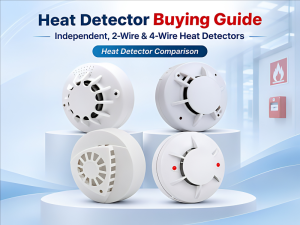
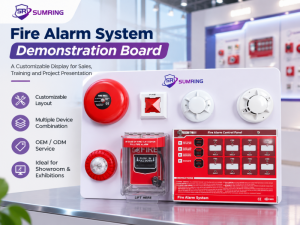
SUMRING supplies fire alarm equipment, including smoke detectors, heat detectors, control panels, alarm bells, and audible and visual notification devices.
Distributors can discuss model-specific voltage options, technical documentation, bulk supply, and OEM/ODM cooperation before confirming purchase orders.
FAQs
1. What is the main difference between 12V and 24V fire alarms?
The main difference is their nominal DC operating voltage. At equal power, 24V equipment requires less current, but actual consumption depends on device design.
2. Are 24V fire alarms better for commercial buildings?
They are commonly used in centralized commercial systems. Final suitability depends on approved system design, equipment compatibility, and regulatory requirements.
3. Can a 12V fire alarm operate on a 24V power supply?
Not unless the manufacturer explicitly supports 24V operation. An incorrect supply voltage may damage equipment or compromise alarm reliability.
4. Are 24V fire alarms louder than 12V models?
Not necessarily. Sound pressure depends on acoustic design, electrical characteristics, operating conditions, and the product’s documented performance.
5. Does higher voltage improve fire alarm system compatibility?
No. Fire alarm system compatibility depends on voltage range, signaling method, electrical characteristics, supervision, and approved device combinations.
6. Can distributors order customized voltage versions?
OEM and ODM voltage options may be available depending on product design, order quantity, technical feasibility, and applicable certification requirements.
Conclusion
Understanding 12V vs 24V Fire Alarms helps distributors and contractors evaluate electrical performance, system compatibility, installation requirements, and long-term procurement costs.
While 24V equipment can offer advantages in distributed power networks, 12V products remain relevant to compatible applications. The best solution is the one that meets the complete project’s technical and regulatory requirements.
Are you sourcing 12V or 24V fire alarm equipment for an upcoming project?
Which matters most to your business: equipment compatibility, cable requirements, certification, or procurement cost?
Share your project specifications with SUMRING to discuss suitable product configurations, wholesale supply, and OEM/ODM cooperation.