What Is a Fire Alarm Control Panel? B2B Selection Guide
A fire alarm control panel, also called an FACP or fire control panel, is the brain of a modern fire alarm system. It connects smoke detectors, heat detectors, manual call points, input modules, output modules, sounders, strobes, relays, and other fire safety devices into one coordinated system. When a fire event, fault, or system condition occurs, the panel receives the signal, processes the information, displays the event, and starts the correct response.
For commercial buildings, factories, hotels, apartments, warehouses, schools, hospitals, substations, and public facilities, choosing the right fire alarm control panel is not only a technical decision. It directly affects alarm speed, evacuation efficiency, maintenance cost, project expansion, and long-term building safety. This is why many engineers, contractors, distributors, and B2B buyers pay close attention to panel type, zone capacity, loop capacity, communication functions, and system compatibility.
Why Is a Fire Alarm Control Panel Important?
A fire alarm control panel helps people discover danger earlier and respond faster. Fire can spread quickly, and every second matters. Without a reliable control panel, detectors and alarm devices cannot work as a complete safety system. The panel links all devices together and ensures that each signal is monitored, identified, and handled correctly.
When smoke, heat, flame, gas, or manual alarm input is detected, the fire alarm control panel can immediately trigger notification devices such as sounders, bells, strobes, or voice alarms. It can also activate relays for fire doors, elevators, ventilation systems, smoke control equipment, or emergency linkage devices, depending on the project design.
In daily operation, the panel also supervises the health of the system. It can report wiring faults, device faults, power failure, battery problems, loop issues, or communication errors. This makes maintenance easier and reduces the risk of hidden system failure.
For property owners and facility managers, a dependable fire alarm control panel supports safer evacuation, better building management, and stronger protection of people and assets.
How Does a Fire Alarm Control Panel Work?
A fire alarm control panel works through signal receiving, signal processing, event display, alarm output, and system supervision.
First, detection devices monitor the building environment. Smoke detectors sense smoke particles, heat detectors respond to temperature rise, and manual call points allow people to trigger an alarm by hand. Modules can monitor external equipment or control linked devices.
Second, when one of these devices detects an abnormal condition, it sends a signal to the fire alarm control panel. The panel identifies the signal type. It may be a fire alarm, fault, supervisory event, disablement, or normal status message.
Third, the panel displays the event information. In a basic system, this may show the zone where the alarm happened. In an addressable fire alarm control panel, it can show the exact detector, module, or manual call point address. This helps security staff and emergency responders find the alarm location faster.
Fourth, the panel activates programmed outputs. It may turn on sounders, flash strobes, activate alarm bells, send signals to a repeater panel, trigger relays, or communicate with other building safety systems.
Finally, the fire alarm control panel continues to monitor the system after the event. It checks whether the alarm is still active, whether devices return to normal, and whether any faults remain after reset.
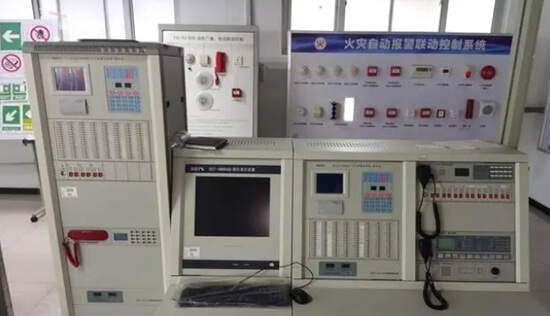
Conventional vs Addressable Fire Alarm Control Panel
There are two common types of fire alarm control panel: conventional and addressable.
A conventional fire alarm panel divides the building into zones. When a detector or manual call point activates, the panel shows the alarm zone, but it does not usually identify the exact device. This type is simple, cost-effective, and suitable for small buildings, shops, small offices, or basic fire alarm projects.
An addressable fire alarm control panel gives every connected device a unique address. When an alarm occurs, the panel can display the exact device name, number, and location. This makes it much easier to locate the fire source, troubleshoot faults, and manage large systems.
For hotels, apartments, factories, warehouses, office buildings, shopping centers, and public projects, an addressable fire alarm control panel usually offers better flexibility and long-term value. It supports larger point capacity, easier expansion, more accurate alarm information, and more efficient maintenance.
For B2B buyers, addressable systems are often more attractive because they meet the needs of modern commercial buildings and can support future upgrades.
Main Components Connected to a Fire Alarm Control Panel
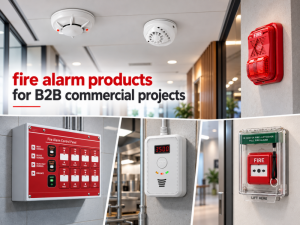
A complete fire alarm system includes more than the panel itself. The fire alarm control panel normally connects with many devices, including:
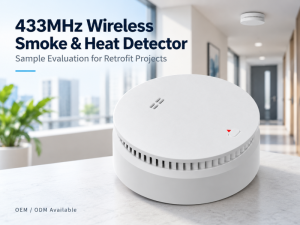
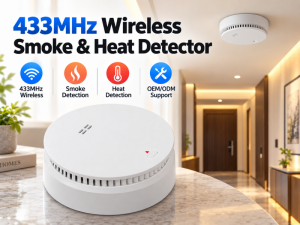
Smoke detectors for early smoke detection.
In large open or high-ceiling spaces, the detection layer may also include beam-type smoke detection where the detector interface and electrical characteristics are compatible with the fire alarm system. For warehouses, factories, shopping malls, and atriums, buyers can review how to select a conventional beam smoke detector for fire alarm systems by checking power supply, alarm and fault interfaces, reset requirements, optical range, and panel compatibility.
Heat detectors for temperature-based fire detection.
Heat detectors for temperature-based fire detection.
Manual call points for manual alarm activation.
Input modules for monitoring external signals.
Output modules for controlling linked equipment.
Sounders and bells for audible warning.
Strobes for visual alarm notification.
Relays for emergency equipment control.
Repeater panels for remote display.
Backup batteries for emergency power.
The electrical paths between these components must match the circuit voltage, current load, supervision method, route length, and local installation requirements. Before choosing conductors for detector, notification, auxiliary-power, or relay circuits, review the cable specifications for fire alarm equipment.
Together, these devices create a complete fire detection and alarm network. The fire alarm control panel manages all these parts and ensures that the system reacts correctly when danger appears.
Modern Fire Alarm Control Panel Key Features
Modern commercial projects need more than a basic alarm signal. A high-quality fire alarm control panel should offer reliable monitoring, strong communication, stable operation, and easy maintenance.
Important features include:
Clear LCD display for alarm and fault information.
Zone or address identification for faster response.
Multiple alarm outputs for sounders and strobes.
Loop capacity for addressable devices.
Fault supervision for wiring, power, and device status.
Backup battery support during power failure.
Relay outputs for linkage control.
Easy programming for project flexibility.
Expandable design for future building changes.
Communication ports for system integration.
For distributors and project contractors, these features can improve product competitiveness and help meet different building safety requirements.
Where Is a Fire Alarm Control Panel Used?
A fire alarm control panel is widely used in commercial, industrial, residential, and public safety projects. Common application areas include hotels, apartment buildings, office towers, factories, warehouses, schools, hospitals, shopping malls, data rooms, substations, control rooms, parking areas, and public service buildings.
Small projects may use a conventional panel with several zones. Medium and large projects often need an addressable fire alarm control panel because the system must manage more devices and provide more accurate location information.
For example, in a hotel, identifying the exact alarm point can help staff respond quickly without disturbing the entire building unnecessarily. In a factory, addressable information helps maintenance teams locate device faults faster. In an office building, a scalable panel supports future renovation and system expansion.
How to Choose the Right Fire Alarm Control Panel?
Choosing the right fire alarm control panel depends on building size, project type, device quantity, safety requirements, budget, and future expansion needs.
For small shops, simple offices, and compact sites, a conventional panel may be enough. It is easy to install and cost-effective.
For larger or more complex buildings, an addressable fire alarm control panel is usually a better choice. It provides exact device identification, flexible programming, better fault finding, and stronger system control.
B2B buyers should consider several points before purchasing:
How many detectors and modules will the project need?
Does the building require zone display or exact address display?
Will the system need future expansion?
Are sounders, strobes, relays, and linkage devices required?
Is the panel easy to install, program, and maintain?
Can the supplier provide stable product quality and technical support?
A well-selected fire alarm control panel can reduce installation difficulty, improve project delivery, and support long-term safety operation.
Why Addressable Fire Alarm Control Panels Are Growing in Demand?
The demand for addressable fire alarm control panel solutions is growing because modern buildings are becoming larger, smarter, and more connected. Buyers now expect fire alarm systems to provide clearer information, faster response, and easier management.
Addressable systems help reduce troubleshooting time. When a detector fails, the panel can show the exact device instead of only showing a broad zone. This saves labor cost and helps maintenance teams act quickly.
They also support better project planning. Engineers can design more flexible systems, add more devices, and create customized alarm logic for different areas of the building.
For distributors, contractors, and OEM buyers, addressable panels offer higher market value and stronger product positioning. They are suitable for commercial projects where reliability, scalability, and professional fire safety performance matter.
Maintenance and Daily Operation
A fire alarm control panel should be checked and maintained regularly. Even the best panel needs proper inspection to ensure stable performance.
Daily users should check whether the panel shows normal status. Facility teams should respond quickly to fault signals, low battery warnings, disconnected devices, or abnormal loop messages. Periodic testing should include detectors, manual call points, alarm outputs, batteries, and communication functions.
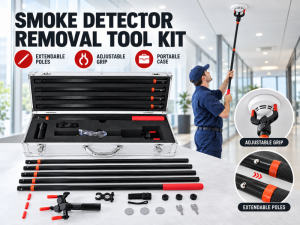
Before removing a ceiling detector, authorized personnel should follow the approved panel isolation procedure and use suitable planned detector maintenance and replacement tools to reduce the risk of device damage or unintended system conditions.
Good maintenance helps prevent false alarms, missed alarms, and system failure. It also extends the service life of the fire alarm system and improves overall building safety.
For project owners, choosing a panel with clear display, simple operation, and reliable fault indication can make maintenance much easier.
A fire alarm control panel is the heart of a fire alarm system. It receives signals from detectors and manual call points, identifies alarm or fault conditions, displays important information, and activates warning devices or emergency outputs. Whether used in a small building or a large commercial project, the panel plays a critical role in early fire detection, safe evacuation, and system management.
For simple sites, a conventional panel may be suitable. For larger buildings, an addressable fire alarm control panel provides stronger visibility, faster maintenance, easier expansion, and better long-term value.
For engineers, contractors, distributors, and project buyers, the right fire alarm control panel is not just a product purchase. It is a safety investment that supports people, property, compliance, and business continuity.
FAQ:
1. What is a fire alarm control panel?
A fire alarm control panel is the central control unit of a fire alarm system. It receives fire, fault, and supervision signals from smoke detectors, heat detectors, manual call points, modules, and other devices, then activates alarms, displays event information, and controls emergency response outputs.
2. Why is a fire alarm control panel important?
A fire alarm control panel is important because it connects all fire alarm devices into one coordinated system. When a fire, fault, or abnormal condition occurs, the panel processes the signal, identifies the event, activates sounders or strobes, and helps occupants respond faster during an emergency.
3. How does a fire alarm control panel work?
A fire alarm control panel works by receiving signals from connected devices, processing the signal type, displaying alarm or fault information, and activating programmed outputs. It can trigger bells, sounders, strobes, relays, repeater panels, emergency linkage equipment, and other fire safety devices.
4. What is the difference between a conventional and addressable fire alarm control panel?
A conventional fire alarm panel divides a building into zones and shows the alarm zone when a device activates. An addressable fire alarm control panel gives each detector, module, or manual call point a unique address, allowing the system to display the exact device location for faster response and easier maintenance.
5. Where is a fire alarm control panel used?
A fire alarm control panel is widely used in hotels, apartment buildings, office towers, factories, warehouses, schools, hospitals, shopping malls, data rooms, substations, parking areas, control rooms, and public facilities. Small projects may use conventional panels, while larger buildings often need addressable panels.
6. What devices can connect to a fire alarm control panel?
A fire alarm control panel can connect to smoke detectors, heat detectors, manual call points, input modules, output modules, sounders, bells, strobes, relays, repeater panels, backup batteries, and emergency linkage devices. Together, these components form a complete fire detection and alarm system.
7. What features should buyers look for in a fire alarm control panel?
Buyers should look for clear LCD display, zone or address identification, multiple alarm outputs, loop capacity, fault supervision, backup battery support, relay outputs, easy programming, expandable design, and communication ports. For B2B buyers, stable quality, technical support, system compatibility, and reliable supply are also important.
8. Why are addressable fire alarm control panels becoming more popular?
Addressable fire alarm control panels are growing in demand because modern buildings are larger, smarter, and more complex. They provide exact device location, faster troubleshooting, flexible programming, easier expansion, and better long-term maintenance value for commercial, industrial, and public safety projects.
Conclusion
Looking for a reliable fire alarm control panel supplier for your next commercial project? Choose Sumring a professional manufacturer that can support stable quality, flexible solutions, OEM service, and project-based technical guidance—so your customers get safer buildings and you win more high-value fire safety orders.