What is a two wire fire alarm system ?
A two wire fire alarm system is a zoned fire detection system that allows compatible detectors, manual call points, sounders, and alarm devices to operate on the same pair of zone wires.
In a traditional conventional installation, detectors and manual call points are normally connected to detection zones, while sounders or alarm bells require separate circuits. A two wire system changes this arrangement by allowing compatible detection and alarm devices to share the same pair of wires within each zone.
For installers, fire alarm contractors, system integrators, and project buyers, this can mean fewer cables, fewer terminations, easier installation, and potentially lower project labor costs.
However, two wire technology should not be confused with an addressable fire alarm system. Most two wire systems still identify the affected zone rather than the exact individual detector. Device compatibility is also particularly important because the panel and field devices must be designed to communicate and operate correctly on the shared circuit.
What Is a Two Wire Fire Alarm System?
A two wire fire alarm system, sometimes described as a 2-wire, twin-wire, or bi-wire fire alarm system, is generally based on conventional zoned fire alarm technology.
Each building area is divided into zones connected back to the fire alarm control panel.
The main difference is in the circuit architecture.
In a standard conventional system, smoke detectors, heat detectors, and manual call points are normally installed on zone circuits, while bells, sounders, or strobes use separate notification circuits.
With a compatible two wire system, devices such as:
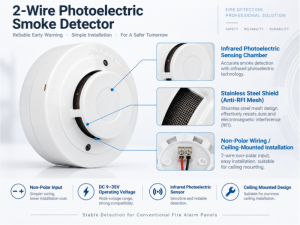
- Smoke detectors
- Heat detectors
- Manual call points
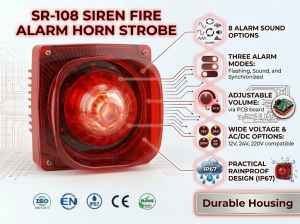
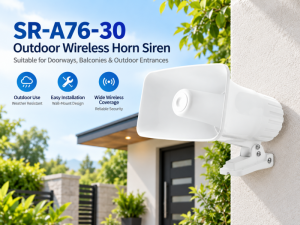
- Sounders
- Sounder bases
- Beacons or visual alarm devices
may share the same pair of zone wires.
This means one circuit can perform both detection and alarm notification functions, depending on the design of the control panel and compatible field devices.
When a detector or call point operates, the control panel recognizes an alarm condition on that zone and activates the appropriate alarm outputs. The panel normally identifies the affected zone rather than displaying the exact device address.
For example, the panel may display an alarm on “Zone 3 – Second Floor” rather than showing the individual smoke detector that initiated the alarm.
This makes two wire technology particularly attractive for small and medium-sized projects where conventional zoning is sufficient but contractors want to reduce wiring complexity.

Why Is a Two Wire Fire Alarm System Important for Fire Safety Projects?
One of the biggest advantages is installation efficiency.
Fire alarm projects can require large quantities of fire-resistant cable, conduits, junction boxes, terminations, and labor. When detection devices and alarm notification devices require separate circuits, installation becomes more complex.
A two wire design can reduce this duplication.
Reduced Cabling
Because compatible detectors and alarm devices can share a circuit, contractors may need fewer separate cable runs.
This can be particularly valuable when installing systems in:
- Hotels
- Apartment buildings
- Small commercial properties
- Schools
- Retail stores
- Warehouses
- Office buildings
Faster Installation
Fewer cable runs generally mean fewer terminations and less installation work.
This can help contractors complete repetitive installations more efficiently, especially in buildings containing many similar rooms or floors.
Easier Retrofit Projects
Two wire systems can also be attractive when upgrading or extending an existing building where installing additional cable is difficult.
Projects with limited ceiling access, finished interiors, or restricted cable routes may benefit from a simpler circuit structure.
Familiar Zonal Operation
Unlike a fully addressable system, a two wire system generally maintains the familiar zonal concept used by conventional panels.
This can make operation and maintenance straightforward for projects that do not require individual device identification.
Key Features to Consider Before Buying
Not every two wire fire alarm panel or detector works with every other two wire device.
For B2B buyers and system integrators, compatibility should be one of the first specifications to confirm.
1. Device Compatibility
Check whether the control panel supports the required smoke detectors, heat detectors, manual call points, sounders, sounder bases, and visual alarm devices.
Two wire operation may rely on manufacturer-specific electrical characteristics or communication methods.
Do not assume that any standard two-wire detector will operate correctly with any two-wire panel.
2. Number of Zones
Determine how many detection zones the project requires.
Two wire fire alarm control panels are commonly offered in configurations for smaller and medium-sized conventional projects, but available zone capacities vary between manufacturers.
Future expansion should also be considered during system design.
3. Devices per Zone
Check the maximum permitted detector, call point, sounder, and alarm-device load for each zone.
The exact quantity depends on the panel design, current consumption, device type, circuit resistance, and manufacturer specifications.
4. Sounder and Beacon Support
Some systems support sounders directly on the shared zone circuit, while others may offer compatible detector bases with integrated sounders.
For projects requiring visual alarm devices, confirm whether compatible beacons or sounder-beacons are supported.
5. End-of-Line Monitoring
Conventional and two wire systems typically supervise field circuits for cable faults.
Always follow the manufacturer’s specified end-of-line component and wiring configuration. Using an incorrect resistor, capacitor, module, or wiring arrangement can cause false fault indications or unreliable system operation.
6. Control Outputs
For commercial projects, buyers may require outputs for integration with other building systems.
Depending on the panel, these may include:
- Fire relay outputs
- Fault relay outputs
- Auxiliary outputs
- Door release interfaces
- Fire damper control
- Ventilation shutdown
- Remote annunciation
Any integration should be engineered according to the panel specifications and applicable local requirements.
7. Certification and Project Standards
Certification requirements vary considerably between countries and projects.
Standards or approvals such as EN 54, UL, CE-related requirements, or other regional regulations should never be assumed simply because a product is described as a two wire fire alarm device.
For procurement, verify the exact certification documents for the specific control panel and compatible device combination required by the project.
Best Applications for a Two Wire Fire Alarm System
Two wire systems are generally most suitable where conventional zone identification provides sufficient information and simplified installation offers a practical benefit.
Typical applications include:
Hotels and Guesthouses
Rooms and corridors often require repeated detector and sounder installations. A two wire architecture can help simplify cabling across multiple similar areas.
Schools
Classrooms, corridors, administrative areas, and common spaces can be divided into clearly defined detection zones.
Offices
Small and medium-sized office buildings often do not require the device-level identification provided by sophisticated addressable systems.
Retail Stores
Shops and smaller commercial properties can benefit from straightforward zone-based fire detection.
Warehouses
A zoned system may be appropriate for smaller or less complex warehouse facilities, depending on risk assessment and local requirements.
Apartment and Residential Projects
Multi-unit residential projects can sometimes benefit from simplified zoned wiring, particularly where compatible detector-and-sounder combinations are used.
The final system type should always be selected according to building size, occupancy, fire strategy, local codes, project specifications, and required alarm functionality.
Two Wire vs Conventional Four Wire vs Addressable Systems
Understanding these three architectures helps buyers avoid incorrect specifications.
| Feature | Two Wire System | Conventional System | Addressable System |
|---|---|---|---|
| Detection method | Zoned | Zoned | Individual device address |
| Detector circuit | Zone circuit | Zone circuit | Addressable loop |
| Sounder wiring | Can share zone pair | Usually separate | Often loop-powered or separately designed |
| Alarm location | Zone | Zone | Specific device/location |
| Cabling complexity | Lower | Higher | Project-dependent |
| Typical application | Small/medium projects | Small projects | Medium/large or complex projects |
| Device compatibility | Very important | Important | Protocol-specific |
A two wire fire alarm system should therefore be viewed as an optimized conventional architecture rather than a simplified addressable system.
How to Choose a Reliable Supplier
Price should not be the only selection criterion for fire alarm equipment.
For distributors, engineering contractors, and system integrators, the long-term value of a supplier depends heavily on product stability and project support.
Before purchasing, evaluate:
- Fire alarm product development experience
- Panel and detector compatibility
- Quality-control procedures
- Available product documentation
- Certification support for the target market
- OEM and ODM capability
- Production capacity
- Delivery reliability
- Export experience
- Technical support
- Spare-part availability
- After-sales service
For OEM projects, buyers should also confirm whether the manufacturer can customize panel appearance, branding, packaging, language, manuals, and compatible peripheral devices without changing critical safety performance.
Common Buying Mistakes to Avoid
Choosing Devices Only by Price
A low-cost detector is not useful if it cannot communicate correctly with the selected control panel.
System compatibility should come before individual product price.
Mixing Incompatible Products
Two products may both be described as “2-wire,” but that does not guarantee compatibility.
Always obtain a compatibility list or written confirmation from the manufacturer.
Confusing Two Wire with Addressable Technology
Two wire systems normally provide zone-level identification.
Projects requiring the exact location and status of each device may be better suited to addressable technology.
Ignoring Alarm Device Load
Adding too many sounders or beacons to one circuit may exceed the panel’s permitted electrical load.
System design should consider both device quantity and current consumption.
Ignoring Future Expansion
A panel that meets the exact number of zones required today may leave no capacity for future extensions.
Allowing reasonable expansion capacity can reduce future upgrade costs.
Buying Before Confirming Certification
Different markets may require different product standards or approvals.
Certification should be checked against the exact model and project requirement before ordering.
Why Choose Sumring for Fire Alarm and Security Solutions?
For distributors, fire alarm contractors, and system integrators, selecting individual components is only part of the job. The larger challenge is making sure the control panel, detectors, manual call points, sounders, and accessories work together as a practical system.
Sumring focuses on fire alarm and security solutions for B2B and project applications, including conventional fire alarm equipment, detectors, manual call points, alarm notification products, and related accessories.
OEM and ODM support can also help distributors and project customers develop products for different markets, packaging requirements, installation environments, and branding needs.
For a two wire fire alarm system project, the most useful starting point is to provide the supplier with the required number of zones, detector quantities, manual call points, sounders, project standard, installation environment, and target market. This allows the complete system configuration to be evaluated rather than selecting each component independently.
FAQ
1. What is a two wire fire alarm system?
A two wire fire alarm system is a zoned fire alarm system that allows compatible detection and alarm devices to operate on the same pair of zone wires, reducing the need for separate sounder circuits.
2. How does a two wire fire alarm system work?
Detectors, manual call points, and compatible alarm devices are connected to a common zone circuit. When a device detects a fire condition, the control panel identifies the affected zone and activates the required alarm outputs.
3. Is a two wire fire alarm system addressable?
Usually no. Most two wire systems are based on conventional zoned technology and identify the alarm zone rather than the exact individual detector.
4. What is the difference between a two wire and four wire fire alarm system?
A traditional conventional system generally uses separate circuits for detection devices and alarm sounders. A two wire system allows compatible detection and alarm devices to share the same zone circuit.
5. Can I use any smoke detector with a two wire fire alarm panel?
No. Electrical and system compatibility must be confirmed. Buyers should use devices approved or specified by the fire alarm panel manufacturer.
6. What buildings are suitable for a two wire fire alarm system?
They can be suitable for hotels, schools, shops, offices, apartments, warehouses, and other small to medium-sized buildings where zone-based fire identification meets the project requirements.
7. Are two wire fire alarm systems cheaper?
They can reduce cabling and installation labor compared with conventional systems requiring separate alarm circuits. Total project cost still depends on panel price, device quantities, installation conditions, and project requirements.
8. How do I choose a two wire fire alarm system supplier?
Check product compatibility, manufacturing capability, quality control, certification documentation, OEM/ODM support, technical assistance, delivery reliability, and experience supporting fire alarm projects.
Conclusion
A two wire fire alarm system combines the straightforward zoning of a conventional fire alarm system with a more efficient wiring architecture.
By allowing compatible detectors, manual call points, sounders, and other alarm devices to share the same zone circuit, it can reduce cabling requirements, simplify installation, and provide a practical solution for many small and medium-sized fire safety projects.
The key word, however, is compatibility.
Before purchasing, engineers and procurement teams should confirm panel capacity, supported devices, electrical loading, installation requirements, certification, and future expansion needs.
If you are sourcing a complete two wire fire alarm solution for distribution, OEM/ODM supply, or an engineering project, Sumring can help evaluate the required panel, detectors, call points, sounders, and accessories based on your application and target market.