Why Are Smoke Alarms and Heat Detectors Essential for Building Fire Safety?
How Can a Smoke Alarm and Heat Detector Improve Early Fire Warning?
A smoke alarm and heat detector arrangement combines two complementary fire detection methods to identify smoke particles or abnormal temperature conditions and provide timely warnings. These devices play an important role in protecting occupants, reducing potential property damage, and supporting emergency response in residential, commercial, and industrial buildings.
Fires can develop unexpectedly due to electrical faults, overheating equipment, cooking incidents, or other hazards. Whether a building is occupied, temporarily unattended, or operating around the clock, reliable fire detection is an essential part of its safety strategy.
For fire protection distributors, contractors, system integrators, and OEM/ODM buyers, selecting suitable detection equipment requires an understanding of seven critical safety considerations.
Why Is Early Fire Detection Important?
The primary purpose of a smoke alarm and heat detector arrangement is to identify potential fire conditions before they develop into more serious emergencies.
Some fires produce detectable smoke before generating significant heat. Others develop rapidly and cause temperatures to increase within a short period.
Early fire detection devices can provide several important benefits:
-
More time for occupants to evacuate safely.
-
Earlier notification of potential emergencies.
-
Reduced risk of delayed fire discovery.
-
Improved coordination of emergency response.
-
Potential reduction in property damage.
However, detection equipment does not prevent fires from starting. Its effectiveness depends on appropriate product selection, installation, maintenance, and emergency procedures.
How Do Smoke Alarms and Heat Detectors Complement Each Other?
Although both devices support fire safety, they monitor different environmental conditions.
Smoke alarms detect airborne particles associated with combustion. Heat detectors respond to a predetermined temperature or an abnormal rate of temperature increase, depending on their design.
| Comparison | Smoke Alarm | Heat Detector |
|---|---|---|
| Detection method | Airborne smoke particles | Abnormal temperature |
| Primary advantage | Early smoke warning | Thermal hazard detection |
| Typical application | Bedrooms, corridors and offices | Kitchens, garages and selected utility rooms |
| Environmental consideration | Sensitive to certain airborne particles | Affected by ambient temperature conditions |
| Alarm notification | Built-in sounder or compatible interconnection | Local alarm or control panel, depending on model |
Using a smoke alarm and heat detector arrangement allows project designers to address different environmental risks rather than relying on one detection technology throughout an entire building.
Heat detectors should supplement, not replace, smoke alarms required for life safety.

Where Should a smoke alarm and heat detector Be Installed?
Different rooms have different environmental conditions and fire risks. Detection equipment should therefore be selected according to the intended application.
Residential Buildings
Smoke alarms are essential for sleeping areas and other locations required by applicable residential fire safety codes.
A suitable heat detector for kitchens and garages may provide supplementary protection where ordinary cooking fumes, dust, or other environmental conditions could affect smoke detection.
Commercial Buildings
Hotels, shopping centers, office buildings, and educational facilities may require coordinated detection across public areas, corridors, service rooms, and occupied spaces.
Industrial Facilities
Warehouses, workshops, and equipment rooms require careful evaluation of ceiling height, ventilation, operating temperatures, and environmental contamination.
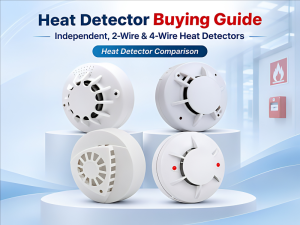
Buyers can explore SUMRING’s heat detector selection guide for additional information about detector types and application considerations.
Final device placement should follow approved fire system designs, local regulations, and manufacturer instructions.
How Does Fire Detection Protect Occupants at Night?
One of the most important advantages of a smoke alarm and heat detector arrangement is its ability to support fire warning when occupants are asleep or unaware of developing hazards.
Without functioning alarms, occupants may not recognize a fire early enough to evacuate safely.
Interconnected smoke and heat alarms can extend warning coverage by activating compatible alarms in multiple areas when a detection event occurs.
This feature can be particularly valuable in apartments, hotels, multi-story homes, and residential accommodation facilities.
For commercial projects, buyers should also consider alarm audibility, visual notification requirements, accessibility, and emergency communication arrangements.
How Can Fire Alarm Systems Protect Unattended Buildings?
A fire may occur outside business hours, when employees have left an office, warehouse, or commercial facility.
Integrating a smoke alarm and heat detector arrangement into a compatible monitoring system can help responsible personnel receive earlier notification of an alarm event.
Depending on the selected equipment and system configuration, notification options may include:
-
Local audible and visual alarms.
-
Fire alarm control panel notifications.
-
Compatible remote monitoring services.
-
Approved alarm transmission equipment.
A standalone alarm does not automatically notify emergency services. Remote reporting requires compatible communication equipment and an appropriate monitoring arrangement.
For distributors and contractors, confirming these capabilities before purchasing is essential.
What Should B2B Buyers Check Before Purchasing?
When sourcing a smoke alarm and heat detector solution, professional buyers should evaluate more than product appearance and unit price.
Important procurement considerations include:
Detection technology: Confirm whether the application requires smoke detection, fixed-temperature detection, rate-of-rise detection, or a suitable multi-sensor device.
System compatibility: Verify electrical characteristics, communication requirements, and compatibility with the intended control equipment.
Certification: Request model-specific compliance documents relevant to the destination market.
Environmental suitability: Review operating temperature, humidity limitations, and installation conditions.
Supply consistency: Confirm product availability, quality control, packaging, and replacement arrangements.
A fire alarm system for commercial buildings must be evaluated as a complete solution rather than a collection of individually selected devices.
Why Are Testing and Maintenance Essential?
Even a well-designed smoke alarm and heat detector arrangement cannot provide reliable protection if its components are damaged, disconnected, or poorly maintained.
Building operators should establish suitable inspection, testing, and maintenance schedules based on manufacturer instructions and applicable regulations.
Residential smoke alarms generally require monthly testing. Commercial fire alarm equipment should be inspected and tested by qualified personnel according to the applicable maintenance requirements.
The U.S. Fire Administration’s heat alarm guidance also highlights the value of heat alarms in residential garages and their potential integration with compatible smoke alarms.
SUMRING supports international distributors, engineering contractors, and brand owners with fire detection products, technical documentation, product selection assistance, and OEM/ODM cooperation.
FAQs
1. What is the difference between a smoke alarm and heat detector?
A smoke alarm identifies airborne smoke particles, while a heat detector responds to specified temperature conditions. They provide complementary detection capabilities.
2. Can a heat detector replace a smoke alarm?
No. Heat detectors should not replace smoke alarms where smoke detection is required by applicable fire safety regulations.
3. Are smoke and heat detectors suitable for commercial buildings?
Yes. Both technologies can form part of a professionally designed smoke and heat detection system, subject to environmental requirements and local regulations.
4. Can fire detectors communicate with a control panel?
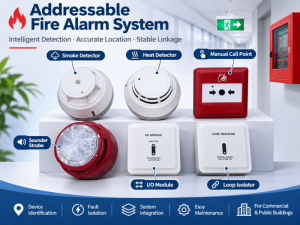
Compatible system detectors can communicate with conventional or addressable fire alarm control panels. Compatibility must be verified for the specific models.
5. Can fire alarms provide remote notifications?
Yes, when connected to suitable communication equipment or monitoring services. Not every standalone alarm supports remote notification.
6. Does SUMRING provide OEM and ODM services?
Yes. SUMRING offers OEM and ODM cooperation for international fire safety distributors, wholesalers, and brand owners, subject to product and project requirements.
Conclusion
A properly selected smoke alarm and heat detector arrangement is an important component of building fire safety. Combining appropriate detection technologies can improve warning coverage, support emergency response, and reduce the risks associated with delayed fire discovery.
For residential developments, commercial facilities, and industrial projects, SUMRING provides fire detection equipment and B2B sourcing support tailored to different market requirements.
Contact SUMRING to discuss product specifications, system compatibility, wholesale pricing, samples, and OEM/ODM opportunities for your next fire protection project.