
What Is a Heat Rise Detector and How Does It Work?
A heat rise detector is a fire detection device that triggers an alarm when it senses a rapid increase in temperature, usually caused by a developing fire, even before the surrounding area reaches a fixed alarm temperature.
What Is a Heat Rise Detector?
A heat rise detector, also known as a rate-of-rise heat detector or ROR heat detector, is designed to detect a fast temperature increase within a protected area. Instead of waiting for the room temperature to reach a fixed point, the detector responds when the temperature rises quickly within a short period.
In many fire alarm systems, a heat rise detector is used in locations where smoke detectors may not be suitable. These areas can include kitchens, garages, boiler rooms, warehouses, workshops, dusty environments, and industrial sites. Because smoke, steam, dust, or fumes may cause false alarms in smoke detectors, heat detection can provide a more stable and practical solution.
A standard rate-of-rise detector usually responds when the temperature increases by approximately 8°C per minute. This means the device can activate during a lower-temperature fire condition if the heat develops quickly. For better protection, many modern heat detectors combine rate-of-rise detection with a fixed temperature element, allowing the device to respond to both fast-growing and slowly developing fires.
How Does a Heat Rise Detector Work?
A heat rise detector works by monitoring temperature changes in the surrounding environment. When a fire starts, hot air rises and spreads through convection and radiation. The detector senses this temperature change and compares it with the ambient temperature.
Many rate-of-rise heat detectors use two heat-sensitive elements, such as thermocouples or thermistors. One sensing element responds quickly to heat from a fire, while the other monitors the normal ambient temperature. When the temperature of the fast-response element increases much faster than the reference element, the detector identifies this rapid change as a fire condition and sends an alarm signal to the fire alarm control panel.
This design helps the heat rise detector react faster than a basic fixed temperature detector in certain fire scenarios. For example, if a fire grows rapidly in a storage room, mechanical room, or equipment area, the detector can trigger before the room temperature reaches a traditional fixed alarm threshold.
However, rate-of-rise technology also has limitations. If a fire develops very slowly and releases heat at a low rate, the temperature may not rise quickly enough to activate the rate-of-rise function. That is why many fire safety professionals recommend combination heat detectors that include both rate-of-rise and fixed temperature detection.

Why Is a Heat Rise Detector Important?
A heat rise detector is important because not every environment is suitable for smoke detection. In real building applications, smoke detectors can sometimes create nuisance alarms due to steam, cooking fumes, dust, chemical vapors, or humidity. Frequent false alarms can disturb building occupants, interrupt business operations, and reduce confidence in the fire alarm system.
In these situations, a heat rise detector can help improve system reliability. It detects fire by temperature behavior instead of airborne particles. This makes it useful in areas where environmental conditions may interfere with smoke sensors.
For commercial and industrial buildings, reliable fire detection is more than a safety requirement. It is also connected to asset protection, production continuity, insurance compliance, and building management efficiency. A properly selected heat rise detector can reduce false alarms while still providing early warning for dangerous fire conditions.
Heat Rise Detector vs Fixed Temperature Heat Detector?
A fixed temperature detector activates only when the surrounding temperature reaches a preset level, such as 57°C, 70°C, or another design threshold. This type of detector is simple and reliable, but it may respond later in a fast-growing fire because it waits for the air temperature to reach the preset point.
A heat rise detector works differently. It responds to the rate of temperature increase. If the temperature rises rapidly, the detector can activate even before reaching the fixed temperature threshold.
The best solution often depends on the application environment.
A rate-of-rise detector is suitable for areas where fast fire growth is a concern. A fixed temperature detector is useful where temperature changes are normally stable but may eventually reach dangerous levels during a fire. A combination detector provides stronger coverage because it can detect both rapid temperature rise and high fixed temperature.
For many projects, choosing a combined rate-of-rise and fixed temperature heat detector is a practical option. It helps improve response performance across different fire development patterns.
Best Applications for a Heat Rise Detector:
A heat rise detector is commonly used in locations where smoke detection may be unreliable or where heat-based detection is more suitable.
In kitchens, cooking smoke and steam can easily trigger smoke alarms. A heat detector can reduce false alarms while still offering fire protection. In garages, vehicle exhaust, dust, and temperature changes may affect smoke detectors, making heat detection a better option. In boiler rooms and mechanical rooms, equipment heat and airflow conditions require stable fire detection devices.
Warehouses, workshops, factories, utility rooms, electrical rooms, laundry rooms, and storage areas may also benefit from a heat rise detector. These places often contain dust, humidity, machinery, or airborne particles that can interfere with smoke sensors.
For commercial buildings, fire alarm designers may use heat detectors as part of a complete fire detection strategy. Smoke detectors, manual call points, sounders, control panels, and heat detectors work together to provide layered protection.
Where Should a Heat Rise Detector Be Installed?
The installation location of a heat rise detector should be selected according to local fire codes, building design, ceiling height, airflow, fire risk, and equipment layout. In general, heat detectors are installed on the ceiling or high on the wall because heat rises during a fire.
Avoid installing the detector too close to air vents, fans, doors, or windows where strong airflow may delay heat reaching the sensor. The detector should also not be placed directly above normal heat-producing equipment unless the device is rated and positioned correctly for that environment.
For large rooms, multiple detectors may be required to provide proper coverage. In industrial or commercial projects, the final installation design should follow the fire alarm system standard used in the target market and should be checked by a qualified professional.
For B2B buyers, it is also important to confirm detector compatibility with the fire alarm control panel. Voltage, wiring type, relay output, base type, alarm current, and certification requirements should be reviewed before ordering.
Advantages of Using a Heat Rise Detector:
A heat rise detector offers several practical advantages.
First, it can reduce false alarms in difficult environments. Since it reacts to temperature rise instead of smoke particles, it is less affected by dust, steam, or cooking fumes.
Second, it can respond quickly to fast-growing fires. When temperature rises rapidly, the detector identifies this abnormal change and activates the alarm.
Third, it is suitable for a wide range of building types, including residential service areas, commercial facilities, factories, warehouses, hotels, schools, parking areas, and utility rooms.
Fourth, it can be integrated into a complete fire alarm system. When connected to a conventional or addressable control panel, the detector helps building managers identify fire conditions and take immediate action.
Finally, a combined heat detector with rate-of-rise and fixed temperature functions provides improved detection reliability for both fast and slow fire scenarios.
Limitations You Should Know:
Although a heat rise detector is useful, it should not replace smoke detectors in all areas. Smoke detectors usually provide earlier warning in sleeping areas, offices, corridors, and spaces where smoke may reach the detector before significant heat develops.
A heat detector may respond later than a smoke detector in smoldering fires. Slow-burning fires may produce smoke long before the temperature rises quickly. For this reason, fire alarm systems should use the right detector type for each location.
The heat rise detector is best used where smoke detection is unsuitable or where heat detection is specifically required. A professional fire alarm layout usually combines different detection methods to achieve better overall protection.
How to Choose a Reliable Heat Rise Detector?
When selecting a heat rise detector, buyers should consider detection type, response temperature, working voltage, wiring method, alarm output, installation base, material quality, and certification.
For commercial fire alarm projects, product certification is especially important. Depending on the market, buyers may need CE, EN54, UL, RoHS, or other compliance documents. Choosing products from a reliable manufacturer can reduce project risk and improve long-term system performance.
You should also check whether the detector offers rate-of-rise detection only or combined rate-of-rise and fixed temperature detection. For many applications, a combination model provides better fire response coverage.
In addition, consider the operating environment. Temperature range, humidity, dust level, airflow, and ceiling height can all influence detector performance. For industrial and outdoor-related applications, system designers should also consider protective accessories and suitable installation methods.
Why Choose Sumring for Heat Detection Solutions?
Sumring focuses on fire alarm and security alarm products for global B2B projects. With years of manufacturing experience, product development capability, and export service experience, Sumring provides fire detection devices and system accessories for distributors, contractors, engineering companies, and OEM/ODM partners.
For projects that require heat detection, Sumring can help buyers choose suitable detector solutions according to application scenario, wiring system, fire alarm panel compatibility, certification demand, and target market requirement.
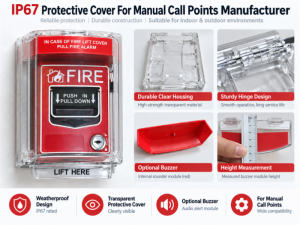
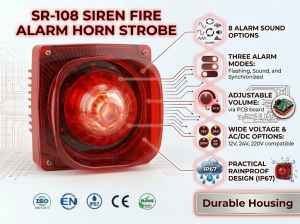
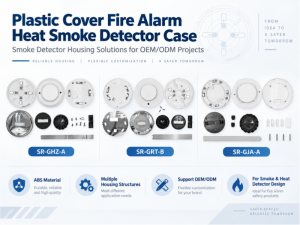
Whether your project needs a heat rise detector, smoke detector, manual call point, fire alarm sounder, control panel, or protective cover, Sumring can support product selection and customization for different commercial and industrial applications.
If you are building a fire alarm product line or sourcing reliable fire detection devices for your market, Sumring can provide practical support from product matching to bulk supply.
Common Mistakes When Buying a Heat Rise Detector
One common mistake is choosing a detector only by price. Low-cost products may create long-term problems if they lack stable sensing performance or proper certification.
Another mistake is using a heat rise detector in areas where smoke detection is required. Heat detectors are useful, but they are not always the earliest warning device.
Some buyers also ignore panel compatibility. A detector must match the control panel’s voltage, wiring type, and alarm signal requirements.
Another issue is misunderstanding rate-of-rise detection. A rate-of-rise detector responds to rapid temperature increase, but slowly developing fires may need a fixed temperature element for reliable detection.
The best approach is to choose the detector based on real application conditions, not only product appearance or unit cost.
FAQ:
1. What is a heat rise detector?
A heat rise detector is a fire detection device that activates when it senses a rapid increase in temperature. It is also called a rate-of-rise heat detector.
2. How fast does a heat rise detector respond?
Many rate-of-rise heat detectors respond when the temperature increases by about 8°C per minute, depending on the detector design and standard.
3. Is a heat rise detector the same as a smoke detector?
No. A smoke detector senses smoke particles, while a heat rise detector senses rapid temperature increase. They are used in different environments.
4. Where should a heat rise detector be used?
It is commonly used in kitchens, garages, boiler rooms, mechanical rooms, warehouses, factories, utility rooms, and dusty or humid environments.
5. Can a heat rise detector detect slow fires?
A rate-of-rise detector may not respond quickly to slow fires. For better protection, choose a combination detector with both rate-of-rise and fixed temperature detection.
6. Is a heat rise detector good for homes?
Yes, it can be useful in home areas where smoke alarms may cause false alarms, such as kitchens, garages, laundry rooms, or utility spaces. Sleeping areas should still use proper smoke or smoke/CO alarms according to local rules.
7. What is the difference between rate-of-rise and fixed temperature detection?
Rate-of-rise detection responds to fast temperature increase. Fixed temperature detection responds when the air reaches a preset temperature level.
8. How do I choose the best heat rise detector?
Choose based on application area, detector type, voltage, wiring system, panel compatibility, certification, installation environment, and supplier reliability.
Looking for a dependable heat rise detector supplier for your next fire alarm project? Contact Sumring to get product recommendations, OEM/ODM options, and B2B fire detection solutions designed for your target market.