What Should Buyers Know About a Free Standing Carbon Monoxide Detector?
What Should Buyers Know About a Free Standing Carbon Monoxide Detector?
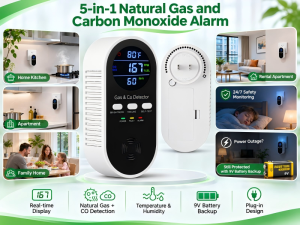
A free standing carbon monoxide detector is a carbon monoxide (CO) alarm intended for use without permanent wall or ceiling mounting, but only when its manufacturer specifically approves placement on a stable surface. It monitors the surrounding air and warns occupants when its programmed CO alarm conditions are reached. For B2B buyers, the main question is whether its installation method, warning performance, and documentation match the property.
Why Does This Type of CO Alarm Matter?
Carbon monoxide is an invisible, odorless gas associated with incomplete fuel combustion. Faulty heating appliances, blocked exhaust routes, and misuse of fuel-powered equipment can create hazardous conditions. Symptoms can include headache, nausea, dizziness, and weakness. A working alarm provides warning that human senses cannot provide.
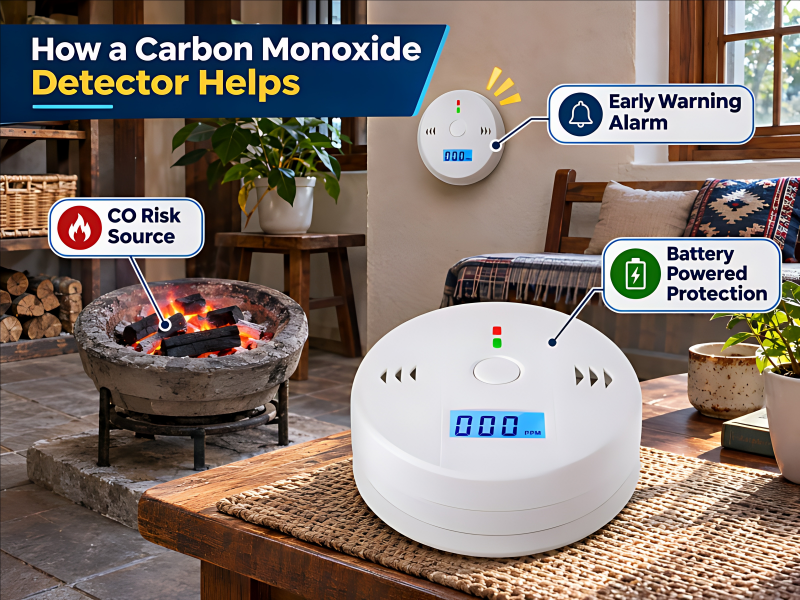
A free standing carbon monoxide detector may appeal to customers who value uncomplicated battery access and a less intrusive appearance. However, easy placement is not a substitute for a documented installation method. Portable or battery-operated does not automatically mean tabletop-approved.
CO detection must complement appliance inspection, ventilation, and safe equipment use.
What Makes the Battery-Operated Design Practical?
The original SUMRING article describes a battery-operated alarm with three AA batteries supplied and a snap-on cover for accessing the battery compartment. The design facilitates battery access without relying on a nearby outlet. Because that article dates from 2024, purchasers should reconfirm the current package contents and specifications before using them in sales materials.
A free standing carbon monoxide detector should be assessed on more than the number of batteries. Buyers need to review low-battery indication, operating temperature, stated service life, test functions, audible warnings, and the method of securing the cover. Verify any requested LCD, sensor technology, or end-of-life alert by model.
For a battery powered carbon monoxide alarm for home applications, replacement-cell availability and clear user instructions are particularly important. Simple maintenance helps residents and managers.
Where Can a Free Standing Carbon Monoxide Detector Be Used Safely?
The phrase “tabletop” raises an essential question: does the product’s approved user manual permit horizontal placement? The alarm must not be placed on a shelf, desk, or cabinet solely because it can physically stand there. Its ventilation openings, sensing response, stability, and location must suit that orientation.
For tabletop carbon monoxide detector placement, check stability, unobstructed vents, and environmental restrictions. Follow local building codes as well as the device’s instructions. Some properties require fixed or interconnected alarms, making a movable unit unsuitable as the only protection.
The U.S. Consumer Product Safety Commission recommends CO alarms on every home level and outside sleeping areas. It also emphasizes following manufacturer installation instructions. A portable unit should therefore be considered only within a complete, compliant alarm plan, not as an excuse to leave required areas unprotected.
Which Properties Could Benefit?
Residential distributors may encounter interest from homeowners seeking a clear, battery-powered warning device. Property managers may also ask about a portable CO alarm for rental properties when reviewing rooms, maintenance access, or temporary accommodation arrangements.
For hotels, serviced apartments, and residential developments, however, purchasing decisions should be based on approved building plans and applicable local requirements. A free standing carbon monoxide detector is not automatically an acceptable alternative to installed, interconnected, or centrally managed life-safety devices.
Importers can use this distinction to organize product listings accurately. Consumer convenience, installation compliance, and project suitability should appear as separate claims, supported by instructions and test documents where relevant.
What Should B2B Buyers Verify Before Ordering?
Begin with the destination country and intended use. Requirements differ across markets for labeling, testing, and placement. In the United States, buyers commonly assess residential CO alarms against UL 2034; European projects may reference EN 50291-1. Neither standard should be presented as a certification held by a specific SUMRING model without current model-level evidence.
Before purchasing a free standing carbon monoxide detector, request the latest datasheet, installation instructions, battery specification, and relevant conformity documentation. Confirm approved orientation, mounting accessories, and replacement rules.
Evaluate alarm behavior as carefully as appearance. CO alarm performance is generally assessed against concentration and exposure time, not a universal instantaneous trigger. Ask for applicable test results and distinguish the alarm’s functional test button from a sensor accuracy test. Buyers should also verify language support, carton markings, traceability, warranty terms, and after-sales arrangements.
When choosing an OEM carbon monoxide detector supplier, discuss branding, manuals, packaging, order quantities, and design changes early. OEM or ODM customization must not alter safety-critical performance or invalidate applicable approval without proper reassessment. SUMRING can discuss customization options, while the purchaser should verify approved configurations and documentation for the target market.
How Should Users Maintain and Respond to the Alarm?
Even a well-designed free standing carbon monoxide detector requires regular attention. Test it at the intervals specified by its instructions, keep sensing openings unobstructed, and replace batteries and the unit according to the manufacturer’s stated schedule. Do not rely on an alarm beyond its designated service life.
Residents should know that a CO alarm does not normally detect smoke, methane, or LPG unless the product is explicitly designed and evaluated for those functions. Alarm location and maintenance also do not replace safe appliance use.
If a CO warning sounds, occupants should move outdoors to fresh air immediately, contact local emergency services from a safe location, and avoid re-entering until responders say it is safe. For broader prevention measures, see SUMRING’s guide to preventing carbon monoxide poisoning.
FAQs
1. Is a free-standing alarm the same as a wall-mounted CO detector?
Not necessarily. A free standing carbon monoxide detector is intended to stand without permanent mounting only if its official instructions allow that orientation. Many battery-operated alarms are designed solely for fixed installation.
2. Does battery power mean an alarm can be moved anywhere?
No. Battery power removes the need for mains wiring, but approved placement, environmental limits, and local rules still apply. Moving an alarm may leave another area without required coverage.
3. How many CO alarms are needed in a home?
Requirements vary by jurisdiction and layout. U.S. consumer-safety guidance recommends alarms on every level and outside sleeping areas. Always check local codes and product instructions.
4. Does a standalone CO alarm detect natural gas?
A CO-only alarm does not automatically detect natural gas or LPG. Choose a specifically designed combination unit when those additional hazards require monitoring.
5. Are three AA batteries always included?
No. The historical SUMRING article mentions three included AA batteries, but bulk-order contents can vary. Confirm the current sales specification and packaging before publication or procurement.
6. Can hotels and landlords use portable alarms instead of installed systems?
Not automatically. Approved building requirements may call for mounted, hardwired, or interconnected devices. Purchasers must obtain confirmation from the relevant authority and project designer.
7. What should an OEM buyer request first?
Ask for a current datasheet, installation manual, applicable certificates or test reports, labeling options, sample policy, and confirmation of any intended changes to the approved design.
Conclusion
A free standing carbon monoxide detector can be attractive where buyers prioritize accessible batteries and convenient form factors, provided its specified placement is permitted. The strongest B2B purchasing decision combines practical usability with verified alarm performance, clear instructions, and destination-market compliance. Buyers comparing a free standing carbon monoxide detector with fixed models should confirm those essentials before private-label procurement.