What Is a Fire Safety Panel and Why Does a Building Need One?
A fire safety panel is the central control unit that receives signals from fire detection devices, identifies alarm or fault conditions, and manages the building’s fire alarm response.
A fire safety panel, also called a fire alarm control panel or fire alarm control unit, acts as the operational center of a building fire alarm system. It receives information from smoke detectors, heat detectors, manual call points, sprinkler waterflow switches, and other initiating devices. When an emergency signal is detected, the panel processes the information and activates the programmed response.
However, not every building follows the same fire alarm requirements. Whether a building needs a panel-based fire alarm system depends on factors such as occupancy classification, occupant load, building height, floor area, business activity, and locally adopted regulations. The International Building Code uses occupancy classification as an important basis for determining fire protection and life-safety requirements.
Building owners, contractors, and system integrators should therefore confirm requirements with the local authority having jurisdiction, commonly called the AHJ, before selecting or installing a system.
Table of Contents
- How a fire safety panel works
- Seven essential panel functions
- Fire panel and sprinkler system integration
- Conventional and addressable panels
- How to select the right panel
- B2B procurement considerations
- Frequently asked questions
How Does a Fire Safety Panel Work?
The fire safety panel continuously supervises connected circuits and devices. Under normal conditions, it displays a system-normal status. When a detector, manual call point, or monitored fire protection device sends a signal, the panel evaluates the signal and displays the relevant condition.
A typical panel distinguishes between three main system states:
- Alarm: A possible fire or emergency condition has been detected.
- Trouble: A wiring, power, communication, battery, or device fault requires attention.
- Supervisory: A monitored fire protection component has changed from its normal state, such as a sprinkler valve being partially closed.
NFPA describes the fire alarm control unit as the “brain” of the system because it monitors incoming signals and controls the fire alarm system’s outputs and emergency functions.
This centralized supervision helps maintenance teams identify problems quickly and enables occupants to receive an early warning when evacuation may be necessary.
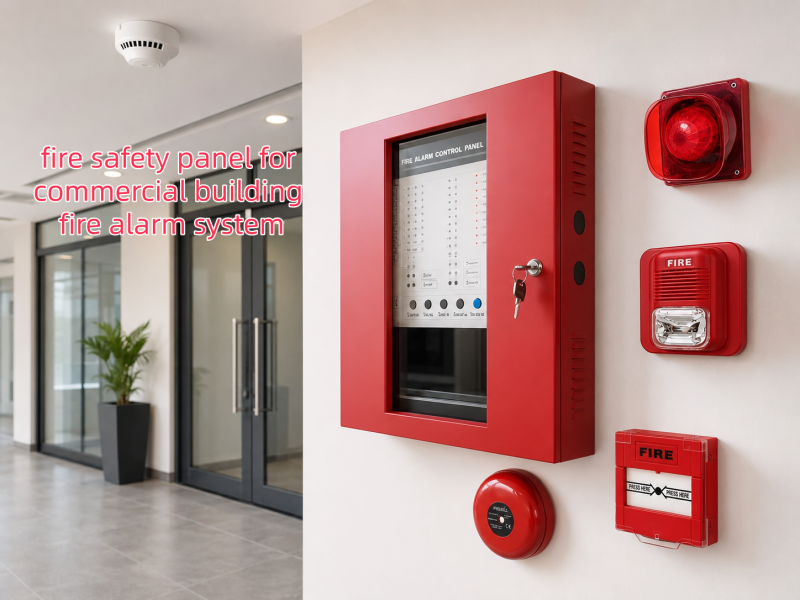
7 Essential Functions of a Fire Safety Panel
1. Receiving Signals from Detection Devices
The first function of a fire safety panel is to receive signals from connected initiating devices. These may include:
- Smoke detectors
- Heat detectors
- Beam detectors
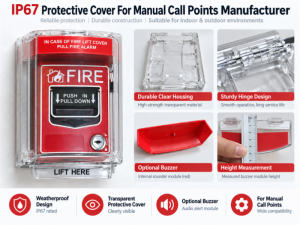
- Manual call points
- Sprinkler waterflow switches
- Gas suppression system interfaces
- Other approved fire detection devices
The panel evaluates these signals according to its programmed logic. In a conventional system, the panel normally identifies the affected zone. In an addressable system, it may identify the specific detector, manual call point, or interface module.
2. Activating Audible and Visual Alarms
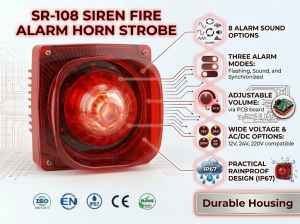
When a confirmed fire alarm signal is received, the panel can activate notification appliances such as bells, sounders, horns, strobes, and voice evacuation speakers.
The purpose is to warn occupants quickly and support an orderly evacuation. The notification method should match the building environment. A warehouse may require high-output sounders and visible strobes, while a hotel, hospital, or large commercial building may require voice evacuation instructions or phased alarm procedures.
The selected fire safety panel must have sufficient notification circuits, output capacity, and programmable functions for the project design.
3. Displaying the Alarm Location
Fast identification of the alarm location is critical during an emergency. The panel may display a zone number, device address, floor, room, or customized location description.
This information helps security teams, facility managers, and emergency responders determine where the signal originated. It can also reduce the time required to investigate faults or unwanted alarms.
For larger buildings, an addressable panel generally provides more precise device-level information than a basic conventional panel.
4. Monitoring System Faults
A reliable fire alarm system must do more than respond to fire signals. It must also monitor its own operating condition.
Depending on the design, the fire safety panel may detect:
- Open or short circuits
- Detector removal
- Communication failures
- Main power loss
- Low standby battery voltage
- Ground faults
- Disabled zones
- Notification circuit faults
Clear fault indication allows maintenance personnel to take corrective action before the issue affects emergency performance.
For B2B buyers, fault monitoring capability is an important procurement factor. A low-cost panel with limited diagnostics may create higher maintenance costs over the full project life cycle.
5. Communicating with a Supervising Station
Some systems are designed to transmit alarm, supervisory, and trouble signals to an approved supervising station through a separate communicator or integrated communication function.
This does not mean that every panel automatically contacts the fire department. The communication method, monitoring arrangement, local approval, and emergency response procedure depend on the system design and local requirements.
The International Building Code includes monitoring requirements for certain required fire alarm systems, but the applicable provisions depend on the building and adopted code edition.
Contractors should confirm communication compatibility before purchasing a panel, especially when the project requires IP, cellular, telephone-line, or third-party monitoring integration.
6. Controlling Emergency Building Functions
A more advanced fire safety panel can interface with other building systems through approved control modules and relays.
Possible emergency control functions include:
- Releasing magnetic fire doors
- Recalling elevators
- Shutting down air-handling equipment
- Activating smoke control functions
- Unlocking designated access-controlled exits
- Starting fire pumps through approved interfaces
- Sending signals to building management systems
- Controlling fire suppression interfaces
These functions must be designed, programmed, tested, and approved as part of the complete fire protection strategy. NFPA 72 includes provisions covering fire alarm signaling and emergency control function interfaces.
Compatibility is especially important. The panel, modules, detectors, notification appliances, power supplies, and connected third-party systems must be selected as a coordinated solution rather than as unrelated components.
7. Maintaining Operation During a Power Failure
Fire alarm control equipment normally uses primary electrical power together with standby battery power. If the main supply fails, the standby source allows the system to continue monitoring the building for a specified period.
The required battery capacity depends on the system load, standby duration, alarm duration, applicable standard, and local approval requirements.
When evaluating a fire safety panel, procurement teams should check:
- Panel standby consumption
- Alarm current
- Battery charging capacity
- Maximum supported battery size
- Auxiliary output load
- Notification appliance load
- Expansion module consumption
A proper battery calculation should be completed by a qualified system designer rather than estimated from the panel enclosure size alone.
Does a Fire Safety Panel Activate the Sprinkler System?
This point is often misunderstood.
In most standard wet-pipe sprinkler systems, individual sprinkler heads are heat-activated mechanical devices. They normally open independently when exposed to sufficient heat. The fire safety panel does not usually command a standard sprinkler head to open.
Instead, the fire alarm system may monitor sprinkler-related equipment such as:
- Waterflow switches
- Valve supervisory switches
- Fire pump status contacts
- Pressure switches
- Suppression system releasing interfaces
When water begins flowing, the waterflow switch can send an alarm signal to the panel. The panel may then activate building notification appliances and transmit the event to a supervising station.
Special suppression or releasing systems may operate differently and require purpose-designed releasing control equipment. Therefore, buyers should not assume that every general-purpose panel is suitable for extinguishing-system release applications.
Conventional vs. Addressable Fire Safety Panels
Selecting between conventional and addressable technology depends on project size, required location accuracy, maintenance strategy, and budget.
Conventional Panel
A conventional panel groups detectors and manual call points into zones. When an alarm occurs, the panel identifies the affected zone but not necessarily the exact device.
It may be suitable for:
- Small shops
- Small warehouses
- Workshops
- Low-rise commercial properties
- Simple projects with limited zones
Conventional systems are generally straightforward to install and operate, but troubleshooting can require checking several devices within the indicated zone.
Addressable Panel
An addressable panel communicates with individually identified field devices. It can display the exact device address and programmed location.
It may be more appropriate for:
- Hotels
- Hospitals
- Schools
- Shopping centers
- Office towers
- Industrial facilities
- Multi-building projects
Addressable systems usually offer more detailed diagnostics, programmable cause-and-effect functions, event history, and system expansion options.
How to Select the Right Fire Safety Panel?
A suitable panel should be selected according to the complete project specification, not only the number of zones shown in a product catalog.
Before purchasing, confirm the following:
Project Capacity
Calculate the required number of zones, loops, detectors, manual call points, sounders, modules, and auxiliary outputs. Leave reasonable capacity for future expansion.
Device Compatibility
Confirm that detectors, manual call points, sounders, modules, and other accessories are technically compatible with the panel. For addressable systems, communication protocol compatibility is particularly important.
Applicable Standards
NFPA 72 provides requirements for fire alarm and signaling system design, installation, performance, inspection, testing, and maintenance in jurisdictions where it is adopted.
Projects outside the United States may follow EN 54 or other national standards. A certification should only be claimed when the exact panel model and relevant system configuration are covered by valid documentation.
Output and Integration Requirements
Determine whether the project requires relay outputs, sounder circuits, fire door control, elevator recall, monitoring communication, smoke control interfaces, or building management integration.
Power and Battery Capacity
Review primary input voltage, auxiliary output, charger capacity, standby load, alarm load, and required battery autonomy.
Installation and Maintenance Support
Clear manuals, wiring diagrams, programming instructions, spare parts, technical training, and after-sales support can significantly reduce installation risks.
FAQs
1. What is a fire safety panel?
A fire safety panel is the central unit that receives signals from fire detection devices, displays system conditions, activates alarms, and controls approved emergency outputs.
2. Does every commercial building need a fire safety panel?
Not necessarily. Requirements depend on the adopted building and fire codes, occupancy type, occupant load, building size, height, use, and local fire authority.
3. Is a fire safety panel the same as a fire alarm control panel?
The terms are often used interchangeably. However, “fire alarm control panel” or “fire alarm control unit” is generally the more precise industry terminology.
4. Can the panel automatically call the fire department?
Only when the system includes an approved communication and monitoring arrangement. A basic standalone panel does not automatically contact emergency services.
5. Can a fire safety panel activate sprinklers?
Standard heat-operated sprinkler heads usually activate independently. The panel commonly monitors waterflow and valve status, although special releasing systems may use dedicated control equipment.
6. What is the difference between a conventional and addressable panel?
A conventional panel identifies an alarm zone. An addressable panel can usually identify the exact device and location, providing more detailed diagnostics and control options.
7. How many detectors can connect to one panel?
The capacity depends on the panel design, number of zones or loops, manufacturer limitations, circuit load, and applicable project requirements. Always follow the technical manual and approved system design.
8. What should B2B buyers ask a fire panel supplier?
Buyers should confirm capacity, device compatibility, supported standards, output functions, battery requirements, programming support, production lead time, warranty, OEM options, and after-sales service.
Conclusion
A fire safety panel is much more than an alarm switch. It supervises detection devices, identifies emergency locations, activates occupant notification, reports faults, and coordinates approved building safety functions.
Before placing an order, confirm the project specification with the system designer and local authority having jurisdiction. A properly selected fire safety panel should support both regulatory compliance and reliable daily operation.
You can also review our fire alarm control panel products or contact our engineering team for project configuration support.