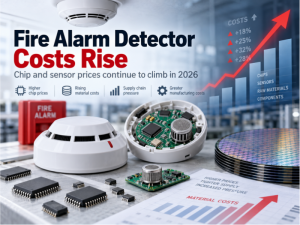

Fire Alarm Detector Costs Rise as Chip Prices Surge 20%
2026 Industry Notice: Rising Raw Material and Chip Prices Are Increasing Fire Alarm Detector Manufacturing Costs
In 2026, the fire alarm detector cost structure is facing increasing pressure as prices for semiconductor chips, sensor components, electronic materials, and manufacturing services continue to rise.
From CIS image sensors and MCUs to power-management components and structural materials, cost increases across the upstream supply chain are gradually being transmitted to fire alarm detector manufacturers and downstream buyers.
For distributors, system integrators, project contractors, and fire alarm equipment importers, closer attention to purchasing schedules, inventory planning, and supplier stability is becoming increasingly important.
Direct Materials Represent More Than 80% of Detector Costs
Raw materials used in fire alarm detectors can generally be divided into three categories: core electronic components, structural parts, and auxiliary materials.
In many detector designs, direct materials represent the majority of total manufacturing cost and may account for more than 80% of the product cost structure.
A typical bill of materials may include:
- Sensor modules, photoelectric components, or CO sensors: approximately 20%–30%
- MCU, SoC, and communication modules: approximately 15%–25%
- Power supply and battery-management components: approximately 10%–15%
- PCB, housing, connectors, buzzers, LEDs, terminals, and other components
Photoelectric smoke detectors depend heavily on optical sensing components such as infrared transmitters and receivers, while some intelligent detection systems may incorporate more advanced sensing technologies.
Heat detectors also rely on temperature-sensitive components such as thermistors.
As a result, fluctuations in semiconductor and electronic-component prices can have a direct impact on fire alarm detector cost.
CIS Sensor and MCU Prices Are Rising
Semiconductor components are among the main drivers behind the latest cost increases.
According to industry pricing notices, SmartSens announced price adjustments affecting CIS image sensors used in smart security and AIoT applications. Products manufactured through certain Samsung foundry channels reportedly increased by around 20%, while some products manufactured by Nexchip increased by approximately 10%.
MCU prices have also come under pressure.
Earlier in 2026, China Micro Semiconductor announced price increases across selected product lines, with adjustments reportedly ranging from approximately 15% to 50%.
Other semiconductor suppliers have also introduced price adjustments as wafer costs, packaging expenses, testing fees, and upstream material prices continue to increase.
For fire alarm equipment manufacturers, MCU pricing is particularly important because microcontrollers are widely used for signal processing, alarm logic, communication, self-testing, display control, and intelligent connectivity.
Cost Pressure Is Moving Downstream
The impact of rising component prices is no longer limited to semiconductor manufacturers.
Cost pressure is gradually moving through the supply chain toward finished fire alarm products.
Honeywell announced a price adjustment for portions of its fire alarm product portfolio, including brands such as Notifier and Morley-IAS, with an average increase of approximately 4.5% effective May 10, 2026.
The company cited factors including global inflation, higher production costs, and increases in critical raw-material prices.
Similar pressure is being seen across the wider fire safety and security industry.
For manufacturers, maintaining stable quality while absorbing substantial increases in component costs is becoming more difficult. For distributors and project buyers, quotations may therefore require shorter validity periods, more flexible purchasing schedules, or earlier order confirmation.
Why B2B Buyers Should Review Procurement Plans?
For international distributors, contractors, OEM buyers, and fire alarm system integrators, the current market environment makes supply-chain planning increasingly important.
Buyers may consider:
- Confirming project demand earlier
- Reviewing safety-stock levels
- Monitoring quotation validity periods
- Locking critical component supply where possible
- Avoiding excessive dependence on a single component source
- Evaluating supplier production capacity and inventory stability
- Planning long-term OEM and ODM orders in advance
For large projects, even relatively small changes in detector unit cost can significantly affect the total procurement budget.
Fire Alarm Industry Competition Is Shifting Toward Value
The fire alarm and security industry has long experienced strong price competition.
However, persistent increases in semiconductor, sensor, metal, packaging, and manufacturing costs are making extremely low-price competition increasingly difficult to sustain.
The market is gradually placing greater emphasis on product reliability, certification, engineering capability, supply-chain management, technical support, and long-term delivery stability.
For B2B buyers, purchasing decisions may therefore increasingly depend not only on unit price, but also on whether a supplier can maintain consistent specifications, stable production, reliable component sourcing, and predictable delivery.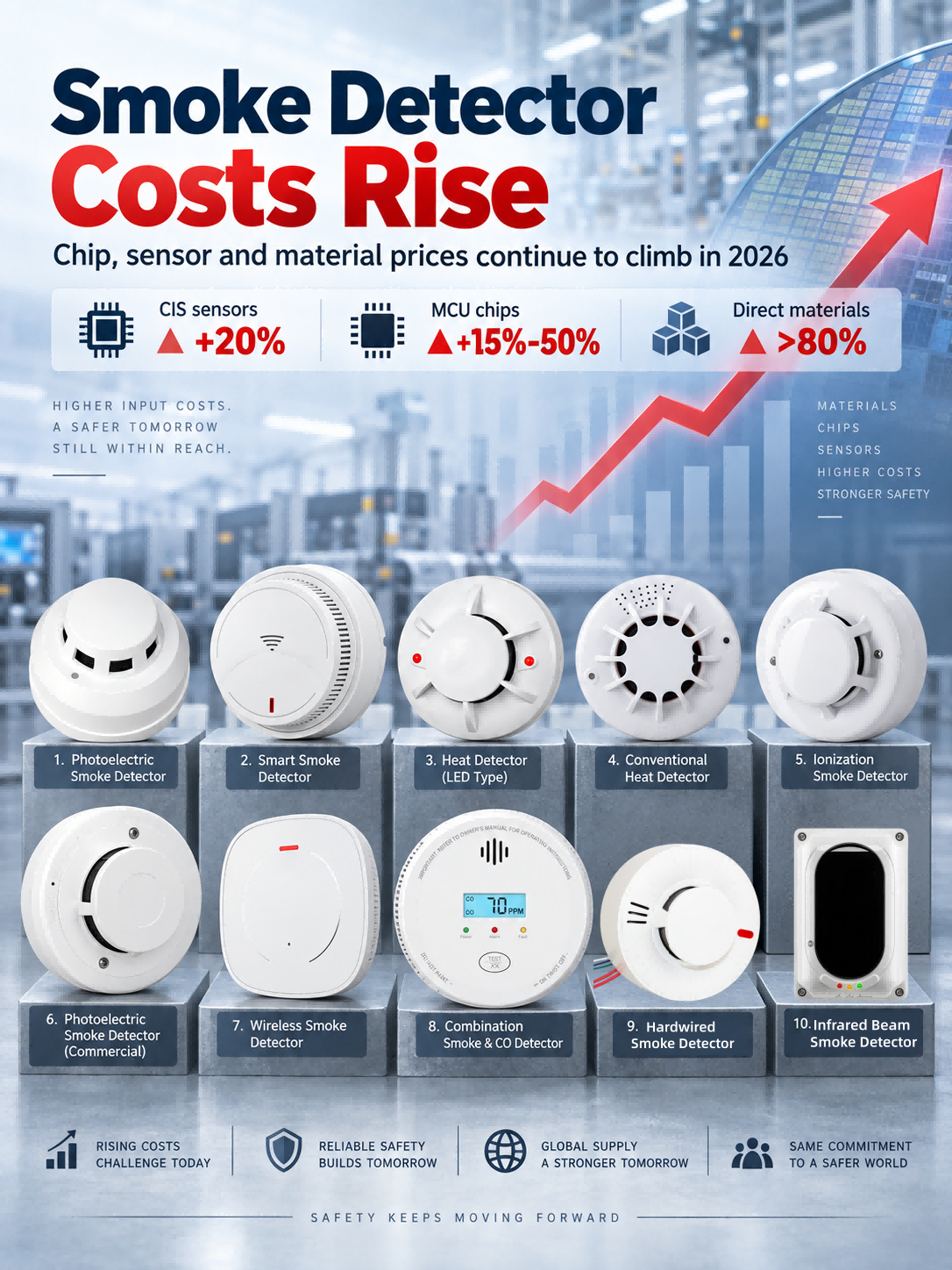
Sumring Supply Chain Notice
With upstream electronic-component prices continuing to fluctuate, Sumring is closely monitoring semiconductor, sensor, PCB, housing, packaging, and other key material costs.
For distributors, importers, fire alarm contractors, and OEM/ODM partners planning orders in 2026, we recommend confirming purchasing requirements and production schedules as early as possible.
Sumring will continue working to maintain stable product quality, reasonable pricing, and reliable production capacity for international fire alarm and security projects.
For upcoming bulk orders, OEM projects, or customized fire alarm detector requirements, buyers are encouraged to contact Sumring in advance for updated pricing, lead-time information, and production planning.