

PRODUCTS
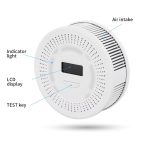
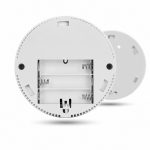
SR-824THS CO and Smoke Detector with LCD Display


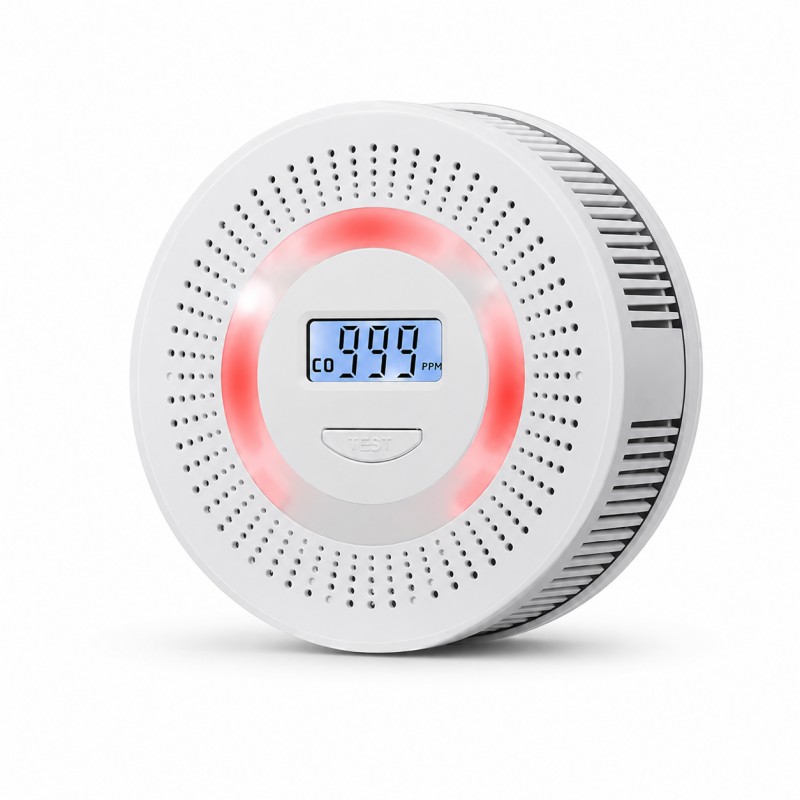
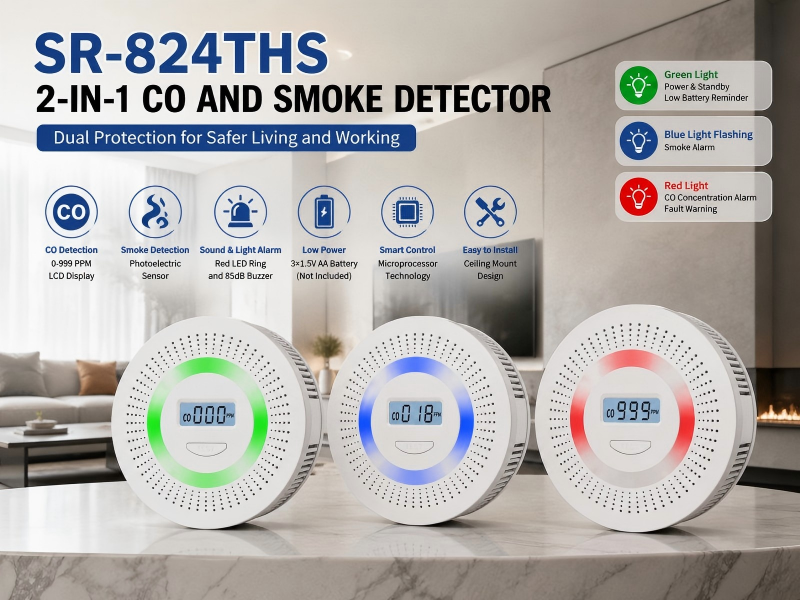
SR-824THS 2-in-1 CO and smoke detector with an electrochemical carbon monoxide sensor, infrared photoelectric smoke sensor, LCD display, and audible and visual alerts. Powered by three 1.5V AA batteries.
A CO and smoke detector is a combination alarm that monitors carbon monoxide and smoke in one device. The SUMRING SR-824THS combines an electrochemical CO sensor with an infrared photoelectric smoke sensor. It provides audible and visual warnings when an alarm condition occurs.
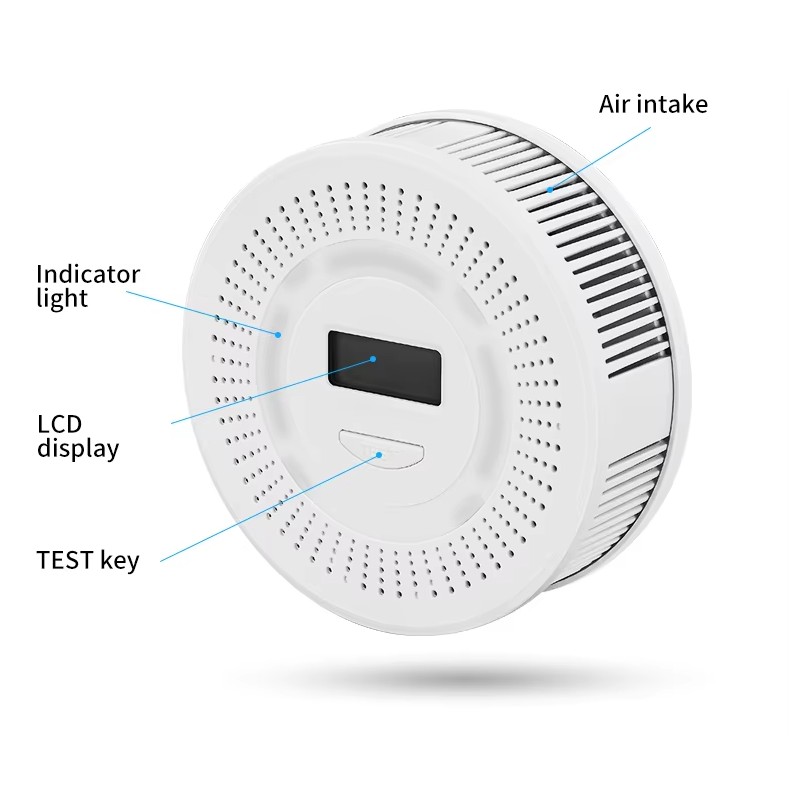
This battery-operated CO and smoke detector also features an LCD screen for carbon monoxide readings. Its published CO display range is 0–999 ppm. A microprocessor processes sensor signals, while the alarm indicators help users recognize warning conditions.
The SR-824THS uses three 1.5V AA batteries and does not require mains wiring for power. It also includes a low-battery warning. For distributors, importers, contractors, and private-label brands, SUMRING supports OEM and ODM project discussions.
What Are the Main Features of This CO and Smoke Detector?
1. Dual Smoke and Carbon Monoxide Detection
The SR-824THS monitors two different hazards. Its electrochemical sensor detects carbon monoxide, while its infrared photoelectric sensor detects smoke particles.
This dual-sensor design combines two alarm functions in one product. However, buyers must still confirm that the model meets local requirements for each detection function.
2. LCD Carbon Monoxide Display
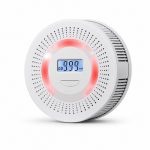
The CO and smoke detector includes a digital LCD display. The published specification lists a CO concentration range of 0–999 ppm.
The display gives users a way to view reported CO readings. This range does not establish the CO alarm threshold, sensor accuracy, or certification status. These details should be confirmed in the approved technical manual.
3. Microprocessor-Controlled Detection
An internal microprocessor processes signals from the two sensors. It supports the detector’s monitoring and alarm functions.
For B2B buyers, the combination of sensor technology and signal processing is an important part of product evaluation. Sample testing and technical documentation help confirm the final configuration.
4. Battery-Powered Operation
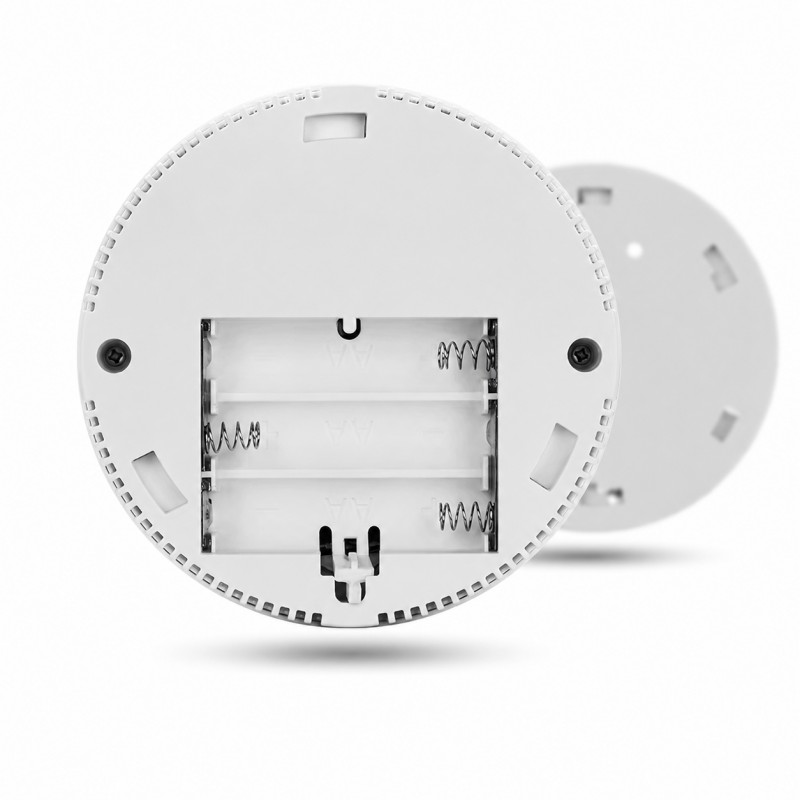
The SR-824THS operates on three 1.5V AA batteries. The nominal combined supply voltage is 4.5V.
Its specified quiescent current is below 80 microamps, while the alarm current is below 30 mA. Batteries are not included in the standard package described on the current product page.
The battery-operated design allows the alarm to function without a mains power connection, provided suitable batteries are installed and have sufficient charge.
5. Audible and Visual Alarm Signals
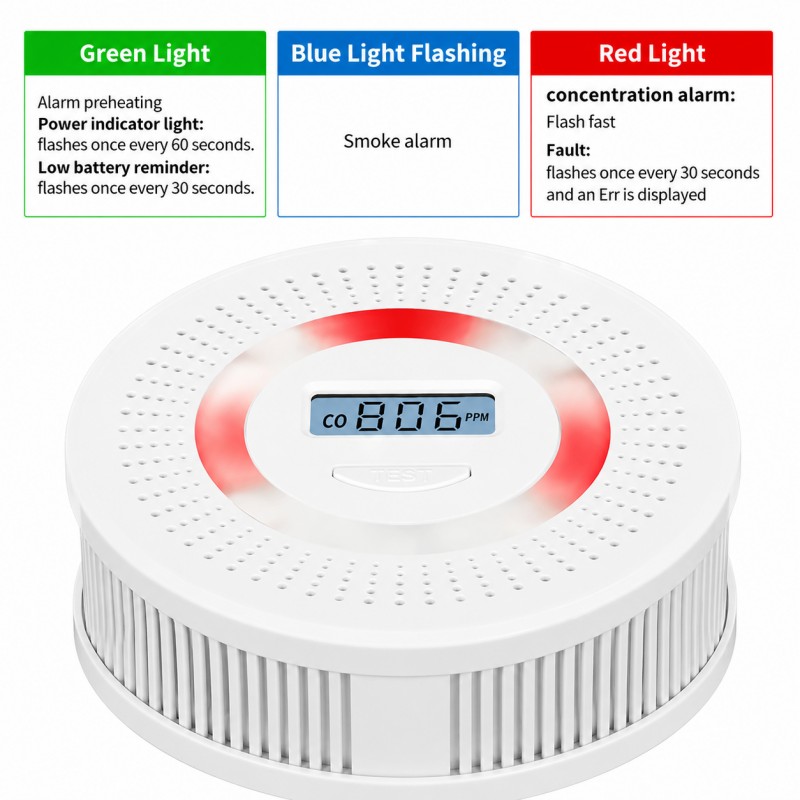
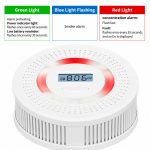
The CO and smoke detector provides sound and light alarms when the relevant detection conditions are met.
These signals help occupants notice a warning. The exact alarm sequence, sound level, and CO activation thresholds must be checked against the official product documentation.
6. Low-Battery Warning
A low-battery warning helps users identify when battery maintenance is required.
For apartment and rental property projects, this feature supports routine inspection and battery replacement planning. Users should follow the approved maintenance instructions and replace batteries when required.
SR-824THS Technical Specifications
The following table summarizes the published specifications of the SR-824THS CO and smoke detector. It includes the sensor types, power requirements, LCD range, alarm output, and operating conditions.
| Parameter | Specification | Parameter | Specification |
|---|---|---|---|
| Model Number | SR-824THS | Operating Voltage | 3 × 1.5V AA Batteries (4.5V nominal) |
| Sensor Technology | Electrochemical CO and Infrared Photoelectric Smoke Sensors | CO Display Range | 0–999 ppm (Published Range) |
| Quiescent Current | Less than 80 µA | Alarm Current | Less than 30 mA |
| Alarm Output | Sound and Light Alarm | Battery Warning | Low-Battery Alarm |
| Working Temperature | 0°C to +50°C | Working Humidity | 10%–95% RH (Published Range) |
| Smoke Sensitivity | Pending Datasheet Verification | Dimensions | 105 × 38 mm |
Technical Note: The published smoke sensitivity value requires unit verification. The CO display range should not be treated as the alarm activation threshold. For engineering approval, request the latest manufacturer-approved datasheet and applicable test reports.
How Does the SR-824THS CO and Smoke Detector Work?
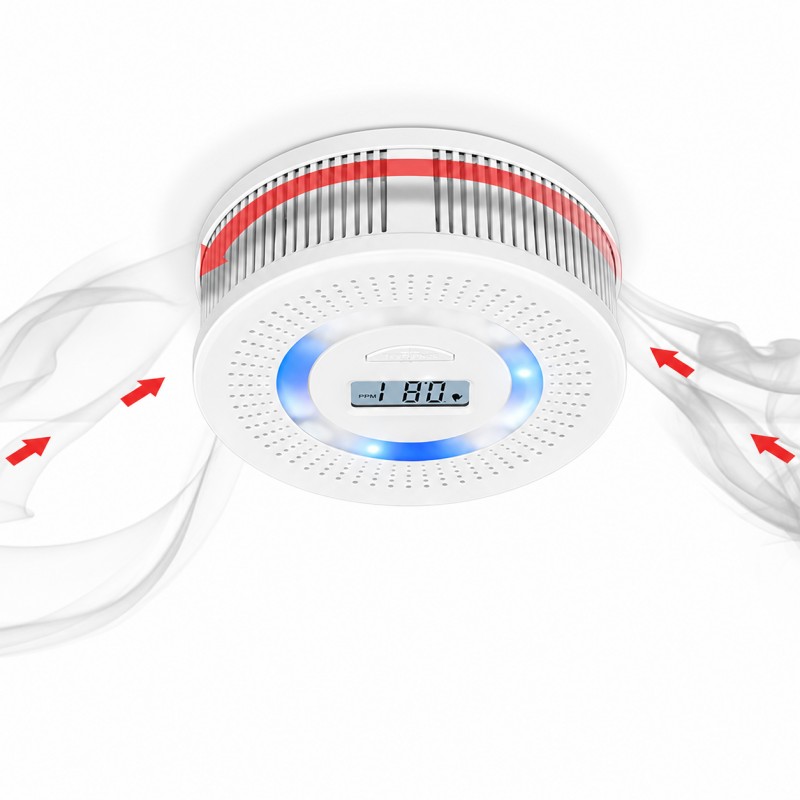
The SR-824THS uses two sensing technologies to monitor smoke and carbon monoxide. Each sensor responds to a different hazard. The internal electronic circuit processes the signals and activates the appropriate warning functions.
Step 1: Smoke Sensing
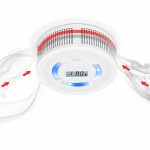
An infrared photoelectric sensor monitors smoke particles entering the sensing chamber. A change in the optical signal helps the detector identify smoke conditions.
Step 2: Carbon Monoxide Sensing
An electrochemical sensor monitors carbon monoxide in the surrounding air. Its electrical response changes as CO exposure changes.
The LCD provides the reported CO concentration reading within the specified display range.
Step 3: Signal Processing
The microprocessor evaluates the signals from the smoke and CO sensing elements.
The two detection functions serve different purposes. A smoke alarm condition does not mean carbon monoxide is present, and a CO alarm condition does not mean smoke has been detected.
Step 4: Audible and Visual Warning
When an alarm condition is detected, the CO and smoke detector activates its sound and light warning functions.
Occupants should respond to an alarm as a possible emergency. They should move to safety and contact the appropriate emergency service. Do not ignore an alarm because the source is not immediately visible.
Step 5: Battery Monitoring and Maintenance
The unit monitors battery condition and provides a low-battery warning. Users should test and maintain the alarm according to its approved instructions.
A combined detector needs the correct installation location, suitable batteries, regular testing, and timely replacement. These steps are important for both smoke and CO monitoring.
Where Is the SR-824THS Suitable?
The battery-operated CO and smoke detector may be considered for residential safety projects where a combined smoke and carbon monoxide alarm is required.
Potential applications include houses, apartments, rental properties, and suitable accommodation projects. However, product selection must comply with the destination market’s installation rules and required safety standards.
Before placing an order, buyers should confirm the approved mounting location, required alarm standard, sound output, battery specification, maintenance requirements, and model-specific certification documents.
For additional guidance, read our smoke and CO combo alarm buying guide.
FAQs
1. Does the SR-824THS detect both smoke and carbon monoxide?
Yes. The SR-824THS CO and smoke detector combines an infrared photoelectric smoke sensor with an electrochemical CO sensor. It monitors two different hazards in one device.
2. What batteries does the SR-824THS use?
The detector uses three 1.5V AA batteries. Their combined nominal voltage is 4.5V. Batteries are not included in the standard package described on the current product page.
3. What does the LCD display show?
The LCD displays reported carbon monoxide concentration readings. The published display range is 0–999 ppm. This does not confirm the alarm activation threshold or measurement accuracy.
4. How does the photoelectric smoke sensor work?
The infrared photoelectric sensor responds to changes in light caused by smoke particles entering its sensing chamber. The detector processes this signal to identify a possible smoke alarm condition.
5. What happens when the detector identifies smoke or CO?
The CO and smoke detector activates audible and visual warning functions when an alarm condition is reached. Treat any alarm as a possible emergency and follow the appropriate safety response.
6. Does the SR-824THS provide a low-battery warning?
Yes. The product includes a low-battery warning to indicate when the battery supply requires attention. Battery replacement and routine testing should follow the official instructions.
7. Is the SR-824THS CE certified?
The current product listing refers to CE certification. However, buyers should request the exact model’s Declaration of Conformity, applicable standards, and supporting technical documents before relying on that claim for a project.
8. Can SUMRING provide OEM and ODM services?
Yes. SUMRING supports OEM and ODM discussions for distributors and private-label customers. Options may include branding, packaging, labels, and instruction manuals, subject to technical evaluation and order requirements.
9. What should B2B buyers confirm before ordering?
Confirm the destination country, required standards, battery configuration, alarm sound level, sensor specifications, installation requirements, packaging, estimated quantity, and certification documents.
10. How should a combination smoke and CO alarm be maintained?
Follow the approved user manual for testing, cleaning, battery replacement, and product service life. Never disable a detector to silence an unexplained alarm.
For general consumer safety guidance, read the U.S. Consumer Product Safety Commission guidance on CO alarms.
OEM and ODM CO and Smoke Detector Solutions
SUMRING supplies smoke and carbon monoxide alarm products for importers, wholesalers, distributors, contractors, and private-label brands.
For an alternative model, explore the SR-821THS smoke and carbon monoxide detector.
The two products have different specifications and should be compared before selection.
If you are sourcing an OEM CO and smoke detector, contact SUMRING with your target market, quantity, required certifications, and customization needs.
Request a quotation, technical datasheet, sample details, or OEM and ODM proposal from SUMRING.