Should Manual Call Points Have Covers?
Manual call point covers are protective covers installed over fire alarm manual call points to help prevent accidental activation, malicious operation, physical damage, dust, moisture, and false fire alarms while still allowing quick emergency access.
Yes, in many buildings, manual call points should have covers because manual call point covers help protect the most vulnerable part of a fire alarm system from accidental activation, intentional misuse, weather damage, dust, impact, and false alarms.
A manual call point is designed to be easy to see, easy to reach, and easy to activate during an emergency. This is exactly why it is important. But this is also why it is exposed to risk. In busy buildings, people may accidentally hit it, children may touch it, visitors may misuse it, workers may damage it during maintenance, and outdoor environments may affect its long-term reliability.
A fire alarm system is only effective when every part works correctly. If a manual call point is damaged, blocked, or frequently misused, the whole system can suffer. False alarms can interrupt business, disturb students, stop hotel operations, create panic, waste emergency resources, and even cause people to ignore future alarms.
That is why manual call point covers are becoming a practical solution for schools, hospitals, shopping malls, hotels, museums, factories, residential buildings, transport stations, office buildings, and outdoor fire alarm projects.
Why Are Manual Call Points So Vulnerable?
Manual call points are usually installed on walls in corridors, entrances, exits, staircases, public areas, workshops, parking areas, and other accessible locations. They must be visible and reachable so people can activate the fire alarm quickly in a real emergency.
However, this open installation position also makes them easy to damage or misuse.
In public buildings, large numbers of people pass by manual call points every day. In schools, children may press or hit them out of curiosity. In hospitals, equipment trolleys, wheelchairs, cleaning carts, and beds may accidentally collide with them. In hotels, guests may misunderstand their purpose. In factories, tools, materials, or moving goods may damage exposed call points. In outdoor areas, rain, dust, UV exposure, salt spray, and temperature changes may also reduce service life.
Without manual call point covers, a fire alarm call point remains exposed to both human behavior and environmental conditions. This increases the risk of false alarms, broken devices, and unnecessary maintenance costs.
What Are Manual Call Point Covers?
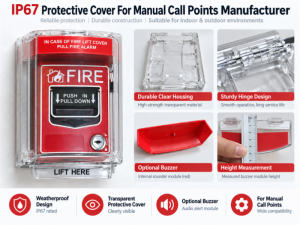
Manual call point covers are protective devices fitted over manual fire alarm call points. They are normally made from transparent or high-strength plastic materials, allowing users to see the call point clearly while protecting it from accidental contact, dust, impact, and environmental damage.
In a real emergency, the user simply lifts or opens the cover and activates the manual call point as normal. A good cover should not stop people from using the alarm. Instead, it adds one extra protective step that helps prevent accidental or unauthorized operation.
Some manual call point covers are designed for indoor use, while others are suitable for outdoor or harsh environments. Some models include a sounder alarm that activates when the cover is lifted, helping draw attention before the manual call point is operated. This can reduce malicious activation and make misuse easier to notice.

Why Do Fire Alarm Systems Need Manual Call Point Covers?
A fire alarm system is designed to protect life and property. But false alarms can create serious problems. When a fire alarm is activated without a real fire, people must evacuate, operations may stop, emergency services may be called, and business activities may be interrupted.
In some facilities, repeated false alarms can lead to high costs and lower trust in the alarm system. Staff and occupants may become less responsive if alarms happen too often. This is dangerous because a future alarm may be real.
Manual call point covers help reduce these risks by protecting the call point from accidental pressing and deliberate misuse. They also protect the device from physical damage, which helps maintain system reliability.
For building owners, contractors, facility managers, distributors, and fire safety engineers, installing manual call point covers is not only a small accessory choice. It is a practical fire safety improvement.
Key Benefits of Manual Call Point Covers
1. Reduce False Fire Alarms
One of the biggest reasons to install manual call point covers is false alarm prevention.
False fire alarms can be caused by accidental contact, vandalism, curiosity, poor installation location, or environmental interference. A protective cover creates a visible and physical barrier around the call point. This makes accidental activation much less likely.
In schools, dormitories, hotels, supermarkets, hospitals, warehouses, and public buildings, this benefit is especially important. Fewer false alarms mean fewer evacuations, less panic, less business interruption, and lower maintenance pressure.
2. Prevent Accidental Activation
Manual call points are often installed in busy passageways. People may bump into them with shoulders, bags, cleaning equipment, trolleys, ladders, or boxes. In narrow corridors or industrial areas, this risk becomes even higher.
With manual call point covers, the alarm point is better protected from accidental contact. The user must intentionally lift the cover before operating the call point. This simple action makes accidental triggering much less common.
3. Protect Against Intentional Misuse
In some public areas, fire alarm call points may be misused deliberately. This can happen in schools, entertainment venues, transport stations, shopping centers, apartment buildings, and other high-traffic locations.
A cover with a warning sounder can help discourage misuse. When someone lifts the cover, the local sounder draws attention immediately. This makes prank activation less attractive and helps staff identify the location quickly.
For this reason, manual call point covers are often used in buildings where false alarms have happened before or where unauthorized access is a known risk.
4. Protect the Call Point from Physical Damage
Manual call points are small but important devices. If they are cracked, broken, knocked loose, or damaged by impact, the fire alarm system may not perform correctly during an emergency.
Manual call point covers help protect the device from impact, collision, and rough handling. In factories, warehouses, workshops, parking garages, loading areas, hospitals, and schools, this protection can greatly extend the service life of the call point.
A damaged call point may require replacement, system testing, labor cost, and downtime. A protective cover is often a cost-effective way to reduce these problems.
5. Improve Protection in Outdoor and Harsh Environments
Outdoor manual call points face more challenges than indoor devices. Rain, dust, sunlight, humidity, salt air, and temperature changes can affect device appearance and performance.
For outdoor or semi-outdoor projects, IP-rated manual call point covers can provide additional protection. An IP67 manual call point cover is especially useful for harsh environments because it helps protect against dust and water ingress.
This makes it suitable for factories, chemical plants, parking areas, ports, coastal buildings, outdoor corridors, industrial parks, and public facilities exposed to weather.
6. Keep Emergency Access Simple
A common concern is whether covers slow down emergency operation. In practice, properly designed manual call point covers should have little impact on emergency use.
The user only needs to lift the transparent cover and activate the call point. The call point remains visible at all times. Clear design, bright color, and proper installation help people identify the device quickly.
Good covers protect the device without hiding it. This balance is very important for fire safety.
7. Support Building Fire Safety Management
Facility managers are responsible for keeping fire alarm systems reliable and reducing unnecessary disruption. Manual call point covers help support this goal.
They make call points easier to protect, reduce avoidable alarms, improve device durability, and support better safety control in high-risk areas. For buildings with repeated false alarm issues, installing covers can be one of the simplest improvement measures.
8. Suitable for New and Existing Systems
Some covers can be installed together with new manual call points. Others are retrofit designs, meaning they can be added to existing fire alarm systems.
This is useful for projects where the fire alarm system is already installed but false alarms or device damage have become a problem. Instead of replacing the full system, building owners can add suitable manual call point covers to improve protection.
Where Should Manual Call Point Covers Be Used?
Manual call point covers are especially useful in locations where call points are exposed, frequently touched, or likely to be damaged.
Common application areas include:
Schools and universities, where students may accidentally or intentionally activate call points.
Hospitals and care homes, where medical equipment, wheelchairs, beds, and staff movement can create accidental impact risk.
Hotels and apartments, where guests or residents may misuse or accidentally touch the call point.
Museums and public buildings, where large visitor flow increases the risk of accidental contact.
Shopping malls and supermarkets, where crowds, carts, and cleaning equipment may damage exposed devices.
Factories and warehouses, where workers, forklifts, tools, goods, and industrial materials may create impact risk.
Parking garages and outdoor corridors, where dust, moisture, and weather exposure may affect equipment.
Coastal and industrial projects, where higher environmental protection is often required.
In these places, manual call point covers help keep the fire alarm system accessible, visible, and better protected.
How to Choose the Right Manual Call Point Covers?
When choosing manual call point covers, buyers should consider the installation environment, the type of call point, the level of protection required, and whether an audible warning is needed.
For indoor public areas, a transparent protective cover may be enough to prevent accidental activation and damage. For schools, hotels, and high-risk public buildings, a cover with a local sounder may offer better anti-misuse performance.
For outdoor or industrial projects, waterproof and dustproof performance is more important. An IP-rated cover is recommended when the device is exposed to rain, dust, humidity, or harsh conditions.
Material quality is also important. A good cover should be strong, impact-resistant, clear, durable, and suitable for long-term use. If the cover becomes yellow, cracked, or difficult to open, it may affect both appearance and safety.
Are Manual Call Point Covers Really Worth It?
Yes. For many projects, manual call point covers are a small investment that can reduce bigger problems.
The cost of one false fire alarm may include evacuation time, lost productivity, customer disturbance, emergency service response, building management pressure, and system inspection costs. Repeated false alarms can also damage trust in the fire alarm system.
By installing manual call point covers, buildings can reduce unnecessary activations, protect fire alarm equipment, and improve long-term safety management.
For distributors and project buyers, these covers are also easy to explain and easy to sell. The value is clear: protect the call point, reduce false alarms, prevent damage, and keep emergency access available.
Why Choose High-Quality Manual Call Point Covers?
Not all covers are the same. A low-quality cover may crack easily, turn yellow, fit poorly, or make operation difficult. A professional cover should be durable, visible, easy to install, and suitable for the target environment.
High-quality manual call point covers can help improve fire alarm reliability and reduce after-sales problems. For contractors and distributors, choosing the right product also helps improve project reputation.
A good fire alarm accessory should not only look protective. It should perform well in real buildings, under real operating conditions, and over long periods of use.
FAQ:
1. What are manual call point covers used for?
Manual call point covers are used to protect fire alarm manual call points from accidental activation, intentional misuse, physical damage, dust, moisture, and false alarms while keeping the call point accessible during emergencies.
2. Do manual call point covers stop people from using the fire alarm?
No. Properly designed manual call point covers do not stop emergency use. The user simply lifts the cover and activates the manual call point as normal.
3. Where are manual call point covers most useful?
They are most useful in schools, hospitals, hotels, museums, shopping malls, factories, warehouses, apartment buildings, parking garages, and outdoor areas where call points are exposed to damage or misuse.
4. Can manual call point covers reduce false alarms?
Yes. Manual call point covers help reduce false alarms by preventing accidental contact and discouraging unauthorized operation.
5. Can I install covers on existing manual call points?
In many cases, yes. Some manual call point covers are designed for retrofit installation, making them suitable for existing fire alarm systems.
6. Do outdoor manual call points need covers?
Outdoor manual call points often benefit from protective covers because they face rain, dust, humidity, sunlight, and physical damage. IP-rated covers are recommended for harsh environments.
7. Should I choose a cover with an alarm sounder?
A cover with a sounder is useful in areas where malicious activation or unauthorized operation is a concern. The sounder alerts nearby people when the cover is lifted.
8. Are manual call point covers suitable for commercial buildings?
Yes. Manual call point covers are widely suitable for commercial buildings, public buildings, industrial sites, residential projects, and fire safety engineering applications.
If your building has exposed manual call points, frequent public access, high foot traffic, outdoor installation areas, or a history of false alarms, then manual call point covers are a smart and practical choice.
They help prevent false alarms, reduce accidental activation, protect fire alarm equipment, lower maintenance costs, and keep emergency access simple. For schools, hospitals, hotels, factories, warehouses, shopping malls, and public buildings, they can make the fire alarm system more reliable and easier to manage.
Looking for durable, clear, and project-ready manual call point covers for your fire alarm system? Contact Sumring today to choose the right protective solution for your building, project, or distribution market.