What Are the Main Components of a Building Fire Alarm System?
A building fire alarm system is an integrated life safety system designed to detect fire risks, warn building occupants, activate safety controls, and send alarm signals to emergency monitoring centers.
In any commercial building, fire safety is not only about installing one smoke detector or one alarm bell. A reliable building fire alarm system is made up of several connected components that work together as a complete protection network. From fire detection to evacuation warning, from control panel monitoring to smoke ventilation, every part has a specific role in helping people escape quickly and reducing property loss.
For offices, hotels, shopping malls, schools, factories, hospitals, warehouses, and residential complexes, a well-designed building fire alarm system can make the difference between a controlled emergency and a major disaster. Modern systems are no longer simple alarm devices. They can detect smoke, heat, flame, gas, or manual alarm signals, activate sirens and strobe lights, communicate with monitoring stations, trigger fire doors, control elevators, and connect with other building safety systems.
So, what are the main components of a building fire alarm system? Let’s look at each important part and how they work together.
1. Fire Alarm Control Panel:
The fire alarm control panel is the central unit of a building fire alarm system. It receives signals from initiating devices, checks system status, controls notification appliances, and sends alarm or fault information to building managers or monitoring companies.
When a smoke detector, heat detector, manual call point, or other input device is activated, the control panel analyzes the signal and starts the correct response. This may include activating sounders, flashing strobe lights, displaying the alarm zone, triggering relays, or sending a signal to a remote monitoring center.
A conventional fire alarm control panel usually divides the building into zones. For example, one zone may cover the lobby, another zone may cover the office area, and another zone may cover the warehouse. When an alarm occurs, the panel shows which zone is activated, helping staff and emergency responders locate the possible fire area faster.
An addressable fire alarm control panel can identify the exact device that triggered the alarm. This is helpful for larger or more complex buildings where fast location identification is important.
For small and medium-sized commercial buildings, Sumring conventional fire alarm control panels can be a practical solution. They are suitable for connecting smoke detectors, heat detectors, manual call points, sounders, strobe sirens, and other fire alarm devices.

2. Power Supplies:
A building fire alarm system must remain active even when normal power fails. That is why power supplies are a critical part of the system.
Most commercial fire alarm systems use two types of power supply:
Primary power supply: Usually connected to the building’s main AC power.
Secondary power supply: Usually a backup battery that keeps the system running during a power outage.
During a fire, power failure may happen due to electrical damage, emergency shutdown, or building conditions. If the fire alarm system depends only on main power, the system may stop working at the most dangerous moment. Backup batteries help ensure that the control panel, detectors, sounders, and other connected devices can continue operating.
A reliable building fire alarm system should include power fault monitoring. If the main power fails, the battery is low, or there is a wiring fault, the control panel should display a fault warning so maintenance staff can take action quickly.
3. Initiating Devices:
Initiating devices are the components that tell the building fire alarm system that something is wrong. They are the “eyes and ears” of the system.
There are two main types of initiating devices: automatic and manual.
4. Automatic Fire Detection Devices
Automatic initiating devices detect signs of fire without human action. They are important because a fire may start when nobody is nearby.
Common automatic detection devices include:
Smoke detectors
Heat detectors
Flame detectors
Gas detectors
Combined smoke and heat detectors
Combined smoke and carbon monoxide detectors
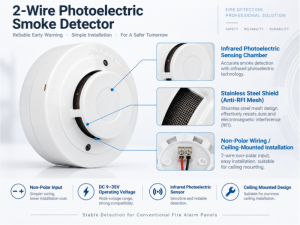
Smoke detectors are commonly used in offices, corridors, hotel rooms, meeting rooms, and other indoor areas where smoke can be detected quickly. They are designed to sense smoke particles in the air and send a signal to the fire alarm control panel.
Heat detectors are more suitable for areas where smoke detectors may cause false alarms, such as kitchens, garages, boiler rooms, dusty workshops, and humid environments. A fixed temperature heat detector activates when the temperature reaches a preset level. A rate-of-rise heat detector responds when the temperature rises quickly within a short time.
Flame detectors are often used in higher-risk industrial environments where open flame or fast-burning materials may be present.
Gas detectors can be used in areas where combustible gas, carbon monoxide, or other dangerous gases may create fire or life safety risks. In kitchens, boiler rooms, gas storage rooms, and industrial sites, gas detection can be an important part of a complete safety strategy.
A professional building fire alarm system should select the right detector type according to the environment. Using the wrong detector may cause false alarms, delayed response, or poor protection.
5. Manual Initiating Devices:
Manual initiating devices require a person to activate the alarm. They are used when someone discovers smoke, fire, or danger before the automatic detector responds.
Common manual initiating devices include:
Manual call points
Pull stations
Fire alarm buttons
Emergency alarm switches
Manual call points are usually installed near exits, stairwells, corridors, and high-traffic areas. In an emergency, a person can press or pull the device to send an alarm signal to the fire alarm control panel.
For public buildings such as schools, shopping malls, hospitals, office buildings, and transportation stations, manual call points are very important. They allow building occupants to report a fire immediately.
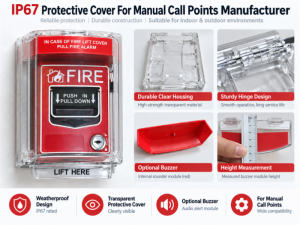
However, manual call points may also face accidental activation, misuse, or vandalism. To reduce false alarms and protect the device, many buildings use manual call point protective covers. Sumring IP67 manual call point covers are designed to protect emergency buttons, break glass call points, and exit buttons in commercial and outdoor environments.

6. Notification Warning People to Evacuate:
Once the building fire alarm system confirms an alarm, it must alert everyone in the building. Notification appliances are the devices that create sound, light, or voice messages to warn occupants.
Common notification appliances include:
Alarm bells
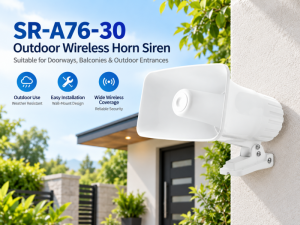
Fire sirens
Sounders
Speakers
Horn strobes
Flashing strobe lights
Voice evacuation speakers
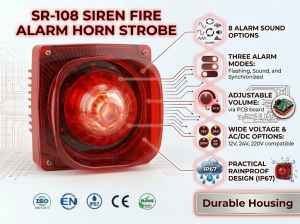
In a small building, a loud siren or alarm bell may be enough. In a large commercial building, a combination of sound and visual warning is usually more effective. Strobe lights are especially important in noisy areas, industrial sites, public spaces, or places where people may have hearing difficulties.
Voice evacuation systems can provide clear instructions, such as “Please leave the building through the nearest exit.” This can reduce panic and guide people during evacuation.
A high-quality building fire alarm system should ensure that the alarm signal can be heard and seen in all required areas. The sound level, strobe visibility, installation height, and device location should be considered during system design.
Sumring offers fire strobe sirens, alarm bells, sounders, and other notification appliances for different commercial fire alarm applications.
7. Building Safety Interfaces:
A modern building fire alarm system does more than sound an alarm. It can also connect with other building safety equipment to help people exit safely and reduce fire spread.
Common building safety interfaces include:
Exit lighting systems
Emergency lighting
Smoke control and ventilation systems
Fire doors
Sprinkler systems
Elevator recall systems
Access control release
Remote annunciators
Two-way communication systems
Security system integration
For example, when the fire alarm system is activated, magnetic fire doors may close automatically to stop smoke and flame from spreading. Elevators may return to a safe floor and stop normal operation. Access control doors may unlock to allow evacuation. Ventilation systems may redirect smoke to improve escape conditions.
These interfaces help turn a building fire alarm system into a complete building life safety solution.
8. Remote Monitoring and Communication Devices
Many commercial buildings need their fire alarm systems to send alarm signals to a monitoring company or fire service communication center. This allows emergency responders to be dispatched even if nobody inside the building makes a phone call.
Remote monitoring can send different types of information, such as:
Fire alarm signal
System fault signal
Power failure signal
Supervisory signal
Device trouble signal
For property managers, remote monitoring improves response speed and reduces the risk of missing a fire alarm after business hours. For warehouses, factories, hotels, and large buildings, this function is especially valuable.
A connected building fire alarm system can help owners manage fire safety more efficiently and respond faster to emergencies.
9. Remote Display and Annunciator Panels
In larger buildings, the fire alarm control panel may be installed in a control room, but firefighters or security staff may need alarm information at another entrance or reception area. A remote annunciator panel can display alarm, fault, or zone information at a secondary location.
This helps emergency responders quickly identify the alarm zone without going directly to the main control panel. In hotels, hospitals, shopping centers, and office towers, remote display panels can make fire response more organized and efficient.
10. Wiring, Modules, and Relays
Behind every building fire alarm system, there is a network of cables, modules, and relay outputs. These parts may not be visible to building occupants, but they are essential for system operation.
Wiring connects detectors, manual call points, sounders, strobes, and control panels. Modules help connect special devices or monitor external equipment. Relays can control elevators, fire doors, ventilation fans, and other building equipment.
Poor wiring or low-quality installation can cause system faults, false alarms, or communication failure. That is why commercial fire alarm systems should be installed and maintained by qualified professionals.
11. Why System Compatibility Matters?
A building fire alarm system often includes devices from different product categories, such as smoke detectors, heat detectors, manual call points, control panels, sounders, and strobe sirens. If these parts are not compatible, the system may not work correctly.
Before choosing devices, buyers should confirm:
Working voltage
Wiring type
Control panel compatibility
Alarm current
Zone capacity
Relay output requirements
Installation environment
Indoor or outdoor protection level
Local fire safety standards
For B2B buyers, contractors, distributors, and system integrators, compatibility is one of the most important purchasing factors. Sumring provides fire alarm products designed for commercial and industrial fire safety projects, including conventional fire alarm panels, smoke detectors, heat detectors, manual call points, manual call point covers, sounders, strobe sirens, and alarm bells.
12. How to Choose the Right Building Fire Alarm System?
Choosing the right building fire alarm system depends on building size, risk level, local regulations, installation environment, and budget.
For a small shop or office, a conventional fire alarm system may be enough. For a large hotel, hospital, factory, or shopping mall, a more advanced system may be required. Areas with dust, steam, or high humidity may need heat detectors instead of smoke detectors. Public areas may need manual call points with protective covers. Noisy areas may need both sirens and flashing strobe lights.
A good system design should answer these questions:
Where could a fire start?
How quickly must the system detect it?
How will occupants be warned?
Which devices need to be controlled automatically?
How will emergency responders receive alarm information?
How easy is the system to maintain?
A complete building fire alarm system should not only meet basic detection needs but also support safe evacuation, fast response, and long-term reliability.
Why Choose Sumring for Building Fire Alarm System Products?
Sumring focuses on fire alarm and security alarm product development and manufacturing. For commercial fire alarm projects, Sumring can provide a range of system components, including fire alarm control panels, smoke detectors, heat detectors, manual call points, alarm bells, strobe sirens, sounders, and protective covers.
For distributors, contractors, OEM buyers, and system integrators, Sumring offers practical product support for different market needs. Whether you need conventional fire alarm devices, manual call point covers, gas detectors, or notification appliances, Sumring can help you build a safer and more reliable fire alarm solution.
A building fire alarm system is not just a group of devices. It is a complete safety network. When every component works together, it can detect danger earlier, warn people faster, and support safer evacuation.
FAQ:
1. What is a building fire alarm system?
A building fire alarm system is a connected safety system that detects fire risks, alerts building occupants, activates safety equipment, and may send alarm signals to a monitoring company or emergency response center.
2. What are the main components of a building fire alarm system?
The main components include the fire alarm control panel, power supplies, initiating devices, notification appliances, building safety interfaces, remote monitoring devices, wiring, modules, and relays.
3. What is the role of a fire alarm control panel?
The fire alarm control panel is the brain of the system. It receives signals from detectors and manual devices, monitors system faults, activates alarms, and controls connected outputs.
4. What are initiating devices in a fire alarm system?
Initiating devices are components that trigger the alarm signal. They include automatic devices such as smoke detectors and heat detectors, as well as manual devices such as manual call points and pull stations.
5. What is the difference between smoke detectors and heat detectors?
Smoke detectors sense smoke particles and usually respond faster to smoldering fires. Heat detectors respond to high temperature or rapid temperature rise and are better for kitchens, garages, dusty areas, or humid environments.
6. Why are notification appliances important?
Notification appliances warn building occupants when a fire alarm is activated. They include sirens, bells, speakers, horn strobes, and flashing strobe lights.
7. Can a building fire alarm system connect with elevators and fire doors?
Yes. Many commercial fire alarm systems can connect with elevator recall, fire doors, access control, smoke ventilation, emergency lighting, and other building safety systems.
8. How do I choose the right fire alarm components for a building?
You should consider building size, risk area, detector type, control panel capacity, power supply, installation environment, local standards, and device compatibility. For project support, choosing an experienced fire alarm product manufacturer can save time and reduce system risks.
If you are sourcing fire alarm products for commercial buildings, hotels, schools, factories, warehouses, or public facilities,Contact Sumring today to learn how our fire alarm system components can help make your next building safety project more reliable, easier to install, and ready for real emergency protection.