

fire alarm system
18
2026-09
How Should B2B Buyers Choose a 2-Wire Photoelectric Smoke Detector?
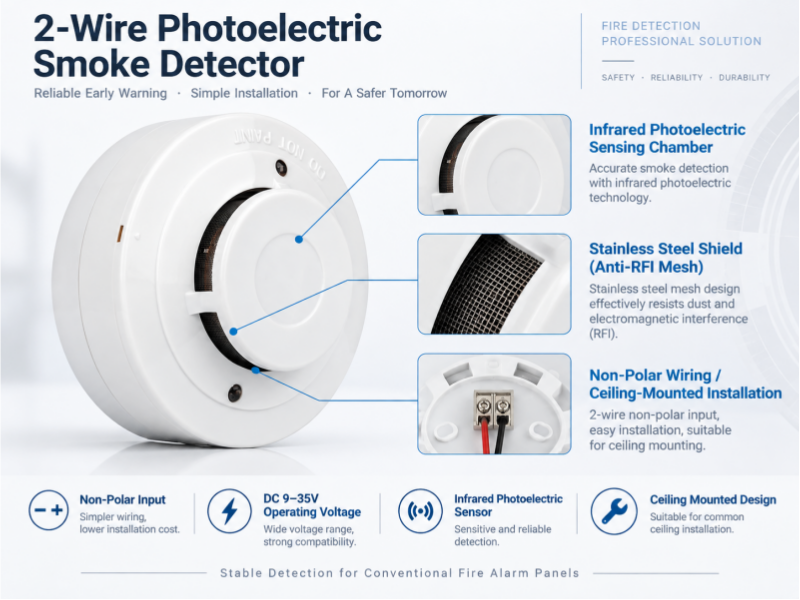
A 2-Wire Photoelectric Smoke Detector is a conventional fire detection device that receives power and communicates an alarm condition through the same pair of zone wires connected to a compatible fire alarm control panel. For B2B buyers, selection should focus on electrical compatibility, sensing performance, installation conditions, and commissioning—not appearance alone. This matters for distributors, system integrators, contractors, and OEM buyers. Two detectors can share a similar voltage range but still behave differently on a real conventional zone. A good procurement specification therefore starts with the panel and project requirements. In practice, a 2-Wire Photoelectric Smoke Detector should be approved as part of the complete zone circuit rather than treated as an isolated device. Why Does Panel Compatibility Come First? A 2-Wire Photoelectric Smoke Detector shares power and alarm signaling through one zone circuit. The detector and panel must therefore operate as a matched electrical system. Check the panel’s normal loop voltage, standby-current allowance, alarm-current range, reset method, end-of-line supervision, maximum detector quantity per zone, and remote-indicator requirements. A wide detector voltage range does not automatically mean universal compatibility. For bulk orders, buyers should confirm the detector against the intended panel model before production. Sample testing on the actual panel......
18
2026-09
Fire Alarm Detector Costs Rise as Chip Prices Surge 20%
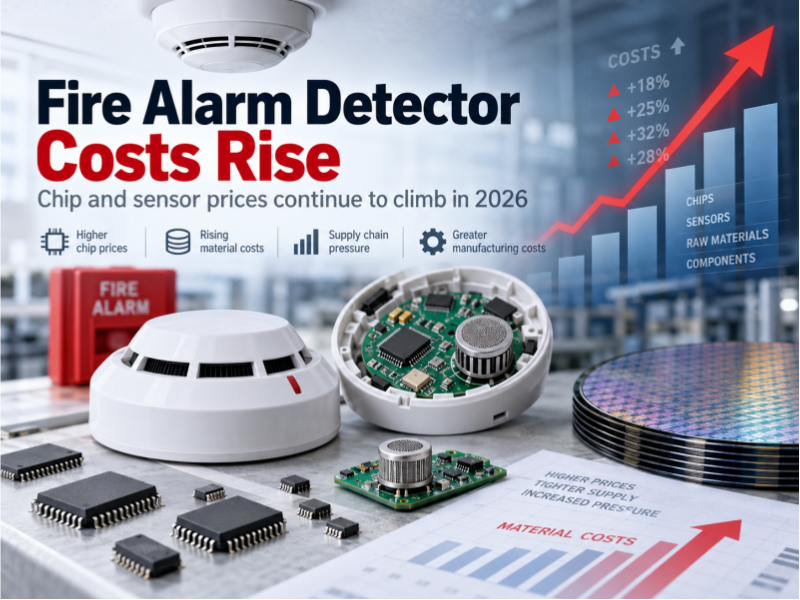
2026 Industry Notice: Rising Raw Material and Chip Prices Are Increasing Fire Alarm Detector Manufacturing Costs In 2026, the fire alarm detector cost structure is facing increasing pressure as prices for semiconductor chips, sensor components, electronic materials, and manufacturing services continue to rise. From CIS image sensors and MCUs to power-management components and structural materials, cost increases across the upstream supply chain are gradually being transmitted to fire alarm detector manufacturers and downstream buyers. For distributors, system integrators, project contractors, and fire alarm equipment importers, closer attention to purchasing schedules, inventory planning, and supplier stability is becoming increasingly important. Direct Materials Represent More Than 80% of Detector Costs Raw materials used in fire alarm detectors can generally be divided into three categories: core electronic components, structural parts, and auxiliary materials. In many detector designs, direct materials represent the majority of total manufacturing cost and may account for more than 80% of the product cost structure. A typical bill of materials may include: Sensor modules, photoelectric components, or CO sensors: approximately 20%–30% MCU, SoC, and communication modules: approximately 15%–25% Power supply and battery-management components: approximately 10%–15% PCB, housing, connectors, buzzers, LEDs, terminals, and other components Photoelectric smoke detectors depend heavily on......
14
2026-09
How to Choose an Outdoor Fire Alarm Horn Strobe for B2B Projects?
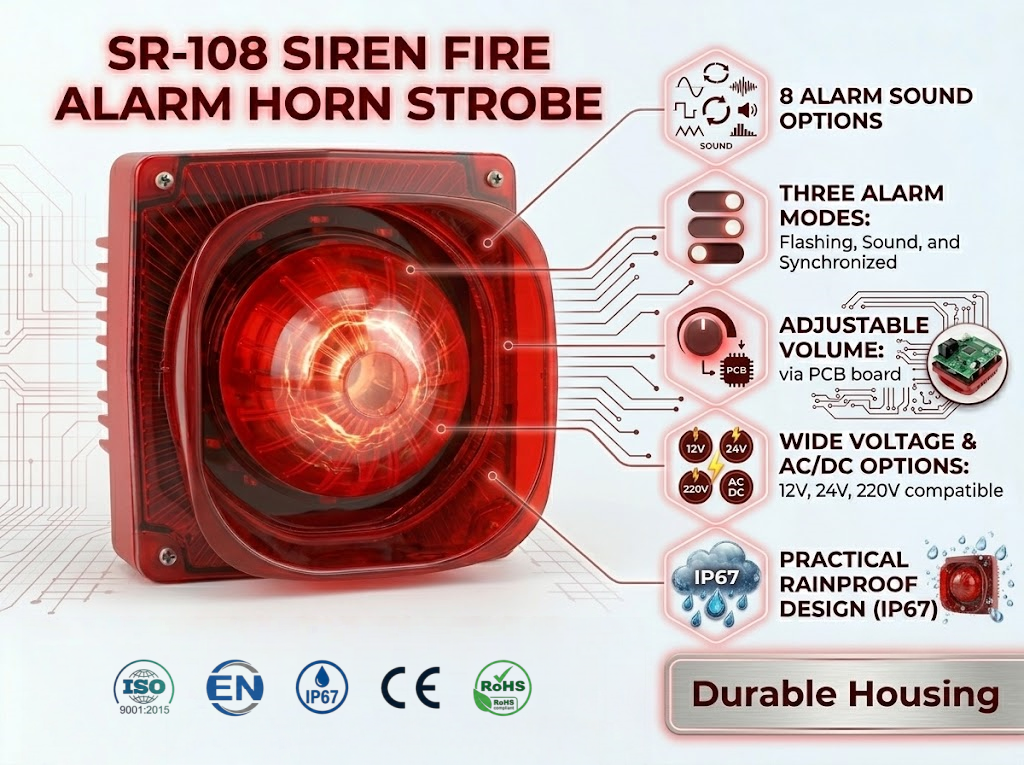
An outdoor fire alarm horn strobe is an audible and visual warning device that uses sound, flashing light, or both to alert people during a fire, security event, or other danger condition. For distributors, contractors and system integrators, selecting the right unit requires more than comparing appearance or sound level. Voltage, alarm current, output mode, environmental conditions and system compatibility all matter. The SR-108 is designed around these project requirements. According to its product specifications, it provides three warning modes: sound alarm, flashing alarm, and sound-plus-light alarm. This makes it suitable for buyers who need one alarm platform for different commercial or industrial applications. What Should Buyers Check When Selecting an Outdoor Fire Alarm Horn Strobe? The first question should be electrical compatibility. The SR-108 specification lists 24V and 220V operating-voltage options. For procurement purposes, buyers should confirm which voltage version is required rather than assuming that one unit automatically supports both inputs. The alarm current also changes according to the operating mode. SR-108 Specification Details Model SR-108 Material ABS Operating Voltage 24V / 220V options Sound + Flash Current Approx. 40mA Sound-Only Current Approx. 25mA Flash-Only Current Approx. 15mA Sound Pressure 85dB, customizable Operating Temperature -10°C to 60°C Environmental......
02
2026-09
IP54 vs IP65 vs IP67: Which Protection Level Is Better for Manual Call Points?
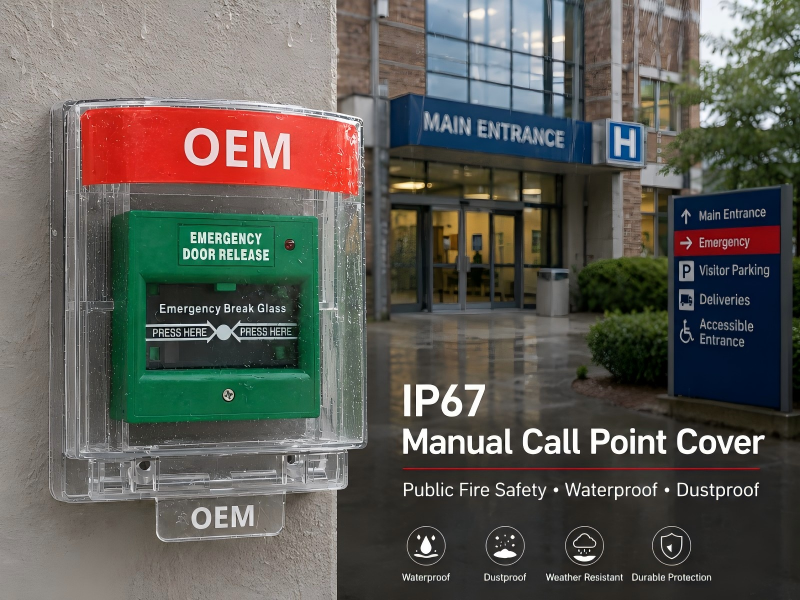
IP54 vs IP65 vs IP67 describes three enclosure protection levels used to indicate how well electrical equipment is protected against solid particles and water under defined test conditions. If you are buying manual call points or protective covers for a fire alarm project, the obvious question is simple: should you choose IP54, IP65, or IP67? The answer is slightly less obvious. IP67 is not automatically the best choice for every manual call point. A clean hotel corridor has very different risks from an outdoor warehouse gate, a dusty factory, or a loading bay washed with water. For wholesalers and fire alarm contractors, choosing IP54 vs IP65 vs IP67 is really about matching the protection level to the site. That saves money. More importantly, it helps avoid specifying the wrong product for the environment. IEC 60529 is the international standard that classifies degrees of protection provided by electrical enclosures using the familiar IP Code. IP54 vs IP65 vs IP67: What Do the Numbers Mean? The IP code contains two digits. The first digit describes protection against solid objects and dust. The second digit describes protection against water. That makes the difference between IP54 vs IP65 vs IP67 easier to understand: Rating......
31
2026-08
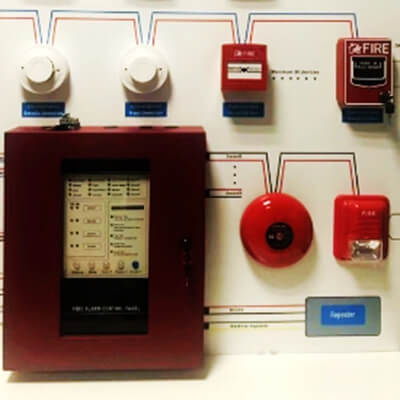
What Is a Conventional Control Panel? 7 Key SR-P01 Features
A conventional control panel is a fire alarm control unit that organizes detectors, manual call points, and notification devices into monitored zones, allowing the system to identify the area where an alarm, trouble, or supervisory condition occurs. For small and medium-sized commercial fire alarm projects, system integrators often need a panel that is straightforward to install, easy to maintain, and flexible enough for different project sizes. The SR-P01 Series is a 4-, 8-, or 16-zone Class B conventional fire alarm control panel designed around these requirements. With programmable zone functions, notification appliance circuits, relay outputs, DC24V auxiliary power, battery backup capability, and optional RS485 communication, the SR-P01 gives contractors a practical platform for conventional fire alarm applications without introducing unnecessary system complexity. What Is a Conventional Control Panel? A conventional control panel receives signals from initiating devices connected to individual fire alarm zones. Devices within the same zone share an initiating device circuit, so the panel normally identifies the affected zone rather than the exact individual detector. For example, a commercial building may assign separate zones to offices, storage areas, corridors, and utility rooms. When a smoke detector or manual call point operates, the panel indicates which zone has entered......
31
2026-08
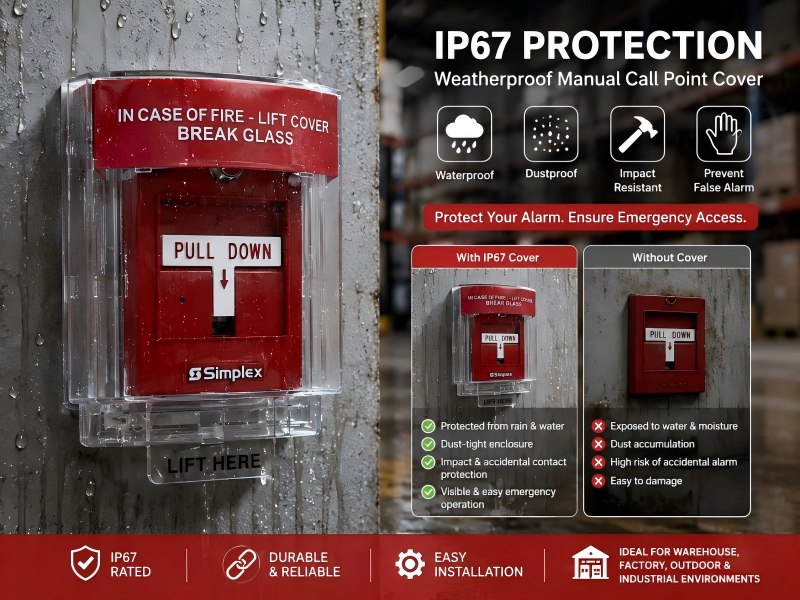
What Is an IP67 Weatherproof Manual Call Point Cover and Why Is It Important?
An IP67 Weatherproof Manual Call Point Cover is a protective enclosure installed over a fire alarm manual call point to help shield it from dust, water, accidental contact, physical damage, and unwanted operation while keeping the alarm point visible and accessible. It sounds like a small fire alarm accessory. In a real project, though, it can solve several very annoying problems. A manual call point may sit quietly on a wall for years. Yet it must work immediately when someone discovers a fire. Rain, dust, cleaning water, passing equipment, careless contact, and public misuse can all put that simple requirement at risk. That is why an IP67 Weatherproof Manual Call Point Cover is increasingly considered when engineers plan outdoor, semi-outdoor, industrial, and high-traffic fire alarm installations. For wholesalers and project contractors, the question is not simply, “Does the cover fit?” The better question is: Will it keep the manual call point protected without making emergency operation difficult? What Is an IP67 Weatherproof Manual Call Point Cover? A manual call point cover is normally a transparent protective housing fitted around a wall-mounted fire alarm activation point. The transparent structure keeps the alarm device easy to identify. A hinged front lid creates......
29
2026-06
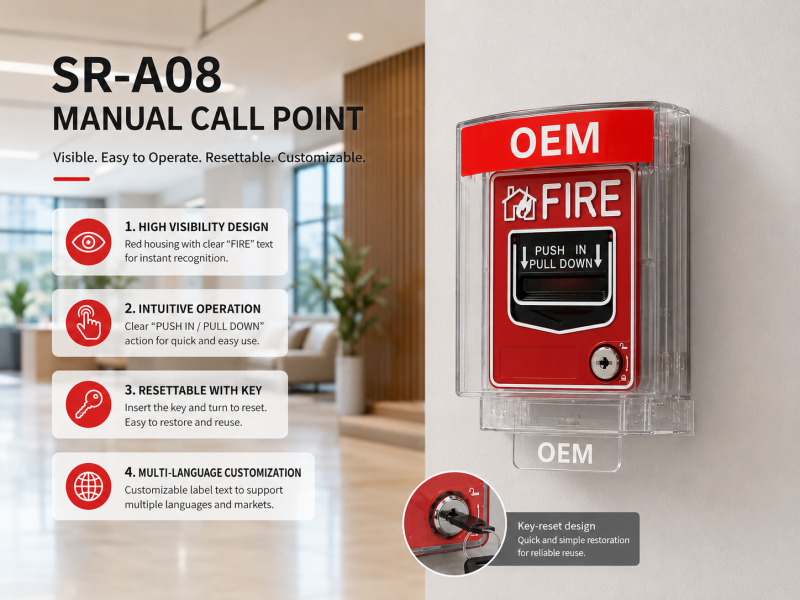
What Is a Manual Call Point and Why Is It Critical in Fire Safety Systems?
A manual call point is a wall-mounted emergency fire alarm device that allows people to manually activate a fire alarm system when a fire or emergency is detected. In modern fire safety engineering, automatic detectors such as smoke and heat sensors are widely used. However, they cannot guarantee immediate detection in every scenario. This is why the manual call point remains a mandatory and critical component in fire alarm system design. It acts as the fastest human-activated alarm trigger, ensuring that occupants can immediately alert the entire building when they discover smoke, fire, or danger. Despite its small size, the manual call point plays a major role in life safety, evacuation speed, and emergency coordination. Why Manual Call Points Are Still Required in Modern Buildings? Even advanced fire detection systems have limitations: Smoke may not reach detectors instantly Fire may start in hidden or low-ventilation areas Sensors can be affected by dust or humidity Early-stage fires may not produce enough smoke The manual call point solves these gaps by enabling instant human activation. Key Safety Function: Once activated, the manual call point immediately sends a signal to the fire alarm control panel, triggering: Building-wide alarms (sirens & strobes) Emergency evacuation......
26
2026-06
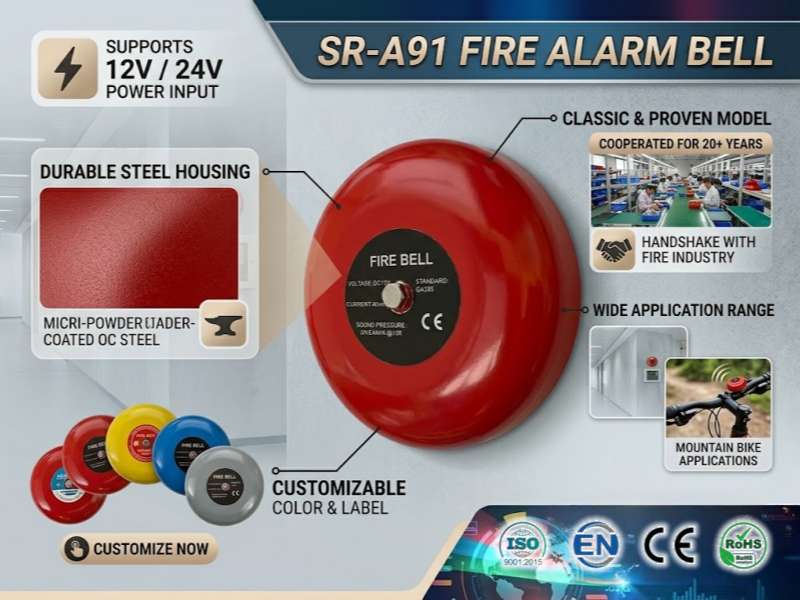
What Is a 6 Inch Waterproof Fire Alarm Bell and How Does It Work?
A fire alarm bell is an audible warning device designed to alert occupants of a building during a fire emergency by producing a loud mechanical ringing sound triggered by a fire alarm control system. Introduction to SR-A91 Fire Alarm Bell The SR-A91 6 Inch Waterproof Fire Alarm Bell is a classic industrial-grade notification device widely used in fire protection systems for commercial, industrial, and public buildings. It is designed to deliver a strong, clear, and reliable alarm sound in emergency situations, ensuring rapid evacuation and response. Unlike electronic sirens that rely heavily on digital components, this fire alarm bell uses a mechanical striking system, making it highly durable and less prone to failure in harsh environments. With support for 12V / 24V power input, a steel housing structure, and EN/CE/RoHS certification, the SR-A91 is engineered for long-term stability and global compliance. Why Fire Alarm Bells Are Still Essential in Modern Safety Systems? Even with advanced smart detectors and wireless alarms, the fire alarm bell remains one of the most trusted alerting devices in fire safety systems. Key Reasons: Mechanical reliability (no software dependency) High sound penetration in noisy environments Low maintenance cost Compatible with conventional fire alarm panels Fast activation......
24
2026-06
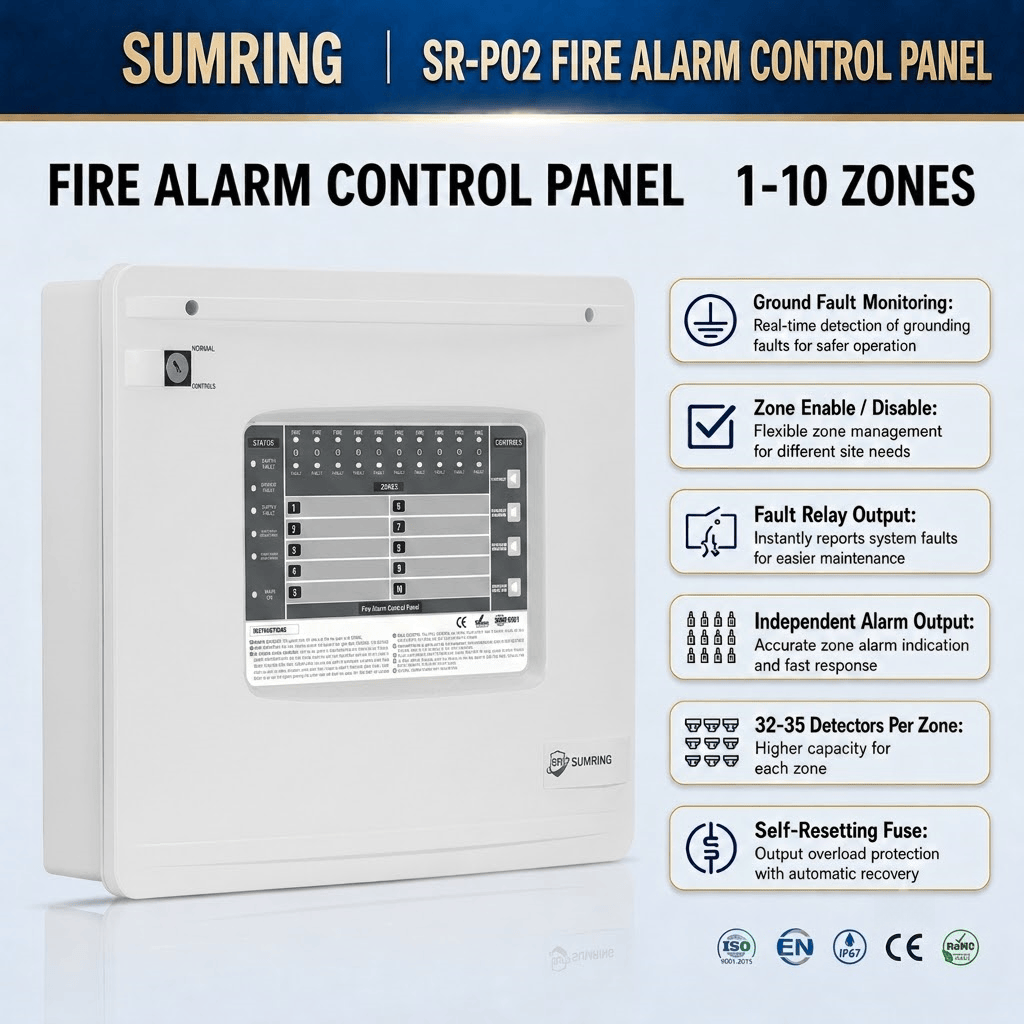
What Is SR-P02 Fire Alarm Panel Controller With High Alert Features?
The SR-P02 Fire Alarm Panel Controller With High Alert Features is designed to serve as the central brain of a conventional fire alarm system. It continuously monitors connected detectors, manual call points, and alarm devices across multiple zones, ensuring fast detection and reliable emergency response. Unlike basic panels, the SR-P02 Fire Alarm Panel Controller With High Alert Features integrates advanced diagnostics, flexible zone control, and robust protection mechanisms, making it suitable for warehouses, factories, commercial buildings, schools, and infrastructure projects requiring stable and scalable fire safety management. Its strength lies in combining intelligent fault detection with practical field usability, reducing downtime while improving system reliability. SR-P02 Fire Alarm Panel Controller With High Alert Features: 1. Ground Fault Monitoring One of the most critical features of the SR-P02 Fire Alarm Panel Controller With High Alert Features is its advanced ground fault detection capability. It can detect abnormal grounding conditions caused by: Damaged or aging cables Moisture intrusion in wiring systems Metal contact interference This function helps maintenance teams identify risks early before they develop into system failures. It also significantly reduces false alarms caused by unstable electrical grounding. In real-world applications, this ensures the fire alarm system remains stable even in......
23
2026-06
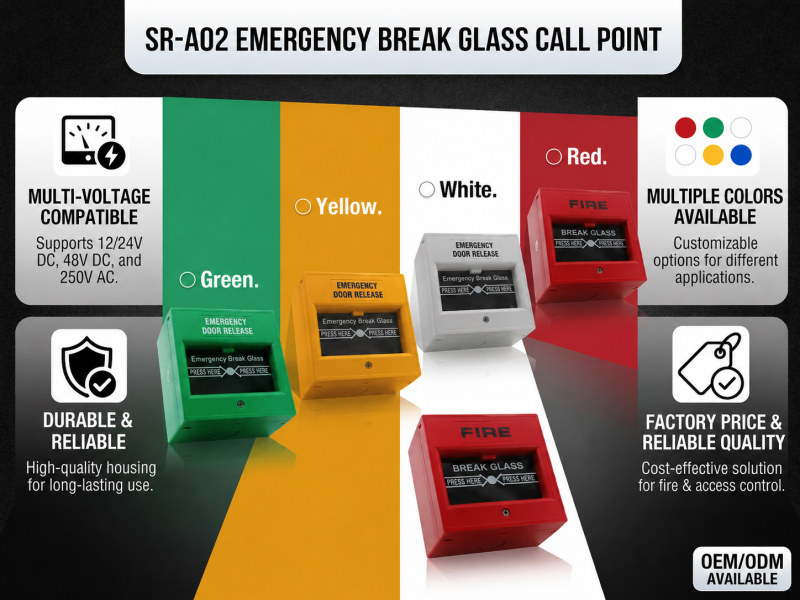
What Is SR-A02 Manual Call Point and How Does It Improve Fire Safety?
A manual call point is a fire alarm initiating device that allows occupants to manually trigger an emergency alarm system by activating a break-glass or push mechanism during a fire incident. What Is SR-A02 Manual Call Point? The SR-A02 Manual Call Point is a reliable emergency fire alarm activation device designed for fast response in critical fire situations. It allows users to immediately trigger a building-wide alarm by simply breaking the glass element, ensuring rapid evacuation and emergency response. Unlike automatic detectors, the SR-A02 Manual Call Point relies on human intervention, making it a crucial part of any layered fire protection system in commercial, industrial, and public environments. It is widely used in factories, warehouses, hotels, office buildings, and medium-sized commercial facilities where fast manual activation can significantly reduce fire damage and save lives. Why SR-A02 Manual Call Point Matters in Fire Safety Systems Fire emergencies often develop within seconds. While smoke and heat detectors provide automatic detection, human confirmation is still one of the fastest ways to initiate evacuation. The SR-A02 Manual Call Point ensures: Immediate alarm activation without delay Simple “break glass” emergency operation Direct integration with fire alarm control panels Reliable signaling to sirens, strobes, and emergency......
22
2026-06
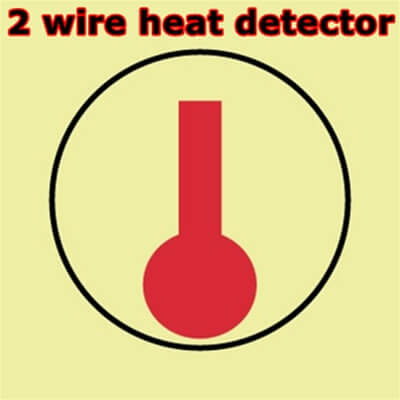
What Is a Battery Powered Heat Detector and How Does It Work?
22
2026-06
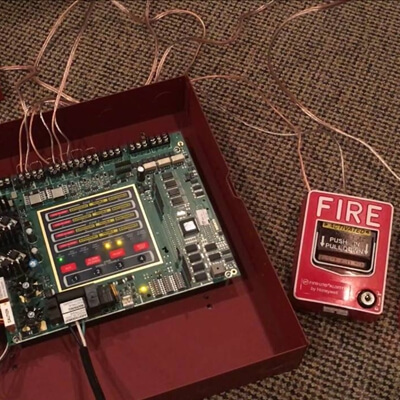
What is difference between an fire alarm annunciator panel VS control panel ?
Let's Discuss Your Project
Contact us for suitable solution, and to meet your needs with maximum efficiency!
1. How can I become a SUMRING distributor?
We welcome global partners for fire alarm system distribution.You can apply for:Regional distributor rights,OEM branding cooperation,Project-based supply agreements,Long-term B2B partnership,Contact us to discuss your target market and business plan.
2. Why choose SUMRING fire alarm systems?
Our Key advantages include:Factory-direct fire alarm manufacturer pricing;Fast delivery for urgent engineering projects;Complete fire detection product portfolio;OEM/ODM customization capability;Stable quality control under ISO9001 system;Suitable for global mid-tier fire protection projects.
3. Do you provide technical support for fire alarm systems?
Yes, we provide full technical support including:Fire alarm system installation guidance,Wiring and configuration support,Troubleshooting assistance,Project-based consultation for distributors and contractors.
4. What shipping methods are available for fire alarm products?
We offer global logistics solutions:Sea freight (main export via Shenzhen / Hong Kong ports),Air freight,Express delivery (DHL, FedEx, UPS, TNT),China-Europe Railway Express (for EU markets).