What Should Facility Managers Do in a CO Alarm Response?
A CO alarm response is a documented procedure that facility managers follow when a carbon monoxide alarm activates in a commercial building. It covers evacuation, occupant accountability, emergency communication, alarm investigation, controlled re-entry, incident documentation, and follow-up safety checks.
For hotels, offices, schools, warehouses, apartments, boiler rooms, parking facilities, and other managed properties, a structured CO alarm response helps staff act consistently instead of improvising during an alarm event.
A structured CO alarm response is especially important for hotels, apartments, offices, schools, warehouses, parking areas, boiler rooms, restaurants, and facilities using fuel-burning equipment.
Why Does a Commercial Building Need a CO Alarm Response Plan?
Carbon monoxide cannot be reliably identified by human senses. Therefore, facility teams should not wait for visible signs of a problem before taking action.
A commercial CO alarm response plan should clearly define:
- Who initiates evacuation
- Who contacts emergency services
- Who accounts for occupants
- Who records alarm information
- Who communicates with technicians
- Who authorizes building re-entry
- Who completes the incident report
This is particularly important in buildings with boilers, generators, kitchens, vehicle areas, furnaces, water heaters, or other fuel-burning equipment.
A written response procedure allows staff to act consistently instead of making decisions during an emergency.
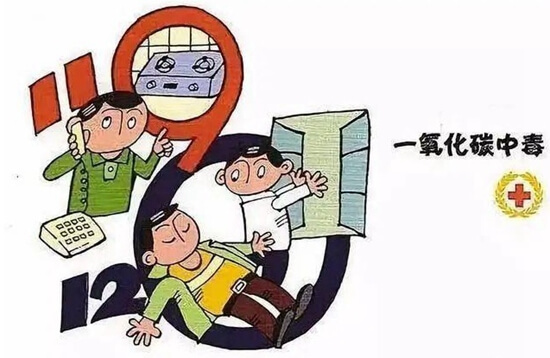
7-Step CO Alarm Response for Facility Managers
Step 1: Treat the CO Alarm as a Safety Event
Every CO alarm should initially be treated as a genuine safety condition.
Facility staff should not assume that an alarm is caused by a faulty detector simply because there is no visible smoke, smell, or obvious equipment failure.
Instead, employees should follow the established emergency procedure.
The first objective of the CO alarm response is occupant safety—not troubleshooting equipment.
Personnel should avoid remaining in potentially affected areas simply to identify which appliance may have caused the alarm.
Step 2: Evacuate and Account for Occupants
If the site’s emergency plan requires evacuation, occupants should be directed to the designated assembly area.
Facility managers should consider everyone who may be inside the building, including:
- Employees
- Visitors
- Contractors
- Hotel guests
- Tenants
- Delivery personnel
- Maintenance workers
- Night-shift employees
Once people reach the assembly point, designated staff should account for occupants.
If someone is missing, facility personnel should provide that information to emergency responders rather than sending untrained staff back into the building.
For hotels, schools, warehouses, and large commercial properties, zone-based accountability can make the CO alarm response easier to manage.
Step 3: Contact Emergency Services
The designated facility manager should contact the appropriate emergency service according to the property’s emergency action plan and local requirements.
Useful information may include:
- Alarm location
- Building floor or zone
- Number of detectors activated
- Displayed CO readings, when available
- Boilers or heating equipment in operation
- Generators
- Attached parking areas
- Commercial kitchens
- Recent equipment maintenance
Clear communication helps emergency personnel understand the building and identify areas that may require investigation.
Facility managers should also maintain updated contact details for HVAC companies, gas technicians, maintenance contractors, and property management personnel.
Step 4: Record Alarm Information Before Resetting
A detector should not automatically be reset simply because the audible alarm has stopped.
Before resetting the system, facility managers should document available information.
A CO alarm response record may include:
- Date and time
- Detector location
- Detector ID
- Alarm zone
- Displayed CO concentration, if available
- Nearby equipment
- Building operating conditions
- Personnel contacted
- Initial actions taken
For connected systems, staff may also review information from the alarm panel, building management system, security system, or remote monitoring platform.
Recording this information before resetting can help qualified personnel investigate the event.
Step 5: Investigate the CO Source
After occupants have been protected, qualified personnel should investigate possible carbon monoxide sources.
Depending on the building, potential sources may include:
- Boilers
- Furnaces
- Water heaters
- Generators
- Commercial cooking equipment
- Vehicle exhaust
- Fuel-burning appliances
- Ventilation problems
A CO detector is an important warning device, but it should not be treated as diagnostic equipment for repairing combustion systems.
Professional testing and appropriate measuring instruments may be required to determine the actual source.
If faulty equipment is identified, it should remain out of service until it has been appropriately inspected, repaired, and approved for operation.
Step 6: Control Building Re-Entry
A stopped alarm does not automatically mean the building is ready for occupancy.
Building re-entry should follow instructions from the appropriate emergency authority or qualified personnel.
Before allowing normal operations to resume, facility managers may need confirmation that:
- The suspected CO source has been identified
- Faulty equipment has been isolated
- Required atmospheric checks have been completed
- Ventilation conditions are acceptable
- Corrective action has been performed
- Responsible personnel have approved re-entry
This stage of the CO alarm response is important because occupants should not make independent decisions about returning to the affected area.
Step 7: Document and Review the Incident
After the building has returned to normal operation, the facility manager should complete an incident report.
Useful information includes:
- Alarm date and time
- Detector or zone involved
- Evacuation actions
- Occupant accountability
- Emergency contacts
- Equipment inspected
- Suspected cause
- Corrective action
- Maintenance performed
- Re-entry authorization
The facility team should then review how effectively the CO alarm response worked.
Questions may include:
Did employees understand the alarm?
Was evacuation completed efficiently?
Were visitors and contractors accounted for?
Were emergency contacts current?
Was alarm information preserved?
Did staff know who had authority to make decisions?
This review helps improve future emergency procedures.
How Should the CO Detection System Be Checked?
After the immediate incident has been resolved, facility managers should review the CO detection system.
Check whether:
- Detectors are installed in appropriate locations
- Devices remain within their specified service life
- Power supplies are operating correctly
- Backup batteries are functional where applicable
- Alarm indicators are operating
- Maintenance records are current
- Connected relay outputs are functioning
- Detector communication is working where applicable
Commercial projects may use standalone CO alarms or detectors connected to alarm panels, security systems, relays, or other building equipment.
For this reason, detector selection should consider the entire project architecture rather than only the detector itself.
How Can Facility Managers Reduce Future CO Alarm Risk?
A reliable CO alarm response should be supported by preventive maintenance.
Facility managers should periodically review:
- Fuel-burning equipment
- Ventilation systems
- Generator areas
- Boiler rooms
- Parking areas
- Detector locations
- Alarm maintenance schedules
- Emergency contacts
- Staff responsibilities
Employee training is equally important.
Staff should know what the CO alarm means, where to evacuate, where the assembly point is located, who contacts emergency services, and who is authorized to coordinate the building response.
The goal is to transform a CO alarm from an improvised reaction into a repeatable facility-management procedure.
What Should B2B Buyers Consider When Selecting CO Alarms?
For distributors, contractors, facility operators, and system integrators, commercial CO alarm selection should be based on project requirements rather than unit price alone.
Important factors may include:
- Power supply
- Detection type
- Audible alarm output
- Visual indication
- Digital display
- Relay output
- Communication options
- Installation environment
- System integration
- Maintenance requirements
- Target-market compliance
Some projects may require standalone carbon monoxide detection, while others may need combination CO and combustible gas detection.
B2B buyers should therefore confirm installation conditions, electrical requirements, project specifications, order quantity, documentation, and target-market requirements before selecting a detector.
For private-label projects, Sumring also supports OEM and ODM carbon monoxide detector solutions, including product configuration, branding, packaging, and project-based customization.
FAQ
1.What is the first action in a CO alarm response?
Facility managers should follow the approved emergency procedure and move occupants away from the potentially affected environment rather than attempting to locate the CO source themselves.
2.Should facility staff reset a CO detector immediately?
No. Relevant alarm information should first be recorded and the incident investigated according to the building’s established procedure.
3.When can occupants return after a CO alarm?
Re-entry should occur only when the responsible authority or appropriately qualified personnel determine that the affected area is safe.
4.Why should commercial buildings document CO alarms?
Records help identify recurring alarms, equipment issues, maintenance patterns, and weaknesses in existing emergency procedures.
5.Can a CO detector identify which appliance caused the problem?
A detector provides an alarm when its sensing conditions are reached. Determining the actual source normally requires qualified investigation and suitable testing equipment.
6.What should B2B buyers consider when specifying CO alarms?
Buyers should evaluate detector type, power supply, alarm output, integration requirements, installation environment, applicable standards, maintenance requirements, and OEM or ODM needs.
Conclusion
A reliable CO alarm response is more than silencing an alarm. It connects evacuation, occupant accountability, emergency communication, professional investigation, controlled re-entry, incident documentation, and preventive maintenance.
For facility managers, establishing the process before an incident makes building safety responsibilities much clearer.
For distributors, contractors, and commercial project buyers, selecting appropriate CO detection equipment is also part of that strategy. Sumring supports multiple carbon monoxide and combination gas detector configurations for B2B projects, including OEM and ODM requirements.