What Is a Battery Powered Heat Detector and How Does It Work?
A battery powered heat detector is a standalone fire safety device that runs on internal batteries and triggers an alarm when it detects abnormally high temperatures or rapid temperature increases caused by fire.
A battery powered heat detector is designed to protect people and property by identifying dangerous heat conditions that typically occur during the early or developing stages of a fire. Unlike smoke alarms, it does not rely on detecting airborne particles, making it suitable for environments where smoke, steam, or dust could trigger false alarms.
What Is a Battery Powered Heat Detector?
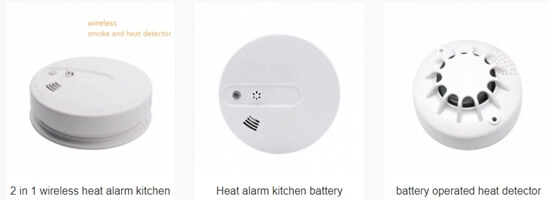
A battery powered heat detector is a self-contained fire detection device that operates independently without wiring to a central control panel. It continuously monitors ambient temperature and activates an audible alarm when preset heat thresholds are reached.
These devices are widely used in residential, commercial, and industrial environments where smoke detectors are less effective or prone to nuisance alarms.
Typical installation areas include:
- Kitchens
- Garages
- Laundry rooms
- Boiler rooms
- Attics
- Workshops
In these environments, a battery powered heat detector offers reliable fire detection while reducing false alarms caused by cooking smoke or steam.
How Does a Battery Powered Heat Detector Work?
A battery powered heat detector operates based on temperature sensing technology. It detects abnormal heat conditions through two main principles:
1. Fixed Temperature Detection
A battery powered heat detector with fixed temperature sensing activates when the ambient temperature reaches a specific threshold, usually around:
- 57°C (135°F) or higher
Once this limit is reached, the device triggers a loud alarm to alert occupants.
2. Rate-of-Rise Detection
A battery powered heat detector with rate-of-rise functionality responds to rapid temperature increases.
For example:
- Temperature rises 15°C (or ~15°F) within one minute
This feature allows earlier detection of fast-developing fires even before reaching high absolute temperatures.
3. Dual-Sensing Models
Some advanced battery powered heat detector models combine both:
- Fixed temperature detection
- Rate-of-rise detection
This dual approach improves reliability and ensures faster response in different fire scenarios.
Battery Powered Heat Detector vs Smoke Detector
Understanding the difference between a battery powered heat detector and a smoke detector is essential for proper fire safety planning.
| Feature | Heat Detector | Smoke Detector |
|---|---|---|
| Detection method | Heat/temperature | Smoke particles |
| False alarm risk | Low | Higher in kitchens/steam areas |
| Speed of detection | Slower | Faster |
| Best location | Kitchens, garages | Bedrooms, living rooms |
A battery powered heat detector is not intended to replace smoke detectors but to complement them in specific high-risk or high-interference environments.
Where Should You Use a Battery Powered Heat Detector?
A battery powered heat detector is ideal for locations where smoke detectors may cause frequent false alarms:
Recommended environments:
- Kitchens (cooking smoke)
- Bathrooms (steam)
- Garages (exhaust fumes)
- Workshops (dust, welding particles)
- Attics (temperature fluctuations)
In these areas, a battery powered heat detector improves system reliability and reduces unnecessary alarm disruptions.
Battery Powered Heat Detectors Advantages:
Using a battery powered heat detector provides several key benefits:
1. Easy Installation
No wiring is required. A battery powered heat detector can be installed quickly on ceilings or walls.
2. Independent Operation
It works even during power outages because it relies on internal batteries.
3. Low False Alarm Rate
Unlike smoke detectors, a battery powered heat detector is not affected by dust, steam, or cooking fumes.
4. Cost-Effective Safety Solution
It provides essential fire protection without requiring complex fire alarm systems.
5. Flexible Placement
A battery powered heat detector can be installed almost anywhere without electrical infrastructure limitations.
Limitations You Should Know
While a battery powered heat detector is highly useful, it has limitations:
- Slower response compared to smoke detectors
- Does not detect smoldering fires as early
- Requires battery replacement or monitoring
- Not suitable as the sole detector in sleeping areas
Therefore, fire safety experts recommend using a battery powered heat detector together with smoke detectors for full coverage.
Types of Battery Powered Heat Detectors
There are several categories of battery powered heat detector systems:
1. Fixed Temperature Heat Detectors
Activate when a specific temperature threshold is reached.
2. Rate-of-Rise Heat Detectors
Trigger when temperature increases rapidly in a short time.
3. Combination Heat Detectors
Integrate both fixed temperature and rate-of-rise functions for improved safety performance.
How to Choose the Right Battery Powered Heat Detector?
When selecting a battery powered heat detector, consider:
1. Installation Environment
Choose based on whether the area is dusty, humid, or high-temperature prone.
2. Battery Life
Long-life lithium batteries (up to 10 years) reduce maintenance effort.
3. Alarm Sound Level
A minimum of 85dB is recommended for residential safety.
4. Detection Technology
Dual-sensor battery powered heat detector models offer higher reliability.
5. Certifications
Look for international safety standards such as EN, UL, or CE.
Maintenance Tips
To ensure your battery powered heat detector works effectively:
- Test monthly using the test button
- Replace batteries regularly if not sealed type
- Clean dust from the sensor chamber
- Replace unit every 8–10 years depending on model
Proper maintenance ensures the battery powered heat detector remains reliable in emergencies.
Why Heat Detectors Are Still Important?
Even with advanced smoke detection systems, a battery powered heat detector plays a critical role in fire safety strategy. It provides targeted protection in areas where smoke alarms may not perform effectively.
A balanced fire safety system typically includes:
- Smoke detectors for early warning
- Heat detectors for high-risk zones
- Manual alarm points for human activation
FAQ:
1. What is a battery powered heat detector?
It is a standalone fire alarm device that runs on batteries and detects high temperatures or rapid heat increases.
2. Where should I install a battery powered heat detector?
It is best used in kitchens, garages, workshops, and other areas prone to false smoke alarms.
3. Is a battery powered heat detector better than a smoke detector?
Not better, but complementary. Smoke detectors detect earlier, while heat detectors reduce false alarms.
4. How long does a battery powered heat detector last?
Typically 5–10 years depending on model and battery type.
5. Can it detect fire faster than smoke alarms?
No, a battery powered heat detector generally responds slower than smoke detectors.
6. Does it work during power failure?
Yes, because it operates on internal batteries.
7. What is rate-of-rise detection?
It triggers when temperature increases rapidly within a short time.
8. Do I need both smoke and heat detectors?
Yes, combining both provides the most complete fire protection system.
If you want more reliable fire protection in high-risk or false-alarm-prone areas, upgrading to a modern battery powered heat detector system is a smart and cost-effective choice.Choose Sumring now!