How Do You Build a Fire Alarm Compliance Matrix for International Projects?
A fire alarm compliance matrix is a structured project document used to verify whether fire alarm products, certifications, system compatibility, technical documents, and approval requirements meet the rules of the final installation market.
For international B2B projects, the matrix helps consultants, contractors, distributors, system integrators, and procurement teams identify compliance gaps before tender submission, quotation, or equipment ordering.
Instead of asking only whether a product is EN54 or UL certified, project teams can use a fire alarm compliance matrix to connect local regulations with exact product models, certification scope, compatibility documents, site conditions, and approval responsibilities.
Why Is a Fire Alarm Compliance Matrix Important?
International projects often involve several layers of requirements. A product may meet a recognized standard but still fail project review because the local code, consultant specification, compatibility list, documentation package, or authority approval requires something different.
A practical fire alarm compliance matrix helps teams identify the governing code, confirm product certification, check compatibility, define required submittals, assign responsibility, and record gaps before tender submission or procurement.
This makes it especially useful for hotels, warehouses, commercial buildings, schools, factories, residential developments, and infrastructure projects across multiple markets.
What Should a Fire Alarm Compliance Matrix Include?
A useful matrix should show how each requirement affects procurement, technical approval, and final acceptance.
| Compliance Item | What to Record | B2B Procurement Question |
|---|---|---|
| Jurisdiction | Country, city, project authority | Which local code applies? |
| Design basis | Adopted fire alarm design standard | What system category is required? |
| Product standard | Standard for each device | Which certificate must match the model? |
| Certification | Holder, model, scope, validity | Is the offered model covered? |
| Compatibility | Approved panel/device combinations | Is the combination documented? |
| Environment | Indoor/outdoor, temperature, IP rating | Is the product suitable for the site? |
| Documents | Datasheet, certificate, manual, drawings | What must be submitted? |
| Approval owner | Consultant, contractor, supplier, AHJ | Who closes each compliance item? |

This turns the fire alarm compliance matrix into a decision tool rather than a simple standards checklist.
Step 1: Start With the Project Jurisdiction
The first row should identify where the system will be installed. Do not begin by asking whether EN54 or UL is “better.”
For U.S. projects, NFPA 72 is a major reference for fire alarm and signaling system requirements, while individual products may be evaluated to applicable UL standards. In the UK, non-domestic projects commonly reference BS 5839-1:2025 for design, installation, commissioning, and maintenance. European projects may also require products covered by applicable harmonised standards under the Construction Products Regulation.
Middle East projects can add local building codes, civil defense requirements, consultant specifications, and tender conditions. Therefore, the matrix should record the exact jurisdiction before product selection begins.
Step 2: Map Each Device to the Required Product Standard
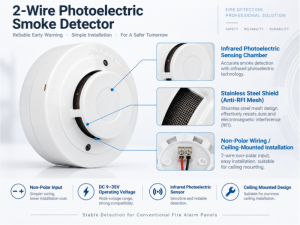
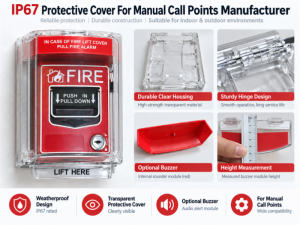
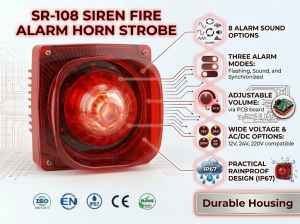
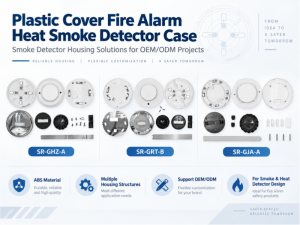
Separate the system into product categories such as the control panel, manual call point covers, smoke detector, heat detector, manual call point, sounder, visual alarm device, power supply, module, and protective accessory.
For each row, record the required standard, certification body, exact model, certificate reference, and scope.
“EN54 available” or “UL available” is not enough for a professional submittal. Buyers should verify whether the exact quoted model is covered by the relevant certificate or listing.
Step 3: Add System Compatibility Requirements
Certification of individual devices does not automatically prove that every device can operate together.
The fire alarm compliance matrix should include compatibility requirements for panels, detectors, modules, notification appliances, communication devices, and software versions where applicable.
A detector may have the correct voltage and certification but still be unsuitable if the approved system documentation does not support that combination. For integrators, this check can prevent redesign, replacement, and approval delays.
Step 4: Define the Required Approval Documents
International procurement teams should create a documentation column before requesting final quotations.
Typical submittals may include product datasheets, model-specific certificates, installation manuals, wiring diagrams, system architecture drawings, compatibility information, power calculations, test records, bills of materials, and labeling details.
The objective is simple: identify missing documents before shipment rather than during final inspection.
Step 5: Separate Mandatory Requirements From Preferences
A strong fire alarm compliance matrix should classify each row as:
- Mandatory: required by law, adopted code, authority, consultant, or tender.
- Project-specific: required because of the building type, environment, interface, or design.
- Commercial preference: requested for branding, packaging, language, accessories, or OEM/ODM customization.
This prevents a commercial preference from being mistaken for a legal requirement, or a mandatory item from being treated as optional.
Step 6: Add Environmental and Installation Conditions
Compliance is not limited to certificates.
Outdoor loading areas, humid plant rooms, dusty warehouses, cold storage facilities, and high-noise industrial spaces may require different enclosure, ingress protection, temperature, audible output, visual signaling, or mounting characteristics.
Add these conditions to the fire alarm compliance matrix so suppliers can recommend the correct product version instead of quoting only the lowest-cost model.
Step 7: Run a Compliance Gap Review Before Ordering
Before placing the purchase order, mark each row as Compliant, Conditionally Compliant, Document Pending, Technical Clarification Required, or Not Compliant.
Every unresolved item should have an owner and due date. This step is valuable for international projects because assumptions made during quotation can become costly once equipment reaches the site.
How Can the Matrix Change by Market?
A European project may focus on applicable EN54 product standards and CPR-related documentation. A UK project may add BS 5839-1 design requirements. A U.S. project may reference NFPA 72 together with applicable UL product standards and local authority requirements. A Saudi project may need to align with the Saudi Fire Protection Code, consultant requirements, and project approval procedures.
The key rule is that the matrix should follow the final installation market, not the supplier’s preferred certification.
How Should B2B Buyers Work With Manufacturers?
Send the fire alarm compliance matrix with the RFQ.
Ask the manufacturer to complete supplier-controlled columns such as model number, certificate reference, technical specification, compatibility statement, available documents, lead time, and OEM/ODM options.
The contractor, consultant, or project engineer should confirm the local code and final approval route.
For Sumring project inquiries, buyers can provide the target country, system type, device list, required certification, quantity, installation environment, and documentation checklist. This makes model selection and technical review more efficient before quotation.
FAQ
1. What is a fire alarm compliance matrix?
It is a project document that maps fire alarm requirements to codes, standards, certifications, compatibility, documents, and approval responsibilities.
2. Is EN54 certification enough for every international project?
No. Acceptance depends on the installation country, local code, project specification, authority requirements, and the exact certificate scope.
3. Should UL and NFPA be placed in the same matrix?
Yes, but in different fields. NFPA 72 addresses fire alarm and signaling system requirements, while applicable UL standards may cover specific product categories.
4. Why should model numbers be checked against certificates?
Because a supplier certificate does not automatically prove that every offered model is included in its scope.
5. Can OEM or ODM changes affect compliance?
Yes. Changes to housings, electronics, firmware, labels, or certified components may require technical review or additional evaluation.
6. Who should approve the final matrix?
The responsible project parties may include the consultant, contractor, fire engineer, owner, and authority having jurisdiction. The supplier should confirm only items within its technical and documentation scope.
Conclusion
A fire alarm compliance matrix helps international project teams move from general standards discussion to measurable procurement control.
The most effective matrix connects jurisdiction, design requirements, product certification, compatibility, documentation, site conditions, and approval responsibility in one place.
For B2B buyers, contractors, and distributors, this reduces the risk of ordering the wrong certification, submitting incomplete documents, or discovering compatibility problems after installation.
Before requesting a final quotation, build the matrix first. Then ask suppliers to prove compliance model by model.